Finance · Markets
China Bond Yields Slide as US Treasuries Face Hawkish Fed Pressure
Diverging monetary policy paths push Chinese 10-year yields near year-low while Warsh signals tighter stance in Jackson Hole
KEY TAKEAWAYS
- ·China's 10-year government bond yield fell to 1.692 per cent Monday, approaching the lowest in a year after July economic data missed estimates.
- ·Fed Chair Kevin Warsh struck a hawkish tone at Jackson Hole, widening the yield spread between US and Chinese bonds to over 230 basis points.
- ·The divergence reflects contrasting policy paths, with Beijing maintaining accommodative conditions while Washington prioritizes inflation control and fiscal concerns weigh on Treasuries.
Yields Drop on Weak Economic Signals
Chinese government bond yields continued their descent Monday, with the benchmark 10-year note trading at 1.692 per cent, nearing the lowest level seen in a year. The decline followed a series of July economic indicators that fell short of analyst expectations, reinforcing expectations that Beijing may need to maintain accommodative monetary conditions longer than previously anticipated.
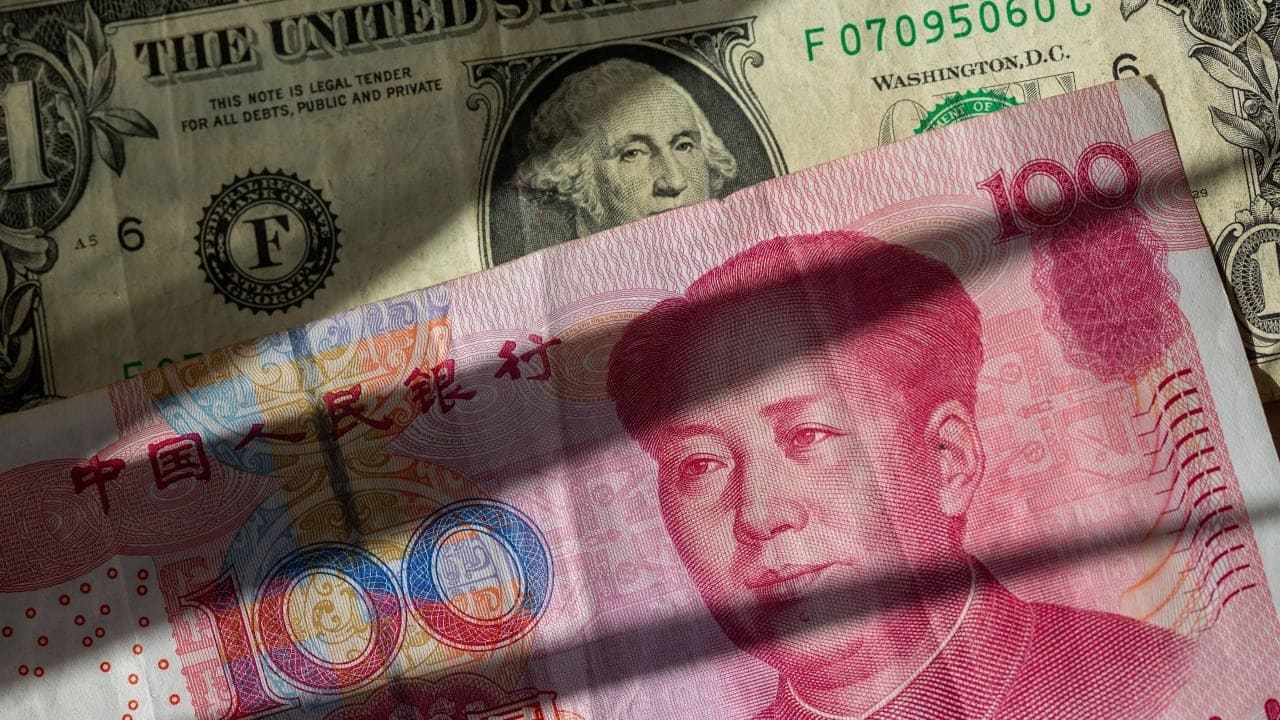
The move underscores a growing divergence in fixed-income markets across the Pacific. While Chinese debt attracts haven flows amid domestic growth concerns, US Treasuries face a different set of pressures tied to monetary policy direction and fiscal sustainability questions.
Warsh Signals Tighter Policy Path
Federal Reserve Chairman Kevin Warsh adopted a notably hawkish tone at the annual Jackson Hole symposium, signaling limited appetite for rate cuts in the near term. His remarks emphasized the Fed's focus on maintaining restrictive policy until inflation shows sustained convergence toward the 2 per cent target.
The contrast with China's trajectory is stark. Where Washington faces persistent price pressures that constrain policy flexibility, Beijing contends with subdued demand and deflationary risks that give authorities room to ease. The People's Bank of China has already cut key lending rates multiple times this year, with market participants pricing in additional support measures.
Warsh's comments added upward pressure on Treasury yields, which have climbed steadily since mid-summer. The 10-year US note now trades roughly 230 basis points above its Chinese counterpart, the widest spread in over eighteen months.
Fiscal Concerns Compound Treasury Headwinds
Beyond monetary policy divergence, concerns about US fiscal sustainability are weighing on longer-dated Treasuries. The federal deficit remains elevated, and political gridlock over spending priorities has raised questions about the government's ability to consolidate its balance sheet.
Institutional investors, particularly sovereign wealth funds and central banks in Asia, have grown more selective in their Treasury allocations. Some have rotated toward shorter maturities or diversified into European and Japanese government debt, seeking better risk-adjusted returns.
China itself holds over USD 800 billion in US Treasuries, making it one of the largest foreign creditors. Any shift in Beijing's appetite for dollar-denominated debt carries implications for global yield curves, though officials have maintained that reserve management decisions are guided by diversification and return objectives rather than geopolitical considerations.
Brokerage Views Point to Further Divergence
Analysts at major Chinese brokerages, including Great Wall Securities, expect the yield gap to persist. Domestic economic headwinds, particularly in the property sector and consumer spending, suggest that monetary authorities will prioritize growth stabilization over concerns about currency depreciation or capital outflows.
Meanwhile, the Fed's commitment to data-dependent tightening leaves little room for premature easing. Inflation metrics, while moderating, have not declined fast enough to justify a pivot, especially with labor markets still tight.
The divergence carries implications beyond bond markets. A wider yield differential typically puts downward pressure on the renminbi, though capital controls and intervention by the PBOC have kept the currency relatively stable. Authorities in Beijing walk a fine line, balancing the need for accommodative policy with the risk of triggering capital flight.
Regional Implications
The yield dynamics also ripple through the rest of Asia. Economies with close trade ties to China, including South Korea, Taiwan, and ASEAN members, face their own policy dilemmas as they navigate slowing Chinese demand and tighter US financial conditions.
Central banks in the region have adopted varied responses. Some, like the Bank of Korea, have held rates steady to preserve yield differentials with the dollar. Others, including Bank Indonesia, have eased cautiously, prioritizing domestic growth over currency stability.
For investors, the divergence presents both opportunity and risk. Chinese government bonds offer attractive yields relative to other major markets, but currency volatility and regulatory uncertainty temper enthusiasm. US Treasuries, while facing headwinds, remain the benchmark safe asset, particularly in periods of global stress.
The path forward hinges on how quickly China's economy stabilizes and whether the Fed's hawkish stance proves sustainable. Any surprise acceleration in Chinese growth, or a sharper-than-expected US slowdown, could narrow the gap. For now, the bond markets on either side of the Pacific are moving in opposite directions, reflecting fundamentally different economic realities.
RELATED STORIES

China Bond Futures Launch in Hong Kong Draws Strong Opening Volume
Cheng Wei-Lun · 3 min
Asia-Pacific Institutions Turn to Foreign-Issued Bonds for Higher Yields
Cheng Wei-Lun · 3 min

Global Traders Turn to Perpetual Futures for China Tech Access
Cheng Wei-Lun · 3 min

Hong Kong Wealth Hub Resilient Despite Beijing Investment Restrictions
Cheng Wei-Lun · 3 min
Spot something wrong? Email editor@briefasia.com. We log every correction publicly.