Technology · Policy
China's CXMT Draws Apple Interest as Memory Crunch Meets Export Controls
The mainland DRAM maker's capacity push following a record IPO arrives as AI demand tightens global supply and Washington weighs new restrictions
KEY TAKEAWAYS
- ·ChangXin Memory Technologies is expanding DRAM production following a record IPO, with Apple reportedly exploring supply agreements amid tight memory allocations.
- ·AI infrastructure demand is straining global DRAM supply, creating openings for alternative suppliers outside the Samsung-SK Hynix-Micron oligopoly.
- ·Potential Apple-CXMT dealings occur as Washington considers tighter export controls on memory manufacturing equipment to Chinese chipmakers.
Capacity Race Meets Geopolitical Friction
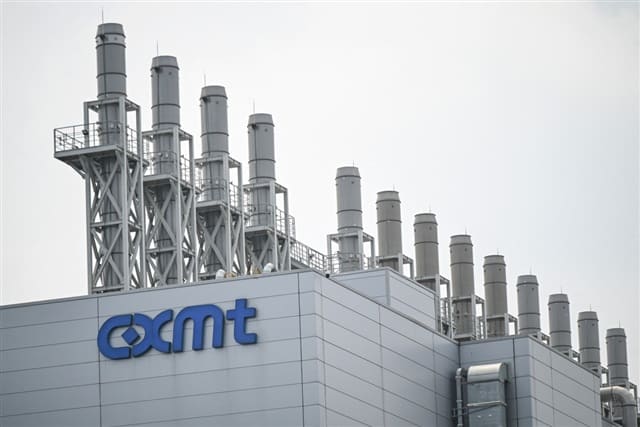
ChangXin Memory Technologies is accelerating DRAM production expansion on the back of a record initial public offering, arriving at a moment when artificial intelligence workloads are straining global memory supply. The Hefei-based chipmaker now finds itself in discussions with Apple over potential DRAM procurement, according to industry sources, even as Washington contemplates tighter export restrictions on advanced semiconductor equipment flowing into China.
The timing underscores a structural tension in the memory industry: surging demand from data center operators and device makers is running into supply constraints just as the world's second-largest economy scales up domestic chip production. CXMT has emerged as mainland China's most advanced DRAM manufacturer, shipping DDR4 modules and moving toward DDR5 technology that powers current-generation servers and smartphones.
AI training clusters and inference deployments have become the dominant force reshaping memory allocation. Hyperscale cloud operators are prioritizing high-bandwidth memory for accelerators, pulling supply away from consumer electronics and enterprise IT. That shift has left device makers scrambling for conventional DRAM, creating openings for suppliers outside the traditional Samsung-SK Hynix-Micron oligopoly.
Apple Explores Supply Diversification
Apple's reported outreach to CXMT reflects a broader industry search for alternative sources amid tight allocations from incumbent suppliers. The iPhone maker has historically relied on a concentrated base of memory vendors, but recent quarters have seen lead times stretch and spot prices firm as AI infrastructure absorbs an increasing share of wafer output.
Securing qualification from a Tier 1 smartphone brand would mark a significant milestone for CXMT, validating its manufacturing quality and opening pathways into other premium device segments. However, any supply agreement would need to navigate US export control frameworks that restrict certain technology transfers to Chinese semiconductor firms. Washington has steadily expanded the scope of equipment and design tool restrictions, citing national security concerns around advanced chip production in China.
The potential Apple relationship also places CXMT in a complex position relative to US policy deliberations. Micron Technology, the sole American DRAM producer, has publicly opposed looser restrictions on Chinese memory makers, arguing that subsidized capacity expansions distort global pricing and threaten the viability of non-Chinese manufacturers. Apple and other device companies, meanwhile, prioritize supply security and cost efficiency, particularly as memory represents a substantial share of bill-of-materials costs.
IPO Fuels Expansion Amid Trade Uncertainty
CXMT's recent public listing provided a substantial capital infusion to fund additional fabrication capacity and technology development. The offering ranked among the largest in China's domestic equity markets this year, reflecting investor appetite for semiconductor plays despite ongoing trade friction with the United States.
The company has been ramping DDR4 production volume and working to bring DDR5 to commercial scale. Industry analysts note that CXMT remains several generations behind Samsung and SK Hynix in process technology and yield rates, but the gap has narrowed faster than many observers anticipated. Domestic policy support, including subsidized financing and equipment procurement assistance, has enabled rapid iteration cycles.
Export control debates in Washington now center on whether to tighten restrictions on memory manufacturing equipment, particularly tools used in advanced lithography and deposition steps. Previous rounds of controls focused primarily on logic chips used in AI accelerators and high-performance computing, leaving memory production largely unaffected. However, memory's role in AI systems has prompted renewed scrutiny, with some policymakers advocating for a more comprehensive approach to semiconductor restrictions.
Regional Supply Chain Implications
CXMT's trajectory carries broader implications for Asia's memory ecosystem. Taiwan and South Korea host the majority of global DRAM production, with Samsung and SK Hynix operating large fabs in Pyeongtaek, Icheon, and Wuxi. Japan's Kioxia and Western Digital focus on NAND flash, leaving DRAM concentrated in an even narrower geographic and corporate base.
China's push to build domestic memory capability is reshaping investment flows and supply chain decisions across the region. Substrate suppliers, equipment vendors, and materials companies are weighing how to serve Chinese customers while complying with evolving export rules. Some firms have established separate production lines or design teams to manage compliance risk, adding complexity and cost to operations.
For device makers and cloud operators, the emergence of additional DRAM sources offers potential supply resilience, but also introduces qualification timelines, performance variability, and regulatory uncertainty. Companies with significant China revenue face additional pressure to incorporate domestically produced components, even as US and allied governments encourage supply chain diversification away from mainland suppliers.
The memory market's current tightness is expected to persist through the remainder of 2026, with AI infrastructure buildouts showing no signs of slowing. That environment provides CXMT with a favorable backdrop for capacity expansion and customer engagement, though the company's growth trajectory will ultimately depend on both technical execution and the evolving contours of US-China technology policy.
RELATED STORIES
JCET Eyes $968 Million to Scale AI Packaging Lines
Tran Quoc Bao · 3 min
China's Chip Makers Split Three Ways Beneath the Revenue Growth
Tran Quoc Bao · 3 min
Sharpa Secures $668 Million at $3.3 Billion Valuation in Tech Giant-Backed Round
Cheng Wei-Lun · 2 min

Li Auto Expands Battery Roster with CALB as Third Supplier
Siti Nuraini · 2 min
Spot something wrong? Email editor@briefasia.com. We log every correction publicly.