Technology · Products
Chinese Automakers Turn Electric Vehicles Into Rolling Entertainment Hubs
Karaoke systems, projector headlights, and AI assistants are becoming standard features as China's EV makers push beyond battery technology into cabin experience
KEY TAKEAWAYS
- ·Chinese EV manufacturers are installing karaoke systems, projector headlights, and voice-activated AI assistants as standard features in new models to differentiate in a crowded domestic market with over 100 competing brands.
- ·The shift toward entertainment-focused cabins follows technical convergence in battery range and charging speeds, with most major brands now offering 500-kilometer ranges and sub-30-minute fast charging by the mid-2020s.
- ·Southeast Asian markets including Thailand, Indonesia, and Vietnam are becoming testing grounds for adapted entertainment features as Chinese EV exports accelerate into regions with strong karaoke culture traditions.
Entertainment on Wheels
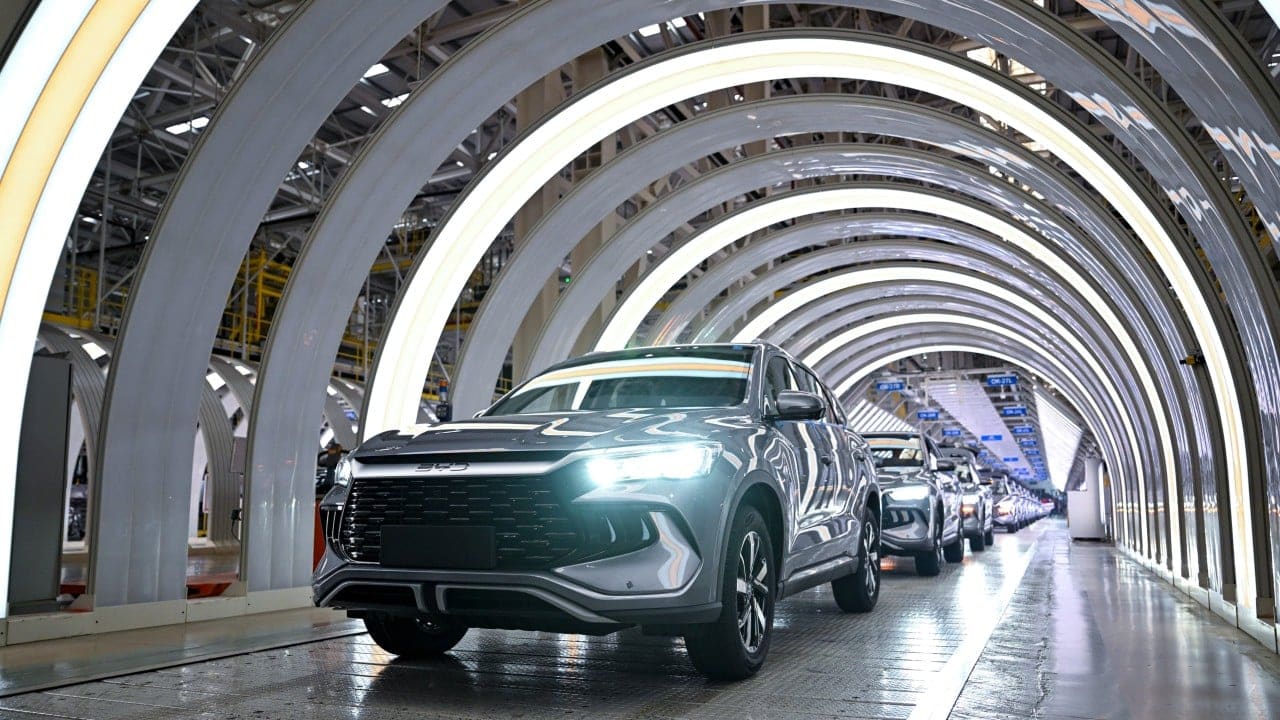
China's electric vehicle sector has spent years competing on battery range and self-driving capabilities. Now manufacturers are opening a new front: turning the cabin into an entertainment destination. The latest models rolling out of Chinese factories come loaded with karaoke systems, headlights that project movies onto walls, and AI assistants that respond to conversational commands.
The shift reflects a broader strategy among Chinese automakers to differentiate products in an increasingly crowded domestic market. With more than 100 EV brands competing for buyers, companies are betting that entertainment features will sway purchase decisions as much as charging speed or autonomous driving scores.
Several new models feature built-in karaoke platforms that sync with streaming services, allowing passengers to turn idle charging time into impromptu sing-alongs. Voice-activated AI assistants handle requests ranging from climate control adjustments to restaurant reservations, while some vehicles integrate headlights capable of displaying video content on nearby surfaces when parked.
The Immersive Cabin Push
The emphasis on cabin experience marks a departure from the specs-driven competition that dominated earlier EV development cycles. Chinese manufacturers invested heavily in battery chemistry and motor efficiency through the 2020s, achieving parity or advantage over international rivals on core powertrain metrics. With that technical foundation established, attention has turned to how occupants spend time inside the vehicle.
Industry observers note that China's urban driving patterns create natural use cases for in-car entertainment. Extended charging sessions at public stations, traffic congestion in major cities, and a cultural affinity for social features in consumer electronics all contribute to demand for cabin-focused innovation. Automakers are designing for scenarios where the vehicle functions as a mobile living room rather than purely a conveyance.
The integration goes beyond bolt-on accessories. New EV architectures dedicate electrical capacity and thermal management specifically to support entertainment loads. High-resolution displays, multi-channel audio systems, and connectivity hardware are engineered into the platform from initial design rather than added as aftermarket options.
Market Dynamics and Differentiation
China's domestic EV market reached saturation in premium battery specifications by the mid-2020s, with most major brands offering 500-plus kilometer ranges and sub-30-minute fast charging. That technical convergence pushed manufacturers to explore alternative differentiation vectors. Entertainment features represent one such avenue, alongside novel interior materials, subscription services, and brand partnerships.
The strategy carries risks. Adding complex electronics increases manufacturing costs and introduces potential reliability issues. Software integration requires ongoing updates and customer support infrastructure. Some industry analysts question whether entertainment capabilities will command sustained price premiums or become expected baseline features that compress margins.
Yet early sales data suggests consumer interest. Models with prominent entertainment features have captured attention in showrooms, particularly among younger buyers and families with children. The karaoke systems in particular have generated social media buzz, with users sharing videos of in-car performances that serve as organic marketing.
Regional Implications
The entertainment-focused approach reflects China's unique position in the global automotive supply chain. Domestic manufacturers enjoy tight integration with consumer electronics suppliers in Shenzhen and surrounding manufacturing clusters, enabling rapid prototyping and deployment of features that might face longer development cycles elsewhere. The same ecosystems that produce smartphones and smart home devices now feed components into vehicle cabins.
This vertical integration advantage complicates competitive dynamics for foreign automakers operating in Asia. European and American brands traditionally emphasized driving dynamics and brand heritage, attributes less relevant to buyers prioritizing cabin technology. Japanese and Korean manufacturers have moved faster to incorporate connectivity features, but face their own integration challenges across global product portfolios.
Southeast Asian markets represent the next testing ground. As Chinese EV exports accelerate into Thailand, Indonesia, and Vietnam, manufacturers are adapting entertainment features for local preferences. Karaoke holds particular appeal in markets with strong singing culture traditions, while AI assistants require language model development for regional dialects.
The Road Ahead
The entertainment arms race among Chinese EV makers shows no signs of slowing. Manufacturers continue announcing cabin features at monthly product launches, each attempting to outdo rivals with novel implementations. The question facing the industry is whether this feature proliferation enhances genuine utility or simply adds complexity.
Regulatory frameworks have yet to catch up with the technology. Standards for driver distraction, data privacy in connected vehicles, and liability for AI assistant errors remain underdeveloped across most Asian jurisdictions. How authorities balance innovation encouragement with safety oversight will shape the trajectory of cabin entertainment development.
For now, Chinese automakers are pushing forward with gadget-rich interiors as a core competitive strategy. Whether other regional manufacturers follow suit or pursue alternative differentiation paths will determine if entertainment-focused EVs remain a Chinese phenomenon or become the global norm.
RELATED STORIES
Xpeng Targets Germany With Munich Debut of Mona L03 SUV
Cheng Wei-Lun · 3 min

Washington Pushes Allies to Choose Sides as AI Competition With Beijing Intensifies
Cheng Wei-Lun · 4 min

Alibaba Cloud Deploys New AI Supernode at Inner Mongolia Data Center
Cheng Wei-Lun · 4 min
Unitree IPO Roadshow Signals Humanoid Robotics Market Still Finding Its Footing
Cheng Wei-Lun · 3 min
Spot something wrong? Email editor@briefasia.com. We log every correction publicly.