Technology · Products
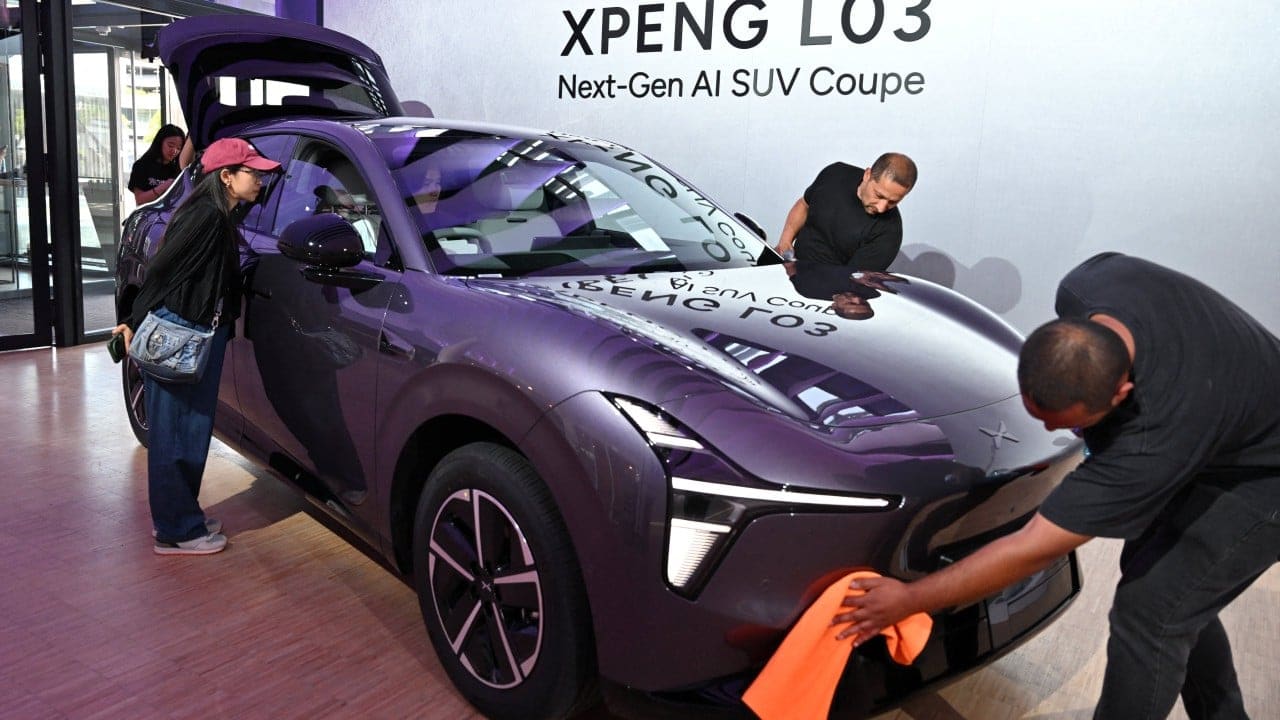
Xpeng Targets Germany With Munich Debut of Mona L03 SUV
The Guangzhou-based EV maker held its biggest European launch yet, signaling a deeper commitment to local production amid rising trade tensions.
KEY TAKEAWAYS
- ·Xpeng launched its Mona L03 compact SUV in Munich, the largest European debut yet by the Chinese EV maker.
- ·Chairman He Xiaopeng pledged to build vehicles for Europe locally, aiming to bypass EU tariffs ranging from 17 to 38 percent.
- ·The move faces steep challenges including capital requirements, regulatory scrutiny, and competition from Volkswagen, Stellantis, and Tesla.
A Munich Statement
Xpeng chose Munich, the nucleus of Germany's automotive industry, to introduce its Mona L03 compact SUV on Thursday. The launch event represented the Guangzhou-based electric vehicle manufacturer's most significant European debut to date, a calculated move to position itself as a permanent fixture in a market increasingly wary of Chinese imports.
Chairman He Xiaopeng framed the occasion as more than a product reveal. "We are here not only to bring our products to Europe, but also to build them for Europe," he told attendees, a statement that carries weight given the European Union's recently imposed tariffs on Chinese-made electric vehicles.
The timing and location are deliberate. Munich sits at the center of Germany's automotive ecosystem, home to BMW's headquarters and a symbolic battleground where legacy automakers and new entrants compete for credibility. By planting its flag there, Xpeng signals it intends to compete on German turf rather than retreat to friendlier markets.
The Mona L03 Proposition
The Mona L03 is a compact SUV designed to appeal to European buyers who prioritize efficiency and technology without the premium price tags of established brands. While Xpeng has not disclosed full European pricing, the model's positioning suggests it will undercut comparable offerings from Volkswagen and Stellantis while matching or exceeding their technology features.
The vehicle joins Xpeng's existing European lineup, which includes the P7 sedan and G9 SUV. Those models have seen modest uptake in markets like Norway, the Netherlands, and Sweden, where EV adoption rates are high and consumers have shown more openness to Chinese brands. Germany, however, remains a tougher sell, with buyers historically loyal to domestic marques.
Xpeng's emphasis on local production could address one of the biggest obstacles facing Chinese automakers in Europe: tariff exposure. The EU's new duties on Chinese EVs range from 17 to 38 percent depending on the manufacturer, making imports significantly less competitive. Building in Europe would sidestep those levies entirely.
The Localization Play
He Xiaopeng's commitment to European production is not unprecedented. Several Chinese automakers, including BYD and Nio, have floated similar plans, though few have moved beyond exploratory stages. Xpeng has not specified where or when it might establish European manufacturing capacity, nor has it announced partnerships with existing facilities.
The challenge is capital intensity. Setting up production in Europe requires navigating complex labor regulations, securing supply chains for batteries and components, and building relationships with local suppliers. For a company that reported narrowing losses but remains unprofitable, the financial commitment is substantial.
Still, the strategic logic is sound. Local production not only avoids tariffs but also signals long-term commitment to European regulators and consumers. It positions Xpeng as a stakeholder in the European automotive ecosystem rather than an outsider dumping subsidized vehicles.
Market Headwinds
Xpeng's European push comes at a precarious moment. European governments are tightening scrutiny of Chinese investments and subsidies, driven by concerns over unfair competition and geopolitical tensions. France has excluded Chinese-made EVs from certain subsidy programs, and Germany's coalition government has debated similar measures.
Meanwhile, European automakers are not standing still. Volkswagen has accelerated its electric transition with new models priced aggressively to defend market share. Stellantis has launched budget EV brands targeting the same segment as Xpeng. Tesla, though American, remains the dominant force in European EV sales and continues to expand its Berlin gigafactory.
For Xpeng, success in Europe hinges on execution. The company must deliver vehicles that meet European quality expectations, build a service network robust enough to support owners, and navigate a regulatory environment that grows more complex by the quarter.
The Longer Game
The Munich launch is a marker of intent, not arrival. Xpeng sold fewer than 10,000 vehicles across Europe in 2025, a fraction of the volumes needed to justify local production. But the company is playing a longer game, betting that early positioning in Europe will pay dividends as the continent's EV market matures.
If Xpeng can establish manufacturing in Europe and scale distribution, it may carve out a niche as the affordable technology-forward alternative to legacy brands. If it cannot, the Munich event will be remembered as an expensive gesture in a market that never opened.
RELATED STORIES
Hong Kong Debuts Robot-Run Convenience Store in Commercial Automation Push
Cheng Wei-Lun · 3 min

China Scrubs 5.6 Million AI-Generated Posts in Platform Cleanup
Cheng Wei-Lun · 3 min
Chinese Automakers Target Hybrid Market After EV Dominance
Cheng Wei-Lun · 3 min
CaoCao Mobility Bets on Autonomous Taxis as Revenue Tops RMB 10 Billion
Cheng Wei-Lun · 3 min
Spot something wrong? Email editor@briefasia.com. We log every correction publicly.