Technology · Dev
Alibaba Cloud Deploys New AI Supernode at Inner Mongolia Data Center
The Lingjun Zhenwu M890 marks the company's shift toward AI-focused infrastructure at its six-year-old Ulanqab facility
KEY TAKEAWAYS
- ·Alibaba Cloud has deployed its Lingjun Zhenwu M890 supernode at the Ulanqab data center in Inner Mongolia, originally built in 2020.
- ·The facility is the first of Alibaba Cloud's Five Super Data Centers to receive the new AI-optimized compute architecture.
- ·The move reflects a broader industry shift toward retrofitting legacy cloud infrastructure to handle training and inference for large language models.
AI Compute Comes to the Grasslands
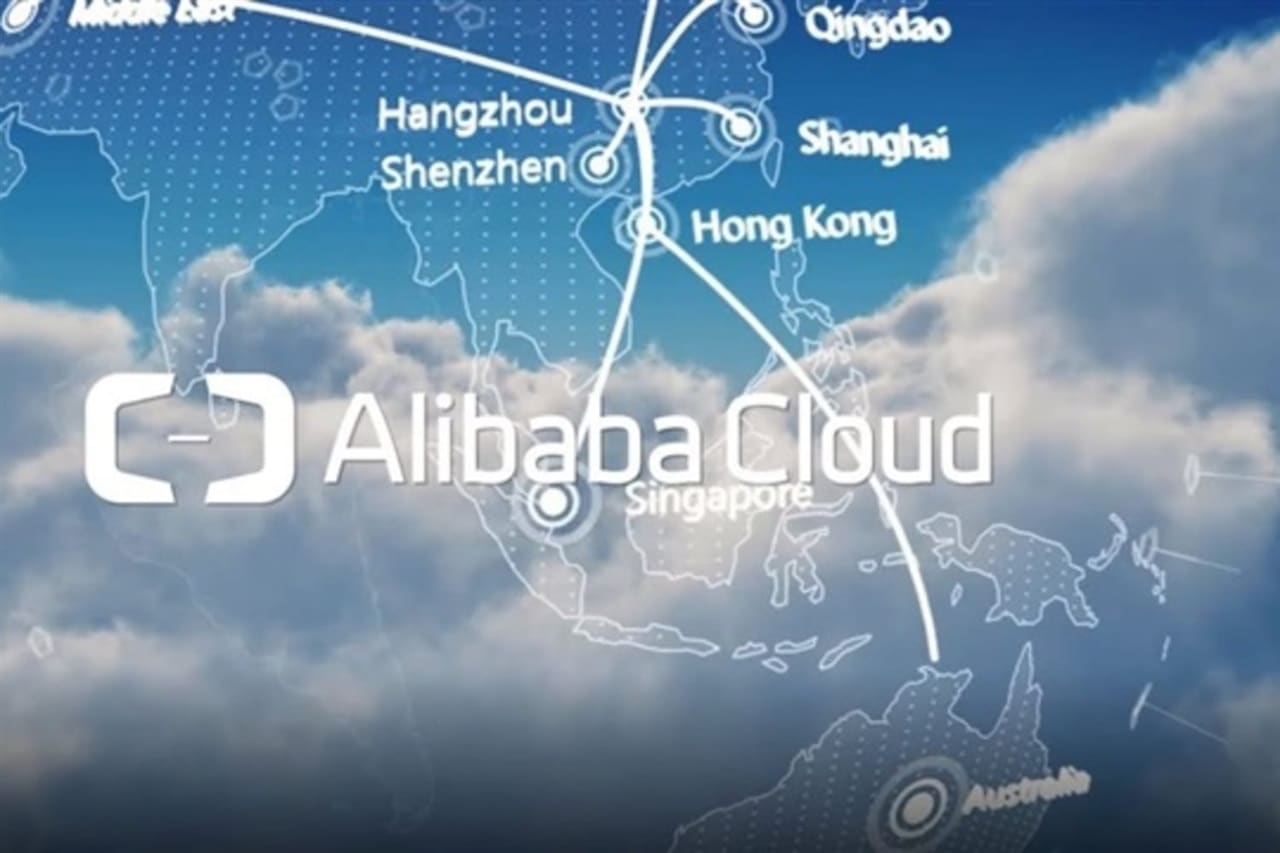
Alibaba Cloud has activated its Lingjun Zhenwu M890 supernode at the Ulanqab data center in Inner Mongolia, according to the company. The facility, originally established in 2020, now serves as the first commercial deployment site for the new AI-optimized compute architecture.
The move underscores a broader strategic pivot within Alibaba Cloud's infrastructure portfolio. The company operates what it calls the "Five Super Data Centers," a network of large-scale facilities spread across mainland China. Ulanqab, located roughly 450 kilometers northwest of Beijing, was among the earliest of these sites to launch. Its selection for the M890 rollout signals that legacy hyperscale infrastructure built for general cloud workloads is being retrofitted to handle training and inference tasks tied to large language models and other AI applications.
Why Ulanqab
Inner Mongolia has emerged as a favored region for Chinese cloud providers seeking to balance power costs, cooling efficiency, and proximity to domestic data traffic hubs. The area benefits from cooler ambient temperatures and access to renewable energy sources, including wind and solar farms that have proliferated across the autonomous region over the past decade.
Alibaba Cloud has not disclosed the exact scale of the M890 deployment in Ulanqab, but the supernode designation typically refers to clusters capable of handling tens of thousands of GPU or specialized accelerator chips working in concert. Such configurations are designed to reduce latency between compute nodes and maximize throughput for distributed training runs that can span weeks or months.
The original Ulanqab facility was built during a period of rapid expansion for Chinese cloud platforms, when demand for e-commerce, streaming, and enterprise SaaS drove infrastructure build-outs. By 2026, that calculus has shifted. Model training, fine-tuning, and real-time inference now dominate the compute roadmap for hyperscalers across Asia, forcing operators to rethink power distribution, cooling architecture, and network fabric within existing shells.
The Five Super Data Centers Strategy
Alibaba Cloud's "Five Super Data Centers" framework refers to a set of strategically located facilities designed to serve different geographic and regulatory zones within China. While the company has not always provided granular details on each site, industry observers note that the network is intended to offer redundancy, disaster recovery, and compliance with data residency requirements that vary by province and sector.
The decision to spotlight Ulanqab for the M890 launch suggests that Alibaba Cloud views the site as more than a cold-storage or backup location. Instead, it is being positioned as a frontline compute hub capable of supporting the most demanding AI workloads. This shift mirrors similar moves by competitors, including Tencent Cloud and Huawei Cloud, both of which have announced upgrades to northern data centers in recent months.
The M890 supernode itself represents Alibaba Cloud's latest iteration of custom-designed infrastructure optimized for AI. The company has been investing in proprietary chip development through its semiconductor subsidiary, and the M890 is expected to leverage both in-house accelerators and third-party GPUs depending on customer requirements and supply chain availability.
Broader Implications for Chinese Cloud Architecture
The Ulanqab deployment arrives at a moment when Chinese cloud providers are navigating a complex set of constraints. Export controls on advanced semiconductors from the United States have limited access to certain high-end GPUs, prompting domestic players to accelerate development of alternative architectures and homegrown chip designs.
At the same time, demand for AI compute continues to surge. Chinese enterprises across finance, manufacturing, logistics, and consumer internet are racing to deploy generative AI features, creating a bottleneck at the infrastructure layer. Hyperscalers that can offer reliable, low-latency AI compute at scale stand to capture a disproportionate share of this market.
Alibaba Cloud's approach with the M890 supernode reflects a bet that retrofitting existing facilities will be faster and more capital-efficient than building greenfield sites from scratch. The company has already invested heavily in power infrastructure, cooling systems, and fiber connectivity at Ulanqab. Adding next-generation compute nodes allows it to extract more value from sunk costs while meeting the new demand profile.
Industry analysts note that the timeline matters. The six-year gap between the original Ulanqab launch and the M890 deployment suggests that Alibaba Cloud is working with a relatively short refresh cycle for its most critical infrastructure. As AI models grow in size and complexity, that cycle is likely to compress further, putting pressure on operators to design facilities with upgrade paths built in from the start.
What Comes Next
Alibaba Cloud has not announced a public timeline for expanding the M890 supernode to its other super data centers, but the Ulanqab deployment is widely viewed as a proof-of-concept that will inform future rollouts. The company is expected to prioritize facilities in regions with strong demand for AI services, including coastal provinces with high concentrations of fintech and e-commerce customers.
For now, Ulanqab serves as a test case for how legacy cloud infrastructure can be adapted to meet the needs of the AI era. The site's transformation from a general-purpose data center to an AI compute hub offers a glimpse of the broader architectural shifts underway across China's hyperscale landscape.
RELATED STORIES

China's SMIC Pushes Through Price Increases as AI Chip Orders Surge
Cheng Wei-Lun · 3 min
Alibaba Cloud Slashes AI Data Center Deployment to 100 Days
Cheng Wei-Lun · 4 min
Lenovo Accelerates Toward $100 Billion Revenue on AI Momentum
Cheng Wei-Lun · 3 min
Alibaba Cloud and Huawei Ascend Deploy Kimi K3 Support on Launch Day
Cheng Wei-Lun · 3 min
Spot something wrong? Email editor@briefasia.com. We log every correction publicly.