Asia · Business
China's GDI Faces Litmus Test in Southeast Asia's Integration Push
As ASEAN shifts focus from growth to resilience, Beijing's development initiative must prove it can strengthen regional systems, not just build infrastructure.
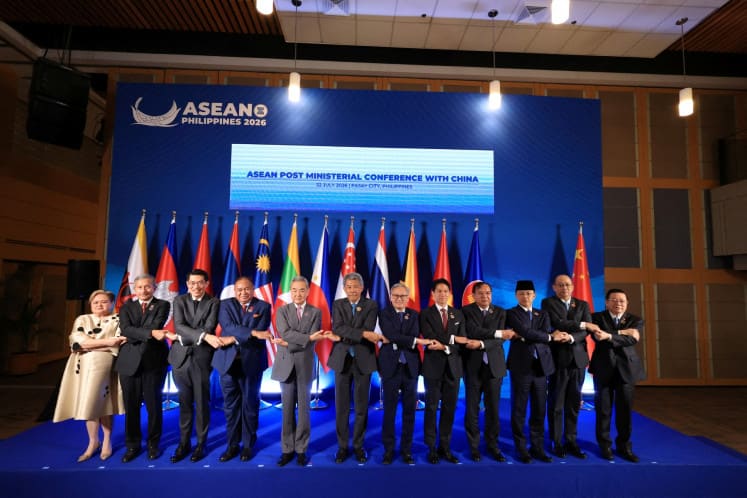
KEY TAKEAWAYS
- ·China's Global Development Initiative aligns with ASEAN priorities but faces scrutiny over whether it can strengthen regional implementation capacity or will remain isolated projects.
- ·Survey data shows weak implementation capacity and development disparities among ASEAN members are the biggest barriers to deeper intra-regional economic cooperation, not external factors.
- ·Southeast Asian countries will judge the GDI on its ability to complement existing ASEAN frameworks, support technical cooperation and produce benefits visible at the community level.
A Different Development Equation
Southeast Asia's development priorities are no longer just about speed and scale. The region has entered a phase where institutional strength, development parity and shared prosperity matter as much as GDP growth. ASEAN member states now face climate disruption, supply chain fragility and persistent gaps in implementation capacity that cannot be solved by isolated infrastructure projects alone.
China's Global Development Initiative sits at the intersection of these challenges. Launched with priorities spanning poverty reduction, food security, public health, climate action and digital economy, the GDI aligns on paper with many of ASEAN's stated needs. But the real question for Southeast Asian capitals is whether Beijing's initiative can complement existing regional frameworks or will create parallel tracks that dilute integration efforts.
Recent survey data underscores the stakes. The State of Southeast Asia 2026 Survey identifies China as the region's most influential economic, political and strategic partner. Yet the same research points to weak implementation capacity and development disparities among ASEAN members as the biggest barriers to deeper intra-regional economic cooperation. The gap between regional ambition and national execution remains wide.
Infrastructure Alone Is Not Enough
Chinese-built transportation projects in Cambodia, Indonesia, Laos and Vietnam have delivered measurable gains. Users report shorter travel times, better access to employment and expanded business opportunities. Development cooperation builds credibility most effectively when people experience direct benefits in their daily lives.
But infrastructure's broader impact depends on what surrounds it. Roads and railways produce limited returns when customs procedures remain inefficient, feeder networks are inadequate or local firms cannot capitalize on new connectivity. Sound fiscal management, environmental standards and social safeguards determine whether projects generate long-term value or short-term headlines.
ASEAN integration requires more than physical links. It needs officials who can translate regional agreements into action, regulators who understand digital trade rules, and agencies capable of enforcing compatible standards across borders. Technical cooperation in customs modernization, cross-border data governance and environmental regulation would address constraints that individual infrastructure projects cannot solve.
From Projects to Systems
The GDI's potential contribution lies in strengthening the systems that underpin regional integration. Physical infrastructure must connect with soft infrastructure: digital documentation, logistics networks, compatible regulatory frameworks and local transportation links. Integrated economic corridors require both the hardware and the institutional capacity to operate effectively.
Supply chain resilience presents another opportunity. China-ASEAN cooperation can support local industry upgrades, skills development and greater participation by small businesses in regional production networks. Future supply chains will demand digital infrastructure, clean energy, electric mobility and climate-resilient production. China's capabilities in artificial intelligence, renewable energy, battery technology and green manufacturing offer pathways for collaboration if structured around shared standards and mutual benefit.
Development cooperation that extends beyond governments to communities will determine whether the GDI earns trust. Technical and vocational education, digital skills training, research partnerships, youth exchanges and community consultation create the human capital and social license that large-scale projects require. Knowledge transfer and local employment opportunities make development visible at the grassroots level.
The Implementation Challenge
ASEAN's integration challenges are internal, not external. The bloc has ambitious agreements on trade, investment and connectivity. What it lacks is consistent capacity to implement those commitments across ten diverse economies. Some member states have strong regulatory institutions and digital infrastructure; others are still building basic administrative systems.
China can bridge this gap by supporting long-term technical cooperation rather than focusing exclusively on capital-intensive projects. Joint problem-solving initiatives, institutional partnerships and capacity-building programs would address the implementation deficit that survey respondents identified as the primary obstacle to deeper regional integration.
The approach requires patience and a willingness to work within ASEAN-led frameworks rather than creating separate mechanisms. Development cooperation builds confidence when it reinforces existing regional architecture instead of competing with it. Southeast Asian countries will judge the GDI on whether it helps ASEAN implement its own plans more effectively.
Beyond Individual Projects
The effectiveness of China's Global Development Initiative in Southeast Asia will not be measured by the number of projects launched or the total capital deployed. It will be judged on whether it helps ASEAN close development gaps, strengthen implementation capacity and ensure that integration benefits reach communities across the region.
Infrastructure matters, but only when connected to the regulatory, digital and institutional systems that allow economic corridors to function. Technical cooperation matters, but only when sustained over time and aligned with local priorities. Financial resources matter, but only when paired with transparency, environmental safeguards and genuine partnership.
ASEAN is not looking for a new development path. It has its own integration roadmap, its own institutional frameworks and its own vision for a resilient, inclusive region. The question is whether China's initiative can support that vision or will remain a parallel track that Southeast Asian nations navigate with caution. The answer will shape not just development outcomes but the broader trajectory of China-ASEAN relations in the years ahead.
RELATED STORIES
Asian Routes Become Conduit for Billions in Tariff Evasion
Cheng Wei-Lun · 3 min

Customs Enforcement Threatens Chinese Ecommerce Air Cargo Boom
Cheng Wei-Lun · 2 min

ComfortDelGro Pivots to Premium Transport as Taxi Profits Slide 40 Percent
Priyanka V. Rao · 3 min
Vietnam's Manufacturing Surge Raises Questions About Industrial Independence
Cheng Wei-Lun · 4 min
Spot something wrong? Email editor@briefasia.com. We log every correction publicly.