Asia · Business
China Unveils Five-Year Plan to Push Retail Sales to $8.9 Trillion by 2030
Beijing targets 60 trillion yuan in retail consumption as it attempts to shift the world's second-largest economy away from export dependency
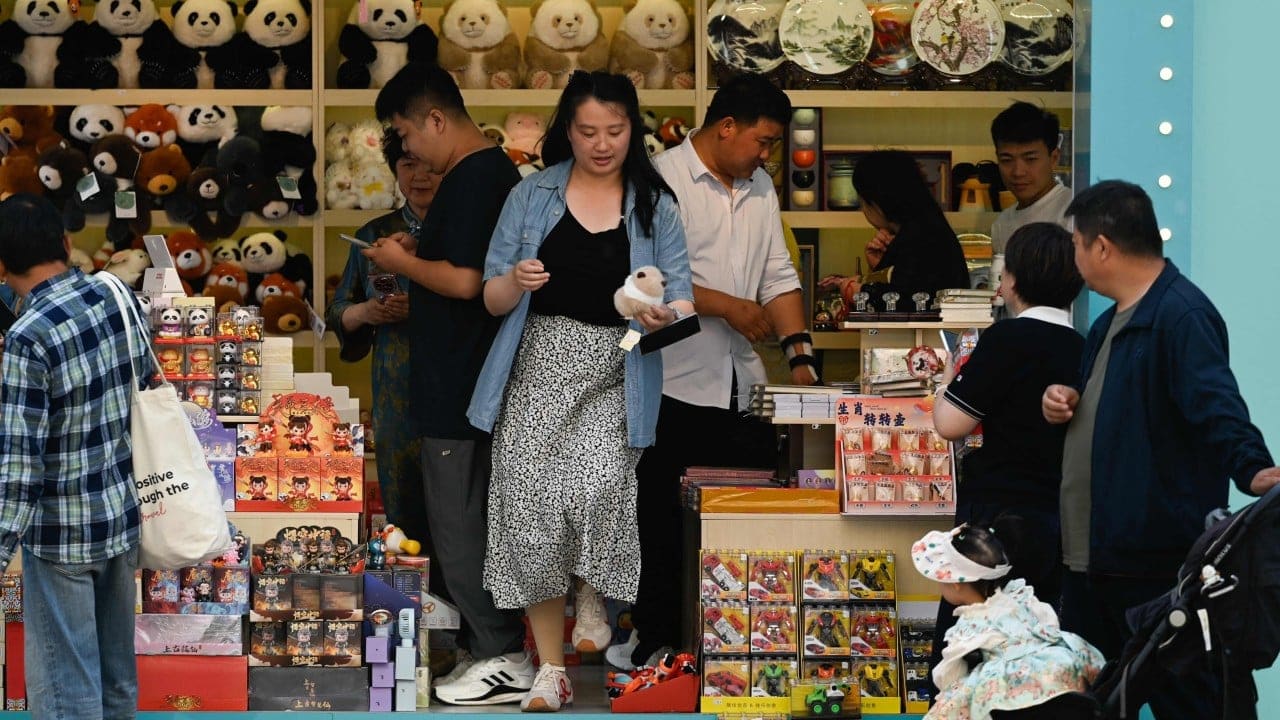
KEY TAKEAWAYS
- ·China has released a standalone five-year plan targeting 60 trillion yuan in retail sales by 2030, a strategic shift toward consumption-driven growth.
- ·The target requires retail sales to grow 6 to 7 percent annually, faster than expected GDP growth, while household consumption remains below 40 percent of GDP.
- ·Success depends on raising incomes, expanding social welfare, and overcoming structural challenges including property market weakness and an aging population.
A Strategic Pivot Toward Domestic Demand
China has introduced a dedicated five-year plan aimed at driving consumption, with retail sales projected to reach 60 trillion yuan by 2030, according to Beijing policymakers. The move represents a strategic effort to reorient the world's second-largest economy away from its historical reliance on exports and toward domestic spending.
The transition has proven difficult. Decades of high savings rates and export-led industrial policy have created structural habits that resist quick reversal. Chinese households have traditionally prioritized saving over spending, a cultural and economic pattern reinforced by concerns over healthcare costs, education expenses, and retirement security in a system where social safety nets remain underdeveloped compared to advanced economies.
The standalone nature of the consumption plan signals a shift in policy priority. Previous growth strategies embedded consumption targets within broader economic blueprints, but the dedicated framework suggests Beijing now views household spending as central to sustaining GDP expansion amid slowing global trade and demographic headwinds.
The Numbers Behind the Target
The 60 trillion yuan target for 2030 implies compound annual growth in retail sales of roughly 6 to 7 percent from current levels, depending on baseline figures. That pace would need to outstrip overall GDP growth projections, which many analysts expect to settle in the 4 to 5 percent range by the end of the decade as China's economy matures.
Achieving the goal will require not only higher incomes but also a willingness among Chinese consumers to spend a larger share of disposable income. Household consumption as a percentage of GDP in China remains below 40 percent, compared to over 60 percent in the United States and around 55 percent in the European Union. Closing that gap involves addressing structural imbalances, including unequal income distribution and limited social insurance coverage.
Policy Levers and Structural Challenges
Beijing has deployed a range of measures to encourage spending, from subsidies for consumer goods to tax incentives for service industries. Local governments have experimented with consumption vouchers, particularly in electronics and appliances, to stimulate near-term demand. The central government has also signaled interest in expanding social welfare programs to reduce precautionary savings.
Yet the challenge extends beyond policy instruments. China's property market downturn has eroded household wealth, as residential real estate accounts for a significant portion of family assets. Falling property values dampen consumer confidence and tighten spending even when incomes remain stable. The lingering effects of pandemic-era lockdowns have further reinforced risk aversion among Chinese households.
Demographic trends add another layer of complexity. An aging population typically saves more and spends less, particularly on discretionary items. With China's working-age population shrinking and the dependency ratio rising, the consumption base is under pressure just as policymakers seek to expand it.
Regional and Global Implications
The success or failure of China's consumption push carries weight beyond its borders. A China that consumes more domestically could ease trade tensions with the United States and Europe, both of which have criticized Beijing's export surpluses as distorting global markets. Stronger Chinese household demand would also create opportunities for exporters across Asia, from luxury goods makers in South Korea and Japan to agricultural producers in Southeast Asia.
Conversely, if the transition stalls, China may double down on export competitiveness, intensifying trade friction and complicating efforts by other emerging economies to move up the value chain. The rebalancing act is as much a geopolitical question as an economic one.
China's attempt to rewire its growth model will unfold over the remainder of this decade. The standalone consumption plan sets a clear benchmark, but translating targets into behavioral change remains the harder task. Whether Chinese households can be coaxed out of their savings habit will shape not only the country's economic trajectory but also the structure of trade and investment flows across Asia.
RELATED STORIES

Manila Eyes Nickel Processing to Escape China's Price Control
Priyanka V. Rao · 4 min

Midea Ships 200,000 Portable Air Conditioners to Europe in Six Months
Cheng Wei-Lun · 3 min

7-Eleven Owner Calls China Its Toughest Market Amid Subsidy Wars
Cheng Wei-Lun · 3 min
Shein Retreats From Vietnam Warehouse Bet as China Manufacturing Proves Irreplaceable
Cheng Wei-Lun · 4 min
Spot something wrong? Email editor@briefasia.com. We log every correction publicly.