Sustainability · Energy
Central Asia Power Grid Faces Stress Test After Regional Blackout
Four-country outage exposes vulnerability as region pursues interconnection plans and eyes data center expansion
KEY TAKEAWAYS
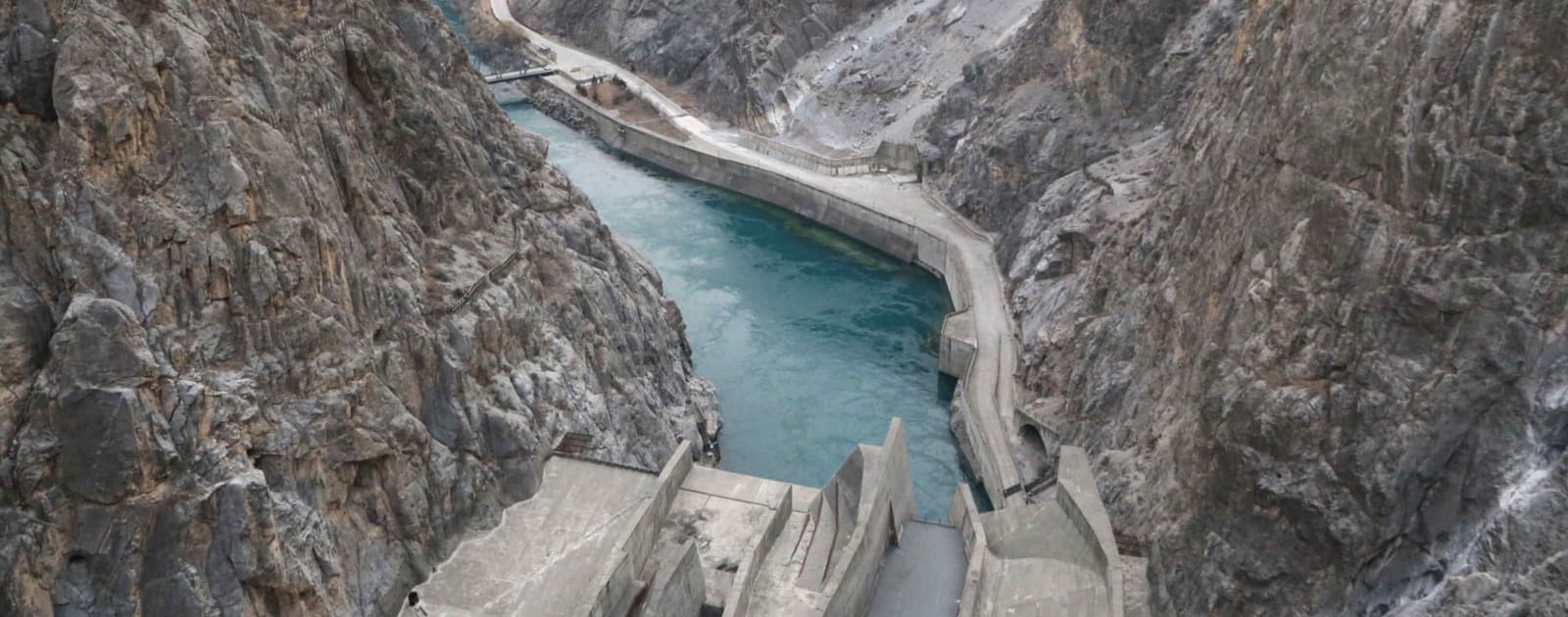
- ·A power outage originating at Kyrgyzstan's Toktogul hydropower plant disrupted electricity supply across four Central Asian countries, testing regional grid interconnection plans.
- ·The blackout highlights infrastructure strain as governments pursue deeper electricity market integration while courting energy-intensive data center investments.
- ·Authorities are investigating how the single plant failure cascaded across borders, with findings likely to shape future grid protection protocols and cross-border coordination mechanisms.
Grid Vulnerability Exposed
Central Asia's electricity infrastructure faced an unexpected test when a power outage swept across four countries, highlighting the fragility of regional energy systems at a moment when governments are pushing for tighter grid integration and courting data center investments.
Kyrgyzstan identified its Toktogul hydropower facility as the point of failure that triggered the blackout. The incident occurred as the region navigates competing pressures: expanding cross-border electricity trade, meeting winter demand spikes, and preparing infrastructure for computing facilities that consume far more power than traditional industrial loads.
The timing complicates an already delicate balancing act. Central Asian governments have been marketing themselves as destinations for data centers, drawn by relatively low electricity costs and proximity to major Asian markets. Yet the recent outage underscores a basic question: can the existing grid handle both current demand volatility and the steady, massive power draw that data centers require?
Winter Deficit Meets New Demand
Winter remains the most challenging season for Central Asia's electricity systems. Hydropower generation drops when rivers freeze and reservoirs run low, while heating demand surges across residential and commercial sectors. The region has historically managed these seasonal swings through a combination of thermal generation and cross-border power flows, but margins are thin.
Data centers add a different load profile. Unlike factories that may idle overnight or residential demand that peaks in the evening, computing facilities draw power around the clock, year-round. A single large data center can consume as much electricity as a mid-sized city. For grids already stretched during winter, absorbing this new baseline demand requires either substantial generation capacity additions or imports from neighbors.
The interconnection strategy that Central Asian countries have pursued over the past several years was designed partly to smooth these imbalances. By linking national grids more tightly, surplus power in one country can flow to another facing shortages. Kazakhstan's wind and solar projects, Tajikistan's hydropower, and Uzbekistan's gas-fired plants were meant to complement each other, creating a regional market that could absorb shocks more gracefully than isolated national systems.
Investigation and Market Implications
Authorities are examining the cascade that turned a single plant malfunction into a multi-country event. Grid interconnection brings resilience benefits but also introduces systemic risk. When one node fails in a tightly coupled network, the disturbance can propagate faster and farther than in isolated systems. Understanding how the Toktogul trip spread across borders will shape future grid protection protocols and interconnection rules.
The blackout also arrives as Central Asia negotiates the terms of a deeper electricity market. Uzbekistan has moved away from gas-heavy generation toward renewables, Kazakhstan is scaling wind and solar capacity, and Kyrgyzstan and Tajikistan are developing additional hydropower. The vision is a market where power flows freely based on price signals and reliability standards. But the recent outage suggests that physical infrastructure and coordination mechanisms may not yet be ready for the full weight of that ambition.
Data Center Calculus
For data center operators and hyperscalers evaluating Central Asia, reliability is paramount. Downtime carries steep financial and reputational costs. The region's pitch has centered on affordable power, favorable geography, and governments eager to attract investment. Yet a multi-country blackout sends a different signal, one that raises due diligence questions about backup systems, grid stability, and the maturity of regulatory oversight.
Some planned data center projects may now face closer scrutiny from investors and lenders. Power purchase agreements will likely include tighter uptime guarantees, and project developers may need to budget for more on-site generation or battery storage than originally modeled. The economics still favor Central Asia compared to many alternatives, but the risk premium has shifted.
Regional energy officials face a narrow window. Proving that the grid can support both seasonal demand swings and new data center loads will require visible progress: upgraded transmission lines, better cross-border coordination protocols, additional generation capacity, and transparent incident reporting. The blackout was a stress test. The response will determine whether Central Asia's energy integration and digital infrastructure ambitions can advance together or must be recalibrated.
RELATED STORIES

SK Group and TerraPower Expand Nuclear Partnership to Power AI Infrastructure
Jun-ho Seo · 3 min

HD Hyundai Electric Builds Korea's First SF6-Free Circuit Breaker for European Grid Market
Cheng Wei-Lun · 3 min
Tuas Power Wins Rights to Build Singapore's Newest Gas Turbine Plant
Priyanka V. Rao · 4 min
Malaysia's TNB Shifts Energy Sovereignty Focus to Resilience Over Self-Sufficiency
Priyanka V. Rao · 3 min
Spot something wrong? Email editor@briefasia.com. We log every correction publicly.