Technology · Products
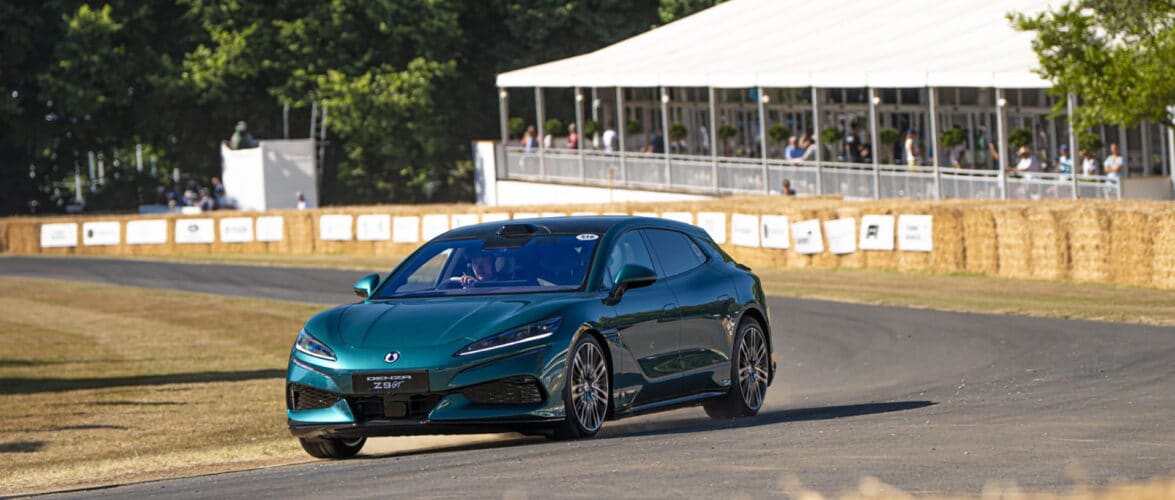
BYD Prices Denza Z9GT at $87,700 in Malaysian Market Entry
The Chinese automaker's first luxury sedan launch in Southeast Asia targets established premium brands with aggressive positioning
KEY TAKEAWAYS
- ·BYD launched the Denza Z9GT in Malaysia at MYR 358,800 (USD 87,700), marking the luxury sedan's first Asia Pacific debut outside China.
- ·The pricing undercuts established European luxury EVs in a Malaysian market that grew 34 percent year-on-year in the luxury segment through mid-2026.
- ·The launch tests BYD's ability to move upmarket, with plans for three dedicated Denza showrooms and potential ASEAN expansion by mid-2027.
A Strategic Beachhead in ASEAN's Premium Tier
BYD unveiled the Denza Z9GT in Malaysia last month, marking the first Asia Pacific appearance of the electric luxury sedan outside China. The automaker set the entry price at MYR 358,800 (USD 87,700), a figure that positions the vehicle below many established European luxury models while offering a feature set typically associated with higher price brackets.
The Malaysian launch represents a deliberate push into Southeast Asia's premium segment, where BYD has historically focused on volume models and fleet sales. Industry observers note the pricing strategy aims to undercut German and Japanese luxury brands that have dominated the region's high-end EV market since 2023.
Specification and Market Context
The Denza Z9GT arrives with a comprehensive suite of driver assistance systems, extended battery range, and interior appointments designed to compete directly with sedans priced 15 to 25 percent higher. Malaysia's luxury EV segment has grown 34 percent year-on-year through the first half of 2026, driven by tax incentives for fully electric imports and expanding charging infrastructure in Kuala Lumpur and Penang.
BYD's decision to debut the Z9GT in Malaysia rather than Singapore or Thailand reflects the country's favorable regulatory environment for CBU (completely built-up) electric vehicles. The Malaysian government extended its EV import duty exemption through 2027, a policy that benefits foreign manufacturers lacking local assembly capacity.
Analysts tracking the Southeast Asian automotive sector suggest the Denza launch tests BYD's ability to move beyond its reputation as a mass-market producer. The company sold 127,000 vehicles across ASEAN in 2025, but fewer than 8 percent carried price tags above USD 50,000.
Competitive Pressure on Incumbents
The Z9GT's arrival coincides with slowing sales growth for established luxury brands in Malaysia. BMW and Mercedes-Benz both reported flat first-half deliveries in the market, while Lexus saw a 12 percent decline as buyers delayed purchases in anticipation of new EV models.
BYD's pricing approach mirrors tactics the company employed in Thailand and Indonesia, where aggressive introductory offers helped capture double-digit market share in under 18 months. However, the luxury segment presents different challenges: brand perception, aftersales infrastructure, and residual value concerns weigh more heavily on purchase decisions than in the mass market.
The Denza sub-brand was established by BYD in 2023 to segregate premium offerings from the parent company's volume lines. In China, Denza models compete with NIO, Li Auto, and Xpeng in the 300,000 to 500,000 yuan bracket, a segment that has seen intense competition and margin pressure over the past year.
Distribution and Aftersales Framework
BYD Malaysia has committed to opening three dedicated Denza showrooms in Kuala Lumpur, Johor Bahru, and Penang by the fourth quarter of 2026, according to company announcements. The automaker will leverage its existing service network of 18 centers nationwide, a footprint built since its Malaysian market entry in 2022.
Warranty terms include an eight-year, 150,000-kilometer battery guarantee and a six-year vehicle warranty, matching or exceeding commitments from European competitors. Parts availability and technician training remain open questions, particularly for complex electronics and battery systems that differ significantly from BYD's mass-market platforms.
The company has not disclosed sales targets for the Z9GT in Malaysia, but industry estimates suggest a modest goal of 300 to 500 units in the first 12 months. For context, the entire luxury EV segment in Malaysia totaled approximately 4,200 deliveries in 2025.
Regional Implications
The Malaysian launch serves as a proving ground for broader ASEAN expansion. BYD executives have indicated interest in bringing Denza to Singapore, Vietnam, and the Philippines by mid-2027, contingent on reception in the initial market. Each country presents distinct regulatory and competitive dynamics that will shape rollout timing and pricing.
Singapore's certificate of entitlement system and high import taxes make it a challenging but symbolically important market. Vietnam's domestic automotive ambitions, led by VinFast, add a layer of protectionist complexity. The Philippines offers scale but faces infrastructure constraints that limit EV adoption outside Metro Manila.
BYD's push into luxury territory reflects a broader industry shift as Chinese automakers seek higher margins amid domestic price wars. The company's operating margin compressed to 5.2 percent in the first quarter of 2026, down from 7.1 percent a year earlier, as competition intensified at home. Overseas expansion, particularly in premium segments, offers a path to margin recovery.
Whether the Denza Z9GT can overcome decades of brand equity accumulated by European rivals in Southeast Asia remains an open question. Early sales velocity in Malaysia will provide the first data point on consumer willingness to trade legacy prestige for feature parity and cost savings. The answer will shape not only BYD's regional strategy but also the broader trajectory of Chinese brands moving upmarket across Asia.
RELATED STORIES

OpenAI Secures Multi-Year Malaysia Data Centre Deal with Firmus
Jun-ho Seo · 3 min
Top Glove Projects Strong FY2026 Results on Tighter Supply and Rising Prices
Anand Sundaram · 3 min
Ringgit Strengthens as Malaysia's Stable Rates Signal Policy Flexibility
Mariel D. Santos · 3 min

Selangor Pulls RM70 Billion in Six Months as Services and Manufacturing Drive Malaysia's Richest State
Anand Sundaram · 4 min
Spot something wrong? Email editor@briefasia.com. We log every correction publicly.