Asia · Trade
Brent Crude Climbs Past $84 as Hormuz Talks Stall on US Compensation Demand
Oil markets reverse prior week's losses after Iran insists on additional conditions beyond shipping lane agreement with Oman, while Houthi strikes target Saudi infrastructure
KEY TAKEAWAYS
- ·Brent crude rose 1.09 percent to $84.46 per barrel after Iran said a shipping lane deal with Oman nears completion but demanded US compensation before reopening the Strait of Hormuz, which carried one-fifth of global oil before closure.
- ·Iran-aligned Houthis struck a Saudi Aramco refinery in Jazan over the weekend, while ADNOC reported 15 vessel attacks in the strait since hostilities began, compounding supply concerns across Gulf exporters.
- ·Traders are waiting for verified tanker movements or formal agreements before removing the risk premium, as Tehran insists Washington must honor a June interim accord before direct negotiations can resume.
Prices Rebound After Week of Decline
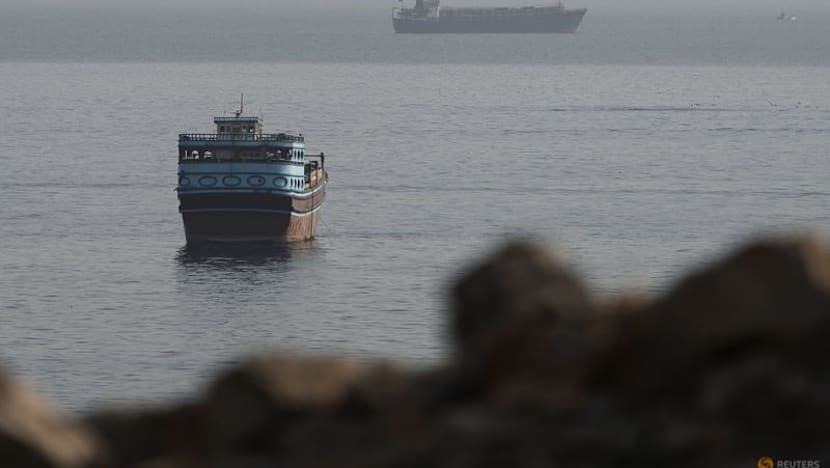
Crude benchmarks moved higher during Monday trading in Asia as uncertainty returned over the timeline for reopening the Strait of Hormuz, the critical waterway that handled roughly 20 percent of global oil flows before regional hostilities closed it to tanker traffic.
Brent futures gained 91 cents to reach $84.46 per barrel in early morning trade, a 1.09 percent increase. The US benchmark, West Texas Intermediate, advanced 61 cents to $78.79, up 0.78 percent. Both contracts had shed more than 7 percent across the previous week when optimism grew that Tehran and Muscat were close to finalizing arrangements that would restore passage through the strait.
The reversal reflects mounting skepticism among traders that a breakthrough is imminent. Iran confirmed Sunday that technical discussions with Oman over new shipping corridors have reached final stages, yet Foreign Minister Abbas Araqchi made clear that Washington must satisfy separate demands before vessels can resume transit. Chief among these is compensation Tehran seeks for damage it attributes to American military operations.
No Direct Dialogue Between Washington and Tehran
Araqchi stated explicitly that Iran and the United States are not conducting negotiations at present. He said Tehran will not initiate such talks while Washington remains in breach of an interim agreement the two sides signed in June. The minister provided no detail on the alleged violations or the scale of compensation Iran considers appropriate.
The June accord, whose contents have not been made public, was understood to establish parameters for de-escalation. Tehran's insistence that the US has failed to honor those terms introduces a new variable into market calculations. Analysts had anticipated that once Oman and Iran settled on revised maritime routes, traffic could resume within days. That timeline now appears optimistic.
Tim Waterer, chief market analyst at KCM Trade, noted that participants have grown wary after repeated cycles of progress and setback. He said traders are waiting for concrete proof such as verified vessel movements or published agreements before they remove the risk premium embedded in current prices. The market had begun pricing out supply disruption last week, only to reverse course when Iran added conditions beyond the Oman shipping lane framework.
Regional Attacks Compound Supply Concerns
Supply anxiety intensified over the weekend when Iran-aligned Houthi forces claimed responsibility for striking a facility operated by Saudi Aramco in Jazan, located in the kingdom's southwest near the Yemeni border. The attack occurred two days after Saudi Arabia formalized a defense pact with Turkey and Pakistan, both Sunni-majority nations responding to what they describe as growing instability tied to the conflict between the United States and Israel on one side and Shi'ite Iran on the other.
The Jazan refinery has capacity to process roughly 400,000 barrels per day. Saudi Aramco has not yet disclosed the extent of damage or whether output was affected. The incident marks the latest in a pattern of cross-border strikes that have complicated the kingdom's efforts to maintain stable production levels.
Separately, Abu Dhabi National Oil Company disclosed Friday that 15 of its vessels have been attacked while attempting to transit the Strait of Hormuz since the onset of hostilities. The United Arab Emirates is a significant exporter, and the attacks underscore the operational risks facing tanker operators even as diplomatic efforts continue. ADNOC did not specify the nature of the attacks or whether cargoes were lost, but the figure illustrates the scale of disruption facing Gulf producers.
Market Dynamics and the Risk Premium
The 7 percent decline in crude prices last week reflected a sharp unwinding of the geopolitical risk premium that had built up since the strait was effectively closed. Traders had interpreted statements from Omani officials as signaling that a technical solution was at hand. The subsequent clarification from Tehran that political conditions must also be met has forced a reassessment.
Energy markets remain sensitive to any development that could restore or further constrain flows from the Gulf. The region supplies significant volumes to Asia, where refining centers in China, India, Japan, and South Korea rely heavily on Middle Eastern crude. Extended closures or unpredictable access to the strait force buyers to source alternative barrels, often at higher cost and with longer shipping times.
The interim agreement signed in June was seen as a potential framework for broader de-escalation, though neither side has detailed its terms. Washington's alleged non-compliance, as characterized by Iran, introduces legal and diplomatic complexities that are unlikely to be resolved quickly. Compensation claims tied to military action typically involve lengthy arbitration processes, suggesting that even if technical shipping arrangements are finalized, political obstacles could delay implementation.
What Comes Next
Market participants are now focused on whether Oman can broker additional understandings that address Iran's compensation demands or whether the shipping lane agreement will remain on hold pending separate US-Iran dialogue. The absence of direct talks between Washington and Tehran limits pathways for rapid resolution.
In the near term, traders will monitor tanker tracking data for any sign that trial convoys are being organized through newly defined routes. They will also watch for further statements from Iranian officials clarifying the scope of their demands and whether there is flexibility on sequencing, such as allowing partial reopening while broader negotiations continue.
The attacks on Saudi and Emirati infrastructure add a layer of supply risk independent of the Hormuz question. If strikes on production or refining facilities escalate, the market will need to account for potential outages even if the strait eventually reopens. For now, the combination of diplomatic uncertainty and physical security threats is keeping upward pressure on prices across both benchmark crude contracts.
RELATED STORIES
Brent Crude Jumps 23 Percent as Iran Blocks Hormuz Exit
Priyanka V. Rao · 3 min
Trump Proposes 20% Charge on Oil Shipments Through Strait of Hormuz
Cheng Wei-Lun · 3 min
Crude Prices Climb as Iran Tightens Grip on Hormuz Transit
Priyanka V. Rao · 3 min
OPEC+ Eyes Final Output Hike as Iraq Presses for Higher Quotas
Rajesh K. Iyer · 3 min
Spot something wrong? Email editor@briefasia.com. We log every correction publicly.