Finance · Markets
Bessent's Notepad Reveals Plans for Up to $10 Billion Yen Purchase
A Reuters photograph captured the Treasury Secretary's to-do list during a Camp David cabinet meeting, signaling potential intervention in Japan's currency market
KEY TAKEAWAYS
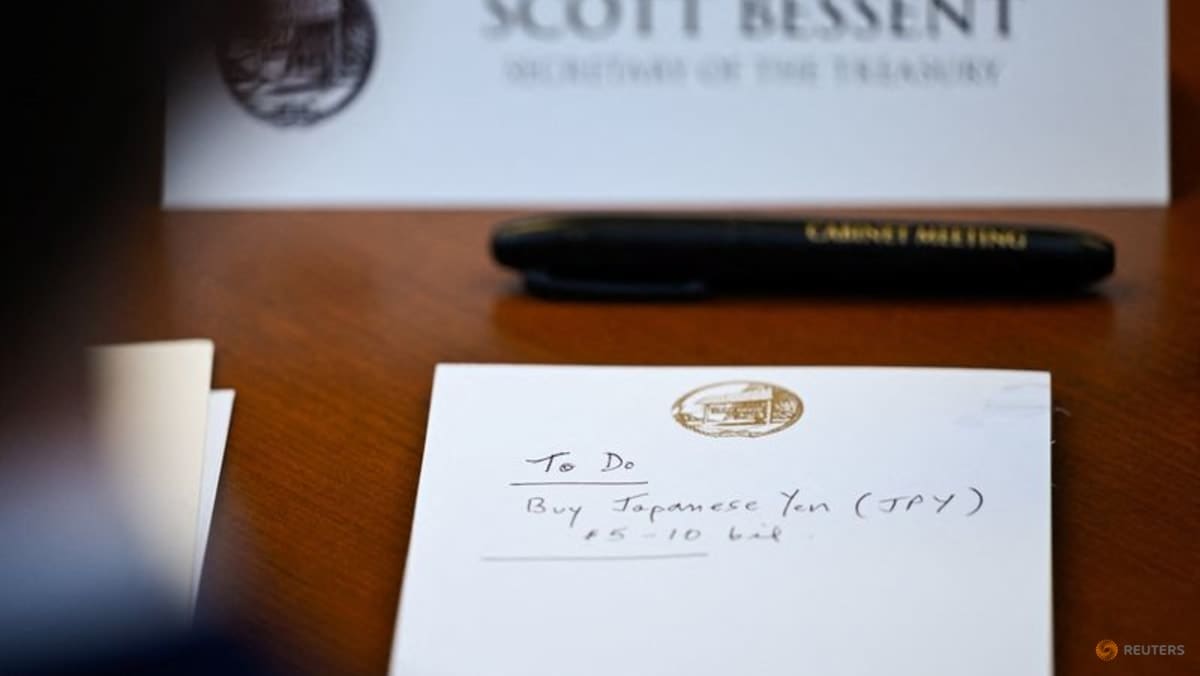
- ·A photograph taken during a cabinet meeting at Camp David captured Treasury Secretary Scott Bessent's notepad showing plans to purchase five to ten billion dollars worth of Japanese yen.
- ·The note appeared two hours after the Treasury notified banks of possible intervention, and the dollar subsequently dropped 0.8 percent against the yen in late afternoon trading.
- ·U.S. intervention would be the first since 2011, when the Treasury joined G7 countries in supporting the yen after Japan's earthquake and tsunami.
The Accidental Disclosure
A handwritten note on a Camp David conference table has provided rare insight into U.S. currency intervention planning. Treasury Secretary Scott Bessent's notepad, photographed during President Donald Trump's cabinet meeting on Friday, displayed a clear to-do item: "Buy Japanese Yen (JPY) $5-10 bil." The photograph, taken at 11:33 a.m. Eastern Time, captured the underscored words on official Camp David stationery positioned directly in front of Bessent's name card.
The disclosure came during an on-the-record portion of the meeting, though the Treasury has not confirmed whether the intervention proceeded. A Treasury spokesperson did not respond to requests for comment about the notepad's contents or any subsequent market action.
Coordinated Currency Defense
The timing of Bessent's note aligns with broader efforts to support the yen. Japanese authorities had already intervened in Tokyo trading hours earlier that morning, triggering a substantial rally in the currency. The note appeared roughly two hours after the Treasury notified several banks of a possible U.S. intervention in the yen market, according to sources familiar with the discussions.
Market data suggests additional dollar-yen movement during U.S. afternoon trading. The dollar dropped from approximately 158.9 yen at 4:14 p.m. Eastern Time to about 157.6 yen just before 5 p.m., marking a decline of roughly 0.8 percent within 45 minutes. While such movements can occur through various channels, the scale and timing have drawn attention given the morning's alerts to financial institutions.
Breaking Precedent
A U.S. intervention to support the yen would mark the first such action since 2011, when the Treasury joined other G7 nations in coordinated market operations following Japan's earthquake and tsunami. That crisis prompted a rare multilateral response as the disaster threatened to trigger destabilizing currency swings that could have hampered reconstruction efforts.
Currency intervention by the U.S. Treasury remains uncommon. The department typically reserves such measures for moments of acute market dysfunction or when exchange rate movements threaten broader economic stability. The dollar's strength against the yen has been building for months, driven by diverging monetary policies between the Federal Reserve and the Bank of Japan.
Asia's Currency Pressures
The yen's weakness reflects structural challenges facing Asian central banks. While the Federal Reserve has maintained relatively high interest rates to control inflation, the Bank of Japan has kept rates near zero to support economic growth. That gap has made dollar-denominated assets more attractive, pulling capital away from yen holdings and pressuring the Japanese currency lower.
For Tokyo, a weak yen presents a double-edged problem. It makes Japanese exports more competitive but raises the cost of energy and food imports, squeezing household budgets. Japanese officials have repeatedly signaled their discomfort with rapid currency moves, emphasizing that volatility rather than absolute levels drives their concern.
The potential for U.S. involvement adds a diplomatic dimension. Washington and Tokyo have maintained close economic coordination, particularly as both governments navigate trade tensions and supply chain restructuring across Asia. A joint approach to currency stability would signal alignment on broader regional economic management.
Market Implications
Traders now face uncertainty about the Treasury's threshold for intervention. The $5 billion to $10 billion range noted on Bessent's pad would represent a modest operation by historical standards, but even limited intervention can shift market psychology. If participants believe the U.S. and Japan will defend a particular exchange rate level, speculative positioning may adjust accordingly.
The episode also highlights operational security challenges in high-level policy discussions. Notepad contents visible during media access have previously revealed negotiating positions and internal deliberations. In this case, the photograph provides markets with information typically kept confidential until after any intervention occurs, potentially complicating execution if the operation had not yet been completed.
Asian currency markets will watch closely for confirmation of U.S. action and any signals about future coordination. If Washington proves willing to support the yen, other regional currencies facing similar pressures may gain indirect relief as dollar strength moderates.
RELATED STORIES

Bank of Japan Eyes Rate Increase as Inflation Risks Mount
Cheng Wei-Lun · 4 min

Japan Wage Growth Hits 29-Year High, Reinforcing Central Bank Rate Path
Aiko Nakamura · 3 min

SoftBank Prices ¥1 Trillion Retail Bond in Largest Offering Since 2020
Aiko Nakamura · 3 min
Bank of Japan Signals Possible Rate Increase This Month
Aiko Nakamura · 3 min
Spot something wrong? Email editor@briefasia.com. We log every correction publicly.