Finance · Deals
Alibaba Targets $10 Billion Equity Raise to Expand AI Infrastructure
The Hangzhou-based tech giant plans a Hong Kong share placement to fund its global AI ambitions as competition intensifies across Asia's cloud and model development landscape.
KEY TAKEAWAYS
- ·Alibaba plans to raise HK$80 billion ($10.2 billion) through a Hong Kong share placement, with all proceeds earmarked for AI infrastructure and full-stack capabilities expansion.
- ·The company reported 269 billion yuan in quarterly revenue, up nine percent year-on-year, driven by AI product demand and its open-source Qwen models gaining developer traction globally.
- ·The capital raise reflects Asia's intensifying AI infrastructure race as Chinese firms navigate semiconductor export controls while competing for regional cloud market share.
A War Chest for AI Dominance
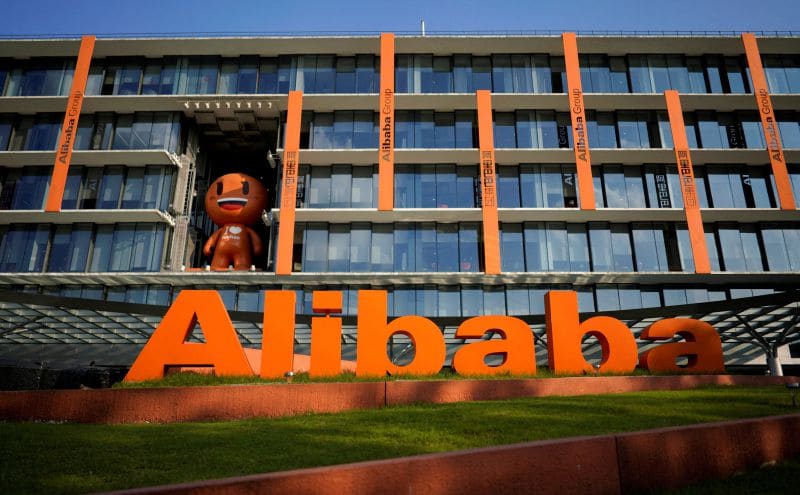
Alibaba unveiled plans for a HK$80 billion ($10.2 billion) share placement in Hong Kong, marking one of Asia's largest equity raises this year and signaling the company's determination to cement its position in the global AI race. The Hangzhou-based conglomerate said all net proceeds will flow directly into expanding its full-stack AI capabilities and infrastructure.
The announcement comes as Chinese tech firms face mounting pressure to demonstrate returns on their AI investments. Alibaba has committed tens of billions of dollars to artificial intelligence development over the past two years, with shareholders increasingly focused on monetization pathways rather than research milestones alone.
According to Alibaba, the equity placement aims to extend the company's global AI leadership. The funds will support infrastructure build-out for its cloud computing division and accelerate development of proprietary models that have already gained traction among international developers.
Revenue Growth Fueled by AI Demand
The timing of the capital raise follows a strong quarterly performance. Alibaba reported revenue of 269 billion yuan ($40 billion) for its most recent quarter, representing a nine percent year-on-year increase. The company attributed much of this growth to surging demand for AI-related products and cloud services, as businesses across sectors rush to integrate machine learning capabilities.
Alibaba's open-source Qwen models have emerged as a key competitive asset. These large language models have attracted a growing developer community worldwide, positioning the company as a viable alternative to U.S.-based offerings in markets where data sovereignty and regulatory concerns shape technology procurement decisions.
The Qwen family of models spans multiple sizes and specializations, from lightweight versions optimized for mobile deployment to larger architectures designed for complex reasoning tasks. This flexibility has proven particularly appealing to enterprises in Southeast Asia, the Middle East, and parts of Latin America seeking AI solutions that can run on local infrastructure.
Asia's AI Infrastructure Arms Race
Alibaba's capital raise reflects broader dynamics reshaping Asia's technology landscape. Cloud providers across the region are racing to build out GPU clusters and specialized AI chips, anticipating sustained enterprise demand for training and inference workloads. The competition extends beyond pure infrastructure to encompass model development, fine-tuning services, and vertical AI applications.
Chinese firms face unique constraints in this race. Export controls on advanced semiconductors have complicated access to cutting-edge chips from Nvidia and other Western suppliers, prompting investments in domestic alternatives and architectural innovations that maximize performance from available hardware.
Despite these headwinds, Alibaba has maintained aggressive expansion plans. The company operates data centers across mainland China and has been extending its cloud footprint into Indonesia, Thailand, and other regional markets where digital transformation is accelerating.
The Hong Kong share placement also carries strategic significance beyond immediate capital needs. By tapping the city's equity markets, Alibaba diversifies its funding sources at a time when U.S. capital markets remain uncertain terrain for Chinese companies. Hong Kong has positioned itself as a primary listing venue for mainland tech firms seeking international investors without full exposure to American regulatory scrutiny.
Monetization Pressure Mounts
For Alibaba and its peers, the critical question remains how to translate AI investments into sustainable revenue streams. While cloud infrastructure generates direct income, the economics of open-source model development are less straightforward. Companies typically monetize these offerings through premium API access, enterprise support contracts, and bundled cloud services rather than licensing fees.
Alibaba's approach appears to center on ecosystem lock-in. By making Qwen models freely available, the company hopes to drive adoption that ultimately channels workloads to its cloud platform, where compute costs generate ongoing revenue. This mirrors strategies employed by Amazon Web Services, Microsoft Azure, and Google Cloud in Western markets.
The $10.2 billion infusion will test whether this model can scale profitably. Investors will watch closely to see if incremental infrastructure spending translates into market share gains and margin expansion, or whether the AI arms race simply compresses returns across the industry.
As Asia's AI landscape takes shape, capital availability will separate contenders from pretenders. Alibaba's ability to raise substantial equity on favorable terms gives it runway to pursue long-term positioning, even as near-term profitability from AI remains elusive for most players.
RELATED STORIES
Alibaba Raises HK$80 Billion to Accelerate AI Infrastructure Build-Out
Cheng Wei-Lun · 3 min
Hang Seng Index Expands to 95 Stocks with Chipmaker Addition
Cheng Wei-Lun · 3 min
China Advances Domestic Chip Production to Replace 85% Foreign Reliance
Cheng Wei-Lun · 3 min

Guotai Haitong Asset Arm Fined $7.8 Million Over Offshore Capital Breaches
Cheng Wei-Lun · 3 min
Spot something wrong? Email editor@briefasia.com. We log every correction publicly.