Technology · Products
Yunnan Germanium Secures Long-Term InP Wafer Contract as AI Drives Optical Component Demand
Chinese rare materials supplier lands major supply agreement for indium phosphide wafers, positioning itself in the fast-growing market for AI data center optical interconnects
KEY TAKEAWAYS
- ·Yunnan Germanium secured a long-term supply contract for indium phosphide wafers, materials essential for high-speed optical transceivers in AI data centers.
- ·The deal positions the Chinese supplier to benefit from structural demand growth, though execution risks in scaling production and maintaining yield remain significant.
- ·Asia's optical interconnect buildout is creating opportunities for domestic compound semiconductor suppliers as hyperscalers expand AI infrastructure across the region.
China's Rare Materials Play
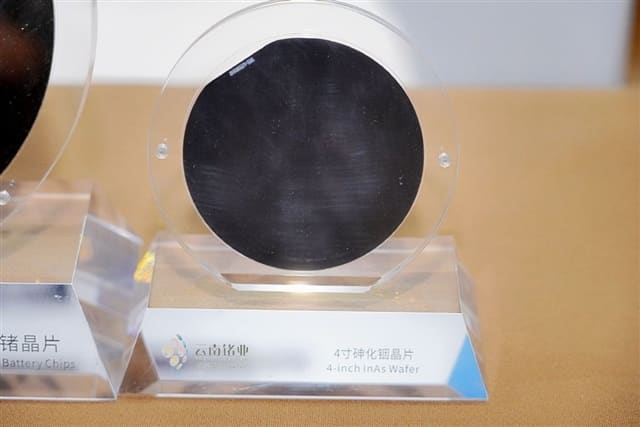
Yunnan Germanium, a Chinese supplier specializing in rare and specialty materials, has locked in a long-term supply agreement for indium phosphide wafers, the company announced. The deal reflects accelerating demand for optical components needed in artificial intelligence data centers, where the speed and efficiency of data transmission between chips and servers has become a critical bottleneck.
InP wafers serve as the substrate for manufacturing high-speed optical transceivers and lasers, components essential for moving vast amounts of data at speeds conventional copper wiring cannot match. As hyperscalers and cloud providers race to deploy AI training clusters and inference infrastructure across the Asia-Pacific region, the market for these specialty wafers is experiencing a structural shift in demand patterns.
The contract positions Yunnan Germanium to capture a larger share of the optical component supply chain at a time when geopolitical tensions and export controls have made sourcing of advanced materials a strategic priority for buyers throughout the region. China has been investing heavily in domestic capacity for compound semiconductors, viewing indium phosphide and gallium nitride technologies as areas where it can reduce dependence on foreign suppliers.
Revenue Upside with Execution Challenges
While the agreement strengthens Yunnan Germanium's revenue visibility, translating the contract into sustainable profit growth will depend on the company's ability to scale production without sacrificing yield or quality. InP wafer manufacturing is technically demanding, requiring precise control of crystal growth and doping processes. Any missteps in ramping capacity could delay shipments or increase costs, eroding the financial benefit of the deal.
The company has not disclosed the contract value, volume commitments, or the identity of the customer. Industry observers note that such long-term agreements typically involve minimum purchase obligations and price adjustment mechanisms tied to raw material costs or production scale. For Yunnan Germanium, securing stable pricing in an environment where indium and phosphorus input costs can fluctuate will be key to maintaining margin stability.
China's Ministry of Industry and Information Technology has identified compound semiconductors as a priority area in its semiconductor self-sufficiency push, offering subsidies and policy support to domestic producers. Yunnan Germanium may benefit from these programs, though the effectiveness of such support in accelerating technology transfer and yield improvement remains uneven across different companies and material types.
Asia's Optical Interconnect Buildout
The broader context is an infrastructure arms race across Asia. Taiwan, South Korea, Japan, and Singapore are all expanding data center capacity to serve AI workloads, with optical interconnect bandwidth emerging as a key differentiator. Hyperscalers including Alibaba, Tencent, ByteDance, and regional cloud providers are deploying 400-gigabit and 800-gigabit optical modules, with 1.6-terabit solutions entering pilot deployments.
InP-based photonics offer advantages in power efficiency and signal integrity at these higher data rates compared to silicon photonics, particularly for longer-reach connections within and between data centers. This technical edge has kept InP wafers in strong demand even as silicon photonics gains traction in shorter-distance applications.
Supply chain dynamics are shifting as well. Historically, InP wafer production has been concentrated in Japan, the United States, and Europe, with companies such as Sumitomo Electric and AXT holding significant market share. Chinese producers have been working to close the technology gap, investing in epitaxial growth equipment and process know-how. Yunnan Germanium's contract win suggests that at least some buyers are willing to qualify Chinese suppliers, whether for cost, supply chain diversification, or strategic reasons.
The deal also highlights the ripple effects of AI infrastructure spending beyond the headline semiconductor names. While much attention focuses on GPU makers and chip designers, the enablers of high-speed data movement, power delivery, and thermal management are seeing their own demand surges. Optical component supply chains, including wafer suppliers, epitaxy houses, device manufacturers, and module assemblers, are all experiencing capacity constraints and lead time extensions.
Market Volatility and Strategic Risks
Yunnan Germanium faces execution risks on multiple fronts. Scaling InP wafer production requires significant capital investment in cleanroom facilities, crystal growth furnaces, and quality control infrastructure. Any delays in capacity expansion could leave the company unable to meet contractual commitments, triggering penalties or customer dissatisfaction.
Market volatility also looms. AI infrastructure spending has been robust through the first half of the decade, but any slowdown in hyperscaler capital expenditure, shifts in optical module technology, or breakthroughs in alternative materials could dampen demand. The cyclical nature of semiconductor markets means that long-term contracts offer revenue visibility but do not eliminate downside risk if end-market conditions deteriorate.
Geopolitical factors add another layer of uncertainty. Export controls on advanced semiconductor equipment, restrictions on technology transfer, and potential trade barriers could complicate Yunnan Germanium's ability to source critical production tools or access international markets. While the current contract appears focused on domestic or regional customers, any ambitions for broader market penetration will require navigating a complex and shifting regulatory landscape.
For investors and industry watchers, the Yunnan Germanium deal is a signal that China's compound semiconductor ecosystem is maturing, at least in certain segments. Whether that maturation translates into competitive advantage, market share gains, and sustainable profitability will depend on execution, continued investment, and the trajectory of AI infrastructure demand across Asia over the next several years.
RELATED STORIES

AliExpress Shifts Focus to Brand Building as AI Hardware Sales Surge Overseas
Cheng Wei-Lun · 2 min

China Scrubs 5.6 Million AI-Generated Posts in Platform Cleanup
Cheng Wei-Lun · 3 min

China Targets 84% Share of AR-HUD Production by 2031
Cheng Wei-Lun · 3 min

Li Auto Expands Battery Roster with CALB as Third Supplier
Siti Nuraini · 2 min
Spot something wrong? Email editor@briefasia.com. We log every correction publicly.