Finance · Markets
Yen Retreats After Japan and South Korea Stage Coordinated Intervention
Tokyo and Seoul moved in tandem to support their currencies ahead of a Bank of Japan meeting, but the dollar rebounded within hours as traders tested official resolve.
KEY TAKEAWAYS
- ·Japan and South Korea conducted coordinated dollar-selling operations Thursday, pushing the yen up 2.4 per cent before gains evaporated within hours.
- ·Speculators hold $11.65 billion in net short yen positions, near a two-year high, testing Tokyo's resolve ahead of the Bank of Japan meeting.
- ·Markets expect the BOJ to hold rates at 1 per cent but watch for signals on timing of the next hike to 1.25 per cent by year-end.
Intervention Gains Evaporate
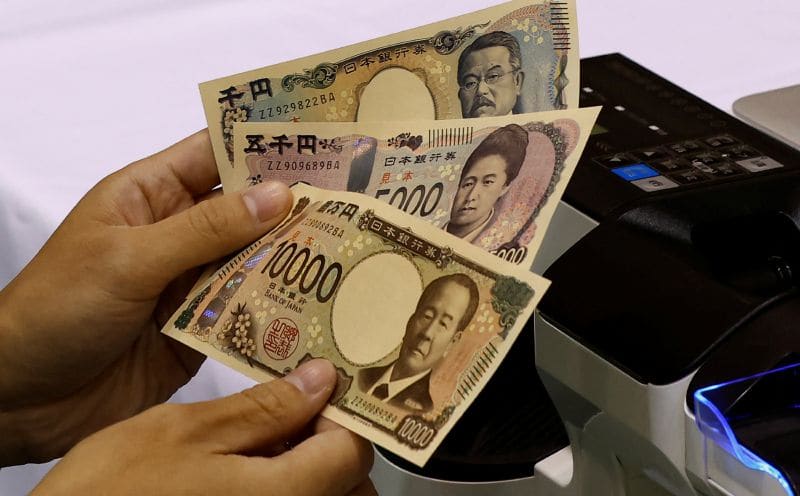
The Japanese yen surrendered much of its overnight rally on Friday, sliding 0.8 per cent to 160.690 against the dollar in early Asian trading after a sharp 2.4 per cent drop the previous session. That single-day move marked the dollar's steepest decline against the yen since January 2023, triggered by coordinated currency intervention from Tokyo and Seoul during New York hours on Thursday.
Japan's top foreign exchange official confirmed Friday morning that Washington had provided support that went beyond words, signaling a level of coordination rarely seen in currency operations. South Korea also sold dollars to prop up the won, which briefly touched a nine-month high before retreating to 1,434.26 per dollar, down 0.7 per cent by Friday morning.
The speed of the reversal underscores the challenge facing Asian central banks as they attempt to defend their currencies against a dollar buoyed by wide interest rate differentials. Speculators hold net short positions on the yen worth $11.65 billion, near the highest level in two years, according to data from a U.S. regulator.
High Stakes Ahead of Policy Decision
Currency traders are now watching the Bank of Japan's policy meeting, scheduled to conclude later Friday. Markets widely expect the central bank to hold its short-term rate at 1 per cent after raising borrowing costs in June, but any signal on the timing of the next move will be scrutinized for clues about official tolerance for yen weakness.
The yen had fallen to a 40-year low in recent weeks, a decline many analysts attribute to the slow pace of BOJ tightening relative to policy settings elsewhere in Asia and the United States. Most economists polled by Reuters expect the central bank to lift rates again to 1.25 per cent by the end of the year, but the question is whether Tokyo will accelerate that timeline in response to renewed currency pressure.
Chris Weston, head of research at Pepperstone, noted that coordinated action is a strong deterrent for leveraged speculators. A 450 to 500 pip move against a short position can force traders to unwind bets quickly, creating temporary support for the yen. Yet the rebound in dollar-yen within hours of the intervention suggests markets remain skeptical that officials can sustain a stronger yen without a shift in underlying policy.
Dollar Softens Broadly
The intervention drama played out against a backdrop of dollar weakness following the U.S. Federal Reserve's decision to leave interest rates unchanged. Traders questioned whether the central bank's new leadership was committed to containing inflation, pushing the dollar index down 0.8 per cent in the previous session. The index was on track for a 1.3 per cent weekly decline and a 1 per cent loss for the month.
The euro edged down 0.08 per cent to $1.1517 in Asian hours after climbing to a six-week high. Sterling held steady at $1.3460, while the Australian and New Zealand dollars dipped roughly 0.1 per cent to $0.7030 and $0.5871, respectively.
Nick Twidale, chief market strategist at ATFX Global in Sydney, said markets would likely continue testing the intervention floor, but he raised the possibility of a surprise rate hike from the BOJ. While he considers such a move unlikely, the scale of spending on currency operations could prompt policymakers to reinforce their intervention with a shift in fundamentals.
What Comes Next
The yen's trajectory will hinge on whether the BOJ signals a willingness to tighten policy faster than previously telegraphed. If officials stick to their gradual approach, speculators may view the intervention as a temporary reprieve rather than a durable turning point. Coordinated action from Seoul adds a regional dimension to the currency battle, but sustained support will require more than one-off operations in thin overnight markets.
For now, the message from Tokyo and Seoul is clear: officials are prepared to act when currencies move too far too fast. Whether that message resonates with traders over the coming weeks depends on the policy signals that follow.
RELATED STORIES
Yen Climbs to Eight-Month High as Rate Hike Expectations Shift Sentiment
Jun-ho Seo · 3 min

Bank of Japan Eyes Rate Increase as Inflation Risks Mount
Cheng Wei-Lun · 4 min

Bank of Japan Prepares Third Rate Increase in Ten Months
Aiko Nakamura · 3 min
Bank of Japan to Continue Rate Increases to Anchor Inflation at 2 Per Cent
Aiko Nakamura · 3 min
Spot something wrong? Email editor@briefasia.com. We log every correction publicly.