Finance · Markets
Yen Jumps 2.6% in Suspected Fresh Intervention by Tokyo
The sharpest intraday rise since April follows months of pressure on the currency, which recently hit four-decade lows despite record spending by Japanese authorities earlier this year.
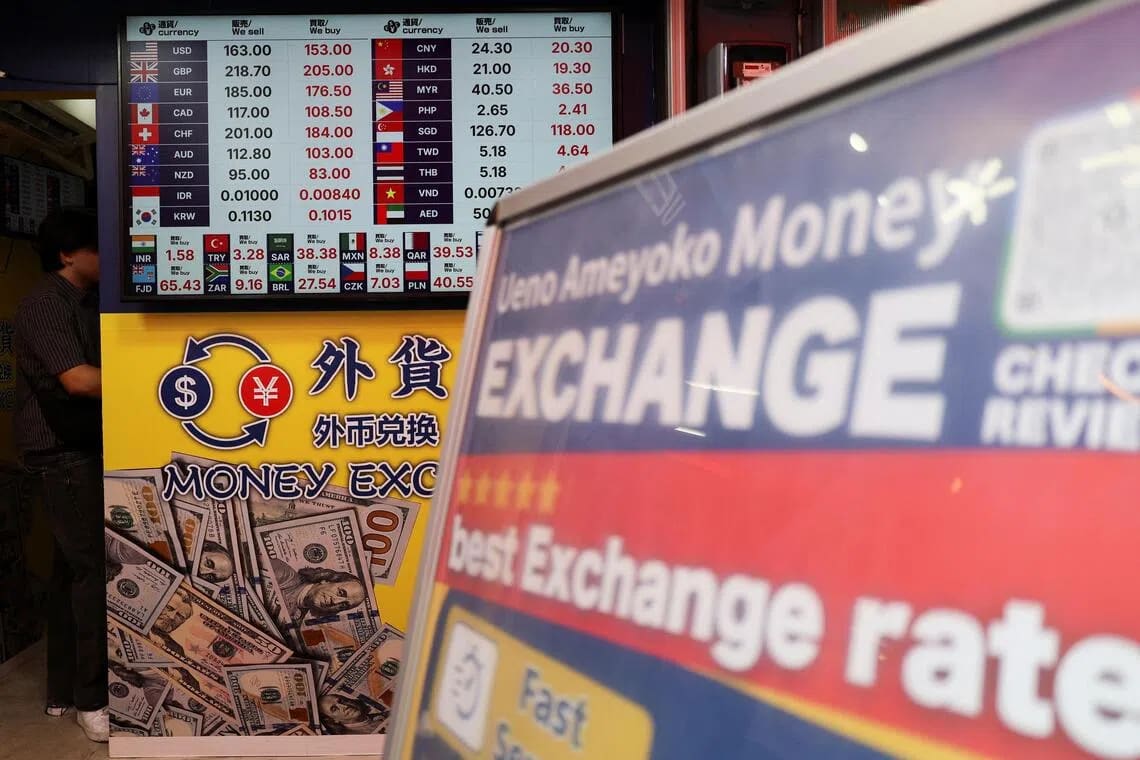
KEY TAKEAWAYS
- ·The yen rose as much as 2.6% against the dollar on July 30, its largest intraday gain since April, triggering speculation of fresh intervention by Japanese officials.
- ·Japanese authorities spent 11.73 trillion yen between April and May to support the currency after it breached 160 per dollar for the first time.
- ·The Bank of Japan will announce its policy decision on July 31 and is expected to hold rates steady following its June increase to the highest level since 1995.
Sharp Move Raises Intervention Questions
The yen climbed sharply against the dollar on July 30, advancing as much as 2.6 per cent to reach 159.21 in New York trading. The move represents the currency's largest intraday gain since April and has prompted market participants to suspect another round of official intervention by Japanese authorities.
The sudden strength came after the yen recently touched its weakest point in four decades, continuing a slide that has persisted despite aggressive action by Tokyo. Between April 28 and May 27, Japanese officials deployed 11.73 trillion yen to support the currency after it first breached the 160-per-dollar threshold.
Noah Buffam, strategist at CIBC Capital Markets, noted the characteristic pattern. "The move in USD/JPY is showing classic signs of intervention," he said. Officials at Japan's Finance Ministry in Tokyo were not immediately available to comment on the market activity.
Persistent Weakness Despite Record Spending
The currency has remained vulnerable even after Tokyo spent the equivalent of $93.8 billion in its spring intervention campaign. Japan likely tapped its reserves of foreign securities, including US Treasury holdings, to fund the operation, according to finance ministry data.
The scale of that earlier effort highlights both the stakes for Japan and the challenge of moving a market that trades $9.5 trillion daily. Previous intervention rounds in 2022 and 2024 brought temporary relief before depreciation resumed. During its 2024 campaign alone, Japanese authorities deployed roughly $100 billion.
The yen faces structural headwinds. The Bank of Japan raised its benchmark rate in June to the highest level since 1995, yet investors remain concerned the central bank is lagging in its response to inflation. Meanwhile, the interest rate differential between Japan and the United States continues to weigh on the currency, with the Federal Reserve maintaining elevated borrowing costs.
Timing and Market Context
The July 30 move followed the Fed's own policy meeting, at which chairman Kevin Warsh and colleagues held rates steady, a decision that pressured the dollar. Win Thin, chief economist at Bank of Nassau 1982, observed that the timing would make tactical sense. "Going with the market instead of against it," he said.
The Bank of Japan is scheduled to release its policy decision on July 31 and is widely expected to keep rates unchanged following the June increase.
Earlier in July, Atsushi Mimura, Japan's top currency official, declined to repeat the finance ministry's standard language about readiness to take "bold action" at any time, a phrase typically understood as signaling intervention preparedness.
Masayuki Nakajima, senior strategist at Mizuho Bank in London, drew parallels to past operations. "The previous FX intervention was conducted on the day following the FOMC meeting," he noted. "It is certainly comparable to the magnitude of USD/JPY moves seen during past FX interventions."
Market Implications
Currency intervention remains a contentious tool, particularly when deployed against persistent market forces. Japan's experience in 2022 marked the first time it had intervened to support the yen since 1998, breaking nearly a quarter-century of restraint.
The current episode underscores the difficulty Tokyo faces in stabilizing the yen while domestic monetary policy remains accommodative relative to other major economies. With the BOJ expected to move cautiously on further rate increases and the Fed maintaining a restrictive stance, the fundamental pressures on the yen are likely to persist.
For now, market participants will watch whether the suspected intervention produces more durable results than previous efforts, or whether it merely provides another brief pause in the currency's long-term weakening trend.
RELATED STORIES
Yen Climbs to Eight-Month High as Rate Hike Expectations Shift Sentiment
Jun-ho Seo · 3 min

Bank of Japan Prepares Third Rate Increase in Ten Months
Aiko Nakamura · 3 min
Malaysian Ringgit Gains Ground as Markets Anticipate Fed and BOJ Rate Moves
Tran Quoc Bao · 2 min

Japan's Central Bank and Markets Diverge on Rate Hike Trajectory
Aiko Nakamura · 3 min
Spot something wrong? Email editor@briefasia.com. We log every correction publicly.