Technology · Products
Xpeng Unveils Robot and Flying Car Vision at Munich Brand Event
Chinese EV maker stages technology showcase in Europe as it challenges Tesla's dominance with autonomous vehicles and ambitious hardware lineup
KEY TAKEAWAYS
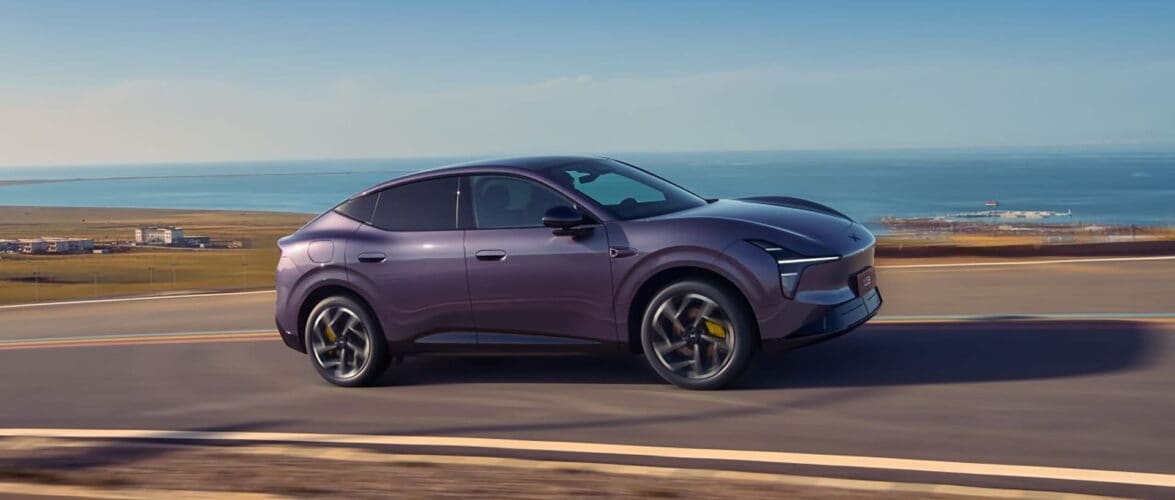
- ·Xpeng held a global brand day in Munich presenting autonomous electric vehicles, flying car prototypes, and humanoid robots to European audiences.
- ·The Chinese automaker delivered approximately 141,600 vehicles in 2025 and has not achieved sustained profitability, making its European push a high-stakes expansion.
- ·European tariffs on Chinese EVs and stricter autonomous vehicle regulations will determine whether Xpeng can translate its technology showcase into commercial traction against Tesla.
Technology Theater in Bavaria
Xpeng staged its global brand day in Munich with enough technological ambition that journalists attending the event mistook human breakdancers for humanoid robots. The confusion speaks to how effectively the Guangzhou-based automaker has cultivated an image as a hardware innovator, not merely another electric vehicle manufacturer seeking European market share.
The Chinese company used the Munich platform to present a product vision extending well beyond conventional automobiles. Xpeng showcased fully autonomous electric vehicles alongside prototypes for flying cars and humanoid robots, signaling an intention to compete across multiple emerging technology categories where Tesla has staked territory.
Direct Challenge to Palo Alto
The strategic positioning is deliberate. Xpeng aims to occupy the same mental space in European consumer consciousness that Tesla has held for the past decade: the technology company that happens to make cars, rather than a traditional automaker adopting electrification. That narrative has proven valuable in commanding premium pricing and investor attention, particularly among younger, tech-forward buyers in urban centers across Germany, France, and the Nordic region.
Xpeng's European timing is calculated. Tesla faces intensifying scrutiny in the region over build quality, service network gaps, and Elon Musk's increasingly polarizing public profile. Chinese automakers including BYD, NIO, and Xpeng have identified a window to establish footholds before legacy European manufacturers fully scale their EV production and before potential trade barriers harden further.
The Munich event format mirrors Tesla's product unveilings in theatricality and scope, prioritizing future-facing hardware over incremental improvements to existing models. For a company still building brand recognition outside China, the approach carries risk. European buyers have historically rewarded engineering substance and reliability over conceptual ambition, a preference that has challenged previous attempts by Asian automakers to enter premium segments.
Hardware Portfolio Beyond Wheels
Xpeng's diversification into flying vehicles and robotics reflects broader strategic trends among Chinese technology conglomerates. The company has invested in eVTOL development through its affiliate HT Aero, which has conducted test flights of passenger-carrying aircraft in Guangdong province. Commercial viability remains years away, but the research signals capital reserves and technical capability that extend beyond automotive assembly.
The humanoid robot initiative places Xpeng in direct competition with Tesla's Optimus program, though neither company has demonstrated robots performing economically useful work at scale. For now, these projects function primarily as brand-building exercises and talent recruitment tools, attracting engineers interested in working across robotics, AI, and autonomous systems rather than traditional automotive development.
European regulators will shape how quickly, if at all, these adjacent technologies reach consumers. The EU maintains stricter certification requirements for autonomous vehicles than China, and urban air mobility faces dense airspace coordination challenges in European cities that differ significantly from test environments in Guangzhou or Shenzhen.
Market Reality Check
Xpeng delivered approximately 141,600 vehicles in 2025, a fraction of Tesla's global volume and a small share of China's domestic EV market. The company reported narrowing losses but has not yet achieved sustained profitability, making its European expansion a high-stakes bet on premium positioning and technology differentiation.
European tariffs on Chinese EVs, currently under review and subject to ongoing trade negotiations, could reshape the economics of Xpeng's market entry. The company has explored local assembly partnerships to mitigate tariff exposure, though no manufacturing agreements have been finalized. Without local production, Xpeng will compete on imported vehicles carrying cost structures that challenge its ability to undercut European rivals on price while maintaining premium brand perception.
The Munich brand event prioritized aspiration over immediate commercial details - no pricing, delivery timelines, or service network expansions were announced. For a company still establishing distribution channels and brand awareness across the continent, the gap between demonstration and deployment will determine whether European consumers view Xpeng as a credible Tesla alternative or another aspirational Chinese brand struggling to translate domestic success into Western market traction.
The breakdancer confusion may have been unintentional, but it captured the essence of Xpeng's European strategy: convince buyers that the future of mobility looks different, and that a Chinese company can deliver it as convincingly as Silicon Valley.
RELATED STORIES
China's Auto Chip Race Shifts to Volume as Horizon Robotics Crosses 15 Million Units
Jun-ho Seo · 3 min

LG Pivots to AI-Defined Vehicle Platform as Korea Chases China's Self-Driving Lead
Jun-ho Seo · 3 min

Li Auto Expands Battery Roster with CALB as Third Supplier
Siti Nuraini · 2 min
BYD Sets Sights on 2 Million Overseas Sales in 2026 After Brazil, Europe Surge
Cheng Wei-Lun · 3 min
Spot something wrong? Email editor@briefasia.com. We log every correction publicly.