Perspectives · Analysis
Why Governments Are Becoming Shareholders Again
After decades of privatization, states across Asia and beyond are rediscovering ownership as a strategic tool. The question now is whether they can govern what they own.
KEY TAKEAWAYS
- ·Governments across Asia and the US are rediscovering ownership as a strategic tool, with Washington taking equity stakes in chipmakers and Indonesia launching Danantara to consolidate over 1,000 state-owned enterprises.
- ·The shift marks a reversal of three decades of privatization, driven by geopolitical concerns over semiconductors, critical infrastructure, and supply chains deemed too important for market allocation alone.
- ·Successful state ownership requires institutional separation between political leadership and investment decisions, as demonstrated by Singapore's Temasek and Norway's sovereign wealth fund.
- ·The challenge is whether governments can govern the corporations they own without undermining commercial discipline, managerial autonomy, and competitive markets.
The Return of Strategic Ownership
For more than thirty years, the prevailing wisdom held that governments should retreat from corporate ownership. Privatization swept across continents. State-owned enterprises were sold off or restructured to mimic private firms. Shareholder primacy became orthodoxy. That era is ending.
Across Asia, the United States, and Europe, governments are rediscovering ownership not as an ideological commitment but as a strategic instrument. Washington now holds equity stakes in semiconductor firms and imposes revenue-sharing conditions on chip exports. Beijing continues to refine its model of corporatized state enterprises. Indonesia recently launched Danantara, a new holding structure consolidating over 1,000 state-owned entities. Singapore's Temasek has operated for decades as a professionally managed state investor, demonstrating that public ownership and commercial discipline need not be contradictory.
The shift is not about ideology. It is about control, security, and influence in industries deemed too critical to leave entirely to market forces. The question facing policymakers is no longer whether states should own, but how they should govern what they own.
The Consensus That Collapsed
The post-Cold War period produced a powerful intellectual consensus. Governments were encouraged to liberalize capital markets, strengthen investor protections, and withdraw from direct ownership. The shareholder-oriented model, with its emphasis on private capital and dispersed ownership, was presented as the natural endpoint of corporate governance evolution.
That framework dominated policy circles and academic literature alike. It shaped reform agendas across emerging markets, where state-owned enterprises were seen as inefficient relics requiring privatization or, at minimum, radical restructuring. The assumption was that private ownership would always outperform public ownership because markets discipline management better than bureaucracies.
China represented the most visible challenge to that consensus. Rather than privatizing strategic assets, Beijing corporatized them. It introduced market incentives, separated day-to-day management from ownership, and established SASAC in 2003 to act as a centralized shareholder. The result was a hybrid model that retained ultimate state control while adopting corporate structures and performance metrics.
Critics pointed to inefficiencies, political interference, and distorted competition. Those concerns remain legitimate. But the model also demonstrated that state ownership could coexist with commercial performance in certain contexts, particularly when governments invested in governance institutions designed to insulate operating decisions from short-term political pressures.
Ownership as National Security
What is striking today is not that China maintains state-owned enterprises. It is that governments with very different political systems are moving in a similar direction.
The United States remains organized around private enterprise, but Washington is increasingly willing to use ownership and control as policy tools. The CHIPS and Science Act channels public capital into semiconductor manufacturing, but it goes beyond subsidies. The federal government now holds a 10 percent equity stake in Intel. It imposes a 15 percent revenue-sharing condition on certain chip exports by NVIDIA and AMD. These are not nationalizations, but they represent a fundamental shift in how the US government views its role in strategic industries.
This is not convergence toward the Chinese model. The two systems remain profoundly different in their legal traditions, political structures, and economic institutions. But both illustrate a broader transformation in which governments treat corporate ownership and control as matters of national interest, not merely economic efficiency.
The logic is geopolitical. Semiconductors, artificial intelligence, rare earth minerals, battery supply chains, and critical infrastructure are too important to leave entirely to market allocation. Governments want visibility, influence, and the ability to shape strategic decisions in real time. Ownership provides that leverage in ways that regulation alone cannot.
Asia's Divergent Experiments
Across Asia, governments are experimenting with different models of strategic ownership, each shaped by local institutions and political contexts.
Singapore's Temasek Holdings represents one of the most successful examples of professionally managed state ownership. Temasek operates with clear separation between political leadership and investment decisions. It has a commercial mandate, professional boards, and accountability mechanisms that insulate it from day-to-day political interference. The result is a portfolio that spans sectors and geographies, managed with discipline comparable to private institutional investors.
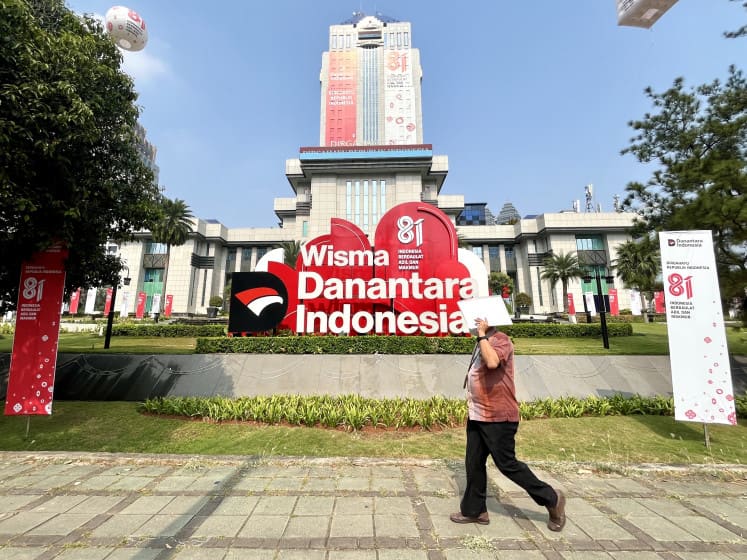
Indonesia's Danantara is a newer experiment. Launched recently, it aims to consolidate more than 1,000 state-owned enterprises under a single holding structure. The stated objective is to improve governance, professionalize management, and unlock value from assets that have long been fragmented across ministries and agencies. The challenge will be whether Danantara can achieve the institutional separation that makes Temasek effective, or whether it becomes another layer of bureaucracy subject to political capture.
China's model continues to evolve. SASAC oversees a portfolio of strategically important enterprises in energy, telecommunications, finance, and heavy industry. These firms are expected to meet commercial performance targets while advancing national objectives. The tension between those two mandates is real, and it creates governance challenges that Beijing has sought to manage through performance contracts, board reforms, and periodic restructuring. The system is neither purely market-driven nor centrally planned. It is a hybrid that defies easy categorization.
The Governance Challenge
State ownership creates a distinctive governance problem. Governments simultaneously act as shareholder and regulator. They set rules, enforce compliance, and allocate capital. That dual role creates conflicts of interest that private shareholders do not face.
The risk is that political objectives overwhelm commercial judgment. Governments may use state-owned enterprises to achieve employment targets, regional development goals, or short-term political wins at the expense of long-term value creation. Without institutional safeguards, state ownership can lead to inefficiency, corruption, and competitive distortions.
International standards, including the OECD Guidelines on Corporate Governance of State-Owned Enterprises, emphasize the importance of separating ownership from regulation. Effective state ownership requires clear mandates, professional boards, managerial autonomy, transparent performance metrics, and accountability mechanisms that prevent political interference in operating decisions.
Institutional separation is the key. Governments that succeed as shareholders are those that create holding structures or investment agencies with professional management, independent boards, and insulation from day-to-day political pressures. Temasek demonstrates that model. So do Norway's sovereign wealth fund and certain public pension funds in Canada.
The challenge is whether governments can replicate that institutional discipline when strategic industries are involved. Semiconductors, energy, and critical minerals are not passive investments. They are sectors where governments have strong policy preferences. Maintaining commercial discipline while pursuing strategic objectives requires governance structures that can balance those competing pressures.
The Future of Corporate Governance
The 20th century's corporate governance debate centered on how corporations should be governed. The dominant answer was shareholder primacy, with dispersed ownership, independent boards, and market discipline. That model assumed private ownership.
The 21st century is asking a different question: How should governments govern the corporations they own? That question is becoming universal. It applies in Washington, Beijing, Jakarta, Singapore, and beyond.
The answer will not be uniform. Different political systems, legal traditions, and economic contexts will produce different models. But certain principles are likely to apply across systems. State ownership requires institutional separation between political leadership and investment decisions. It requires professional management, transparent performance metrics, and accountability mechanisms. It requires clear mandates that distinguish commercial objectives from policy goals.
The future of capitalism will not be defined by a choice between market capitalism and state capitalism. Those labels obscure more than they reveal. Instead, the defining question will be whether governments can exercise ownership through institutions that preserve commercial discipline, political accountability, and competitive markets.
States are returning as strategic shareholders. The challenge is building governance institutions capable of managing that role without undermining the market dynamics that drive innovation, efficiency, and growth. How governments answer that challenge will shape the structure of capitalism for decades to come.
RELATED STORIES

Family vs. Meritocracy: What Toyota's Leadership Model Says About Asian Corporate Longevity
Jun-ho Seo · 5 min
South Korea's Economic Weight Class Shift Demands Regional Recalibration
Cheng Wei-Lun · 5 min

Vietnam Redraws State Ownership Lines in SOE Overhaul
Tran Quoc Bao · 2 min
Foreign Investors Now Own Over One-Third of Japanese Equities
Cheng Wei-Lun · 3 min
Spot something wrong? Email editor@briefasia.com. We log every correction publicly.