Perspectives · Analysis
Why Central Bank Credibility Matters More Than Any Governor
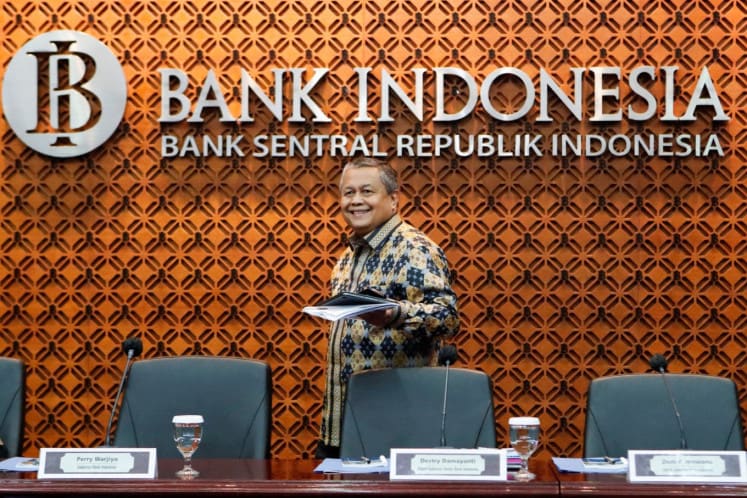
Perry Warjiyo's abrupt departure from Bank Indonesia triggered market tremors not because of one man, but because investors suddenly questioned decades of institutional trust.
KEY TAKEAWAYS
- ·Perry Warjiyo resigned as Bank Indonesia governor two years early, causing the rupiah to weaken to 18,000 per US dollar and stock market declines.
- ·Markets repriced Indonesia not due to one leader's exit but because of uncertainty around the central bank's institutional independence and succession clarity.
- ·Central bank credibility functions as productive capital that lowers borrowing costs, anchors inflation expectations, and stabilizes currency flows.
- ·Indonesia must clarify succession protocols and reinforce statutory independence to prevent long-term erosion of investor confidence and higher debt servicing costs.
The Rupiah's Verdict
When Perry Warjiyo stepped down as governor of Bank Indonesia in late July 2026, two years before his term ended, the rupiah slid to around 18,000 per US dollar. The Jakarta Stock Exchange dipped. Traders recalibrated. None of this should have happened if you believe in the textbook logic of central banking: the institution's legal mandate stayed intact, its policy toolkit remained unchanged, its organizational chart looked identical.
Yet investors voted with their capital. The question is not whether Perry left for personal reasons or political pressure. The question is why markets cared at all.
The answer lies in a concept economists often discuss but rarely measure with precision: institutional reputation. Markets did not reprice Indonesia because one executive departed. They repriced because they saw a crack in the foundation of credibility that Bank Indonesia had spent decades building. And in emerging Asia, where capital flows can reverse in hours, credibility is not a soft asset. It is infrastructure.
Reputation as Productive Capital
Central bank credibility functions much like a balance sheet item, except it does not appear on any ledger. It reduces the cost of capital. It anchors inflation expectations. It allows a country to borrow in its own currency at lower rates. When a central bank says it will defend price stability, credibility determines whether bond markets believe it or demand a risk premium.
Bank Indonesia earned that credibility the hard way. After the 1997 Asian financial crisis hollowed out the rupiah and torched Indonesia's foreign reserves, the institution rebuilt itself through painful reforms: adopting inflation targeting in 2005, codifying operational independence, and weathering political storms without compromising its policy stance. By the mid-2010s, BI had become a regional reference point, a central bank that could stabilize the rupiah during global selloffs and manage monetary tightening without triggering a credit crunch.
That credibility is productive. It means Indonesia can run a current account deficit without sparking capital flight. It means foreign investors hold rupiah-denominated bonds despite the currency's historical volatility. It means domestic firms can plan multi-year investments without hedging every exposure to the dollar.
When Perry resigned abruptly, investors did not lose confidence in the institution's legal structure. They lost confidence in the predictability of its leadership. And predictability is the currency of credibility.
What Markets Price When Leaders Leave
Leadership transitions happen. Governors retire, move to multilateral institutions, or accept cabinet posts. Markets typically absorb these changes if the process is orderly and the succession plan is clear. What spooked investors in this case was the opacity: no advance signal, no groomed successor, no narrative that framed the departure as part of institutional continuity.
The speculation that followed - political interference, policy disagreements, a broader cabinet reshuffle - mattered less for its accuracy than for what it revealed: the market no longer felt certain about the rules governing BI's autonomy. If a sitting governor can exit mid-term without explanation, what prevents the next governor from facing the same pressures? And if those pressures come from the executive branch, does BI still control its own policy rate?
These are not hypothetical concerns in Southeast Asia. Central bank independence has eroded in Turkey, where President Erdoğan cycled through governors who refused to cut rates during inflation surges. It has frayed in the Philippines during periods of fiscal dominance. Indonesia's own history includes episodes where monetary policy bent to political expediency, most disastrously in the run-up to 1997.
Investors price tail risk. The rupiah's slide after Perry's resignation reflected a modest uptick in the probability that Indonesia could drift back toward that pattern. Not a collapse, but a recalibration of the odds.
The Institutional Resilience Test
Here is the uncomfortable truth: countries do not prosper over the long run because they produce exceptional leaders. They prosper because they build institutions that remain trusted after those leaders leave. Singapore's Monetary Authority, the Reserve Bank of India, and the Bank of Korea all survived leadership changes without market panics because their institutional frameworks - transparent mandates, clear succession protocols, statutory independence - convinced investors that the institution was larger than any individual.
Bank Indonesia now faces a test of that resilience. Can it demonstrate that its inflation-targeting framework, its foreign exchange intervention protocols, and its communication strategy will continue without disruption? Can it signal that Perry's successor, whoever that is, will operate under the same constraints and objectives?
If the answer is yes, the rupiah will stabilize and the episode will be remembered as noise. If the answer is no, if the next governor appears to take cues from the presidential palace rather than the data, then the repricing will accelerate. Investors will demand higher yields on Indonesian bonds. The cost of servicing public debt will rise. Firms will delay investment. The real economy will pay the price for lost credibility.
What Indonesia Should Do Next
The immediate priority is transparency. The government and Bank Indonesia's board of governors should clarify the succession process, outline the criteria for the next governor, and reaffirm the institution's operational independence in public, specific terms. Vague reassurances will not suffice. Markets want to see statutory commitments, not press releases.
The medium-term priority is institutional reinforcement. Indonesia should consider codifying clearer rules around governor tenure, removal procedures, and the firewall between fiscal and monetary policy. Many advanced economies enshrine these protections in central bank legislation precisely to prevent political cycles from destabilizing monetary credibility. Indonesia's Central Bank Act could be strengthened along similar lines.
The long-term priority is cultural. Institutional credibility is not built by laws alone. It is built by a consistent track record of resisting short-term political pressure in favor of macroeconomic stability. Every time a central bank defends its independence, even at political cost, it deposits credibility in the bank. Every time it capitulates, it withdraws from that account.
Perry Warjiyo's tenure had its critics. Some argued he kept rates too high for too long, others that he intervened too aggressively in currency markets. But on the core question of independence, BI under Perry maintained its policy stance even when the executive branch signaled a preference for easier money. That consistency mattered.
The next governor will inherit that legacy. Whether they build on it or squander it will determine not just the rupiah's trajectory, but Indonesia's ability to attract patient capital, finance its infrastructure ambitions, and navigate the next global downturn without a balance-of-payments crisis.
The Real Cost of Lost Credibility
Central bank credibility is invisible until it vanishes. Turkey learned this when its lira lost two-thirds of its value after Erdoğan purged independent-minded governors. Argentina learned it repeatedly, most recently when inflation hit triple digits and the peso collapsed despite IMF support. Indonesia came close to learning it in 1997, when the rupiah fell from 2,400 per dollar to over 16,000 in months, wiping out savings and triggering riots.
The rupiah's post-Perry wobble is not that kind of crisis. Not yet. But it is a warning signal. Markets are watching to see whether Indonesia treats central bank independence as negotiable or non-negotiable. If the answer is the former, the repricing will continue. If the answer is the latter, Indonesia will emerge stronger, with an institution that outlasts any single leader.
A governor can be replaced. Institutional reputation, once lost, takes decades to rebuild. Indonesia's challenge now is to prove it understands the difference.
RELATED STORIES

Indonesia's Defense-First Economy Overlooks Its Real Engine of Growth
Anand Sundaram · 7 min

Indonesia's Graduate Unemployment Crisis Signals Broken Promise of Education
Priyanka V. Rao · 6 min

Indonesia's Record Current Account Deficit Threatens Rupiah Stability
Siti Nuraini · 3 min

Indonesia's Renewable Energy Capacity Faces AI Data Centre Test
Tran Quoc Bao · 3 min
Spot something wrong? Email editor@briefasia.com. We log every correction publicly.