Finance · Markets
Washington's Yen Intervention Signals Broader Currency Pressure Across Asia
Joint US-Japan action to stabilize the yen sends ripples through regional forex markets already facing dollar strength
KEY TAKEAWAYS
- ·The US and Japan conducted a rare joint intervention in August 2026 to halt the yen's decline, signaling systemic concern over Asian currency instability.
- ·South Korea intervened quietly around the same time, while China has used daily reference rates to keep the yuan stable despite exporter pressure from dollar strength.
- ·Japan's strategic importance and formal currency agreements with Washington secured US support unavailable to smaller Asian economies managing their own currency pressures.
A Rare Coordinated Signal
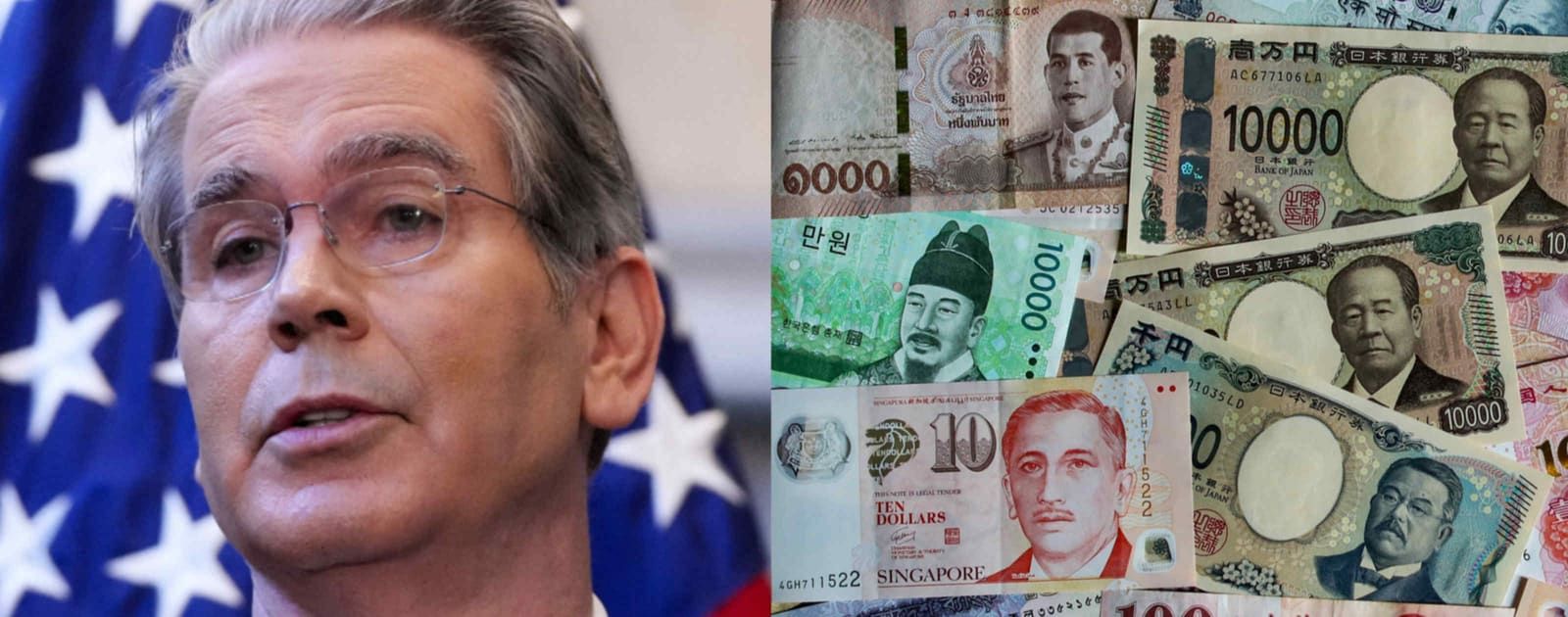
When US Treasury Secretary Scott Bessent joined Japanese authorities in early August 2026 to prop up the tumbling yen, the intervention marked more than a bilateral rescue. It sent a clear message across Asia's foreign exchange markets: currency instability in the region had reached a threshold that warranted Washington's direct involvement.
The yen had weakened sharply against the dollar throughout 2026, mirroring a broader slide across Asian currencies. What made this intervention notable was not just its scale but its visibility. Joint currency operations between Washington and Tokyo are uncommon, and when they happen publicly, they typically signal systemic concern rather than routine market management.
Treasury Secretary Bessent framed the move as necessary to contain wider currency risks across Asia. The intervention succeeded in halting the yen's immediate descent, but it also raised questions about which other regional currencies might need similar support and whether Tokyo's access to US backing reflects unique strategic considerations.
Dollar Strength Tests Regional Defenses
Asian currencies have faced sustained pressure in 2026 as the dollar rallied on higher US interest rates and safe-haven demand. The yuan, won, baht, and rupiah all registered multi-month lows against the greenback in the first half of the year. Central banks across the region have deployed reserves to smooth volatility, though most have avoided the kind of high-profile intervention Tokyo received.
South Korea's financial authorities were observed intervening in currency markets around the same time as Japan, according to traders familiar with the transactions. The won had touched levels last seen during periods of acute stress, prompting the Bank of Korea to act without formal announcement. Seoul's quiet approach contrasts with the joint US-Japan statement, underscoring the political dimension of currency policy.
China has taken a different path, using daily reference-rate settings to guide the yuan within a managed band. The People's Bank of China has kept the currency relatively stable even as exporters face mounting pressure from a stronger dollar eroding their competitiveness. Beijing's ability to control capital flows gives it more direct tools than its neighbors, but the cost is reduced flexibility and persistent questions about market transparency.
Why Japan Got Washington's Backing
Japan's access to coordinated US support reflects both economic and strategic factors. The two countries maintain a formal currency cooperation agreement dating to the Plaza Accord era, though it has rarely been invoked in recent decades. More immediately, a collapsing yen threatened to destabilize Japanese government bond markets and complicate the Bank of Japan's delicate exit from negative interest rates.
US officials have also expressed concern that a weak yen could fuel deflationary pressures in Japan, undermining the BOJ's efforts to normalize monetary policy after decades of ultra-loose settings. A disorderly yen decline risked spilling over into Treasury markets, given Japan's status as the largest foreign holder of US debt.
Strategic considerations likely played a role as well. Washington has prioritized economic stability in key Indo-Pacific allies as part of its broader regional posture. Allowing Japan's currency to spiral while remaining silent would have raised questions about US commitment, particularly as Beijing watches how Washington treats partners in financial distress.
Implications for the Yuan and Regional Stability
The intervention has focused attention on the yuan, which Beijing has kept in a relatively tight range despite external pressures. Chinese policymakers face a delicate balance: allowing the yuan to weaken would support exporters but risk capital flight and undermine confidence in the currency's managed stability. The US-Japan move raises the stakes for that calculation.
If Washington is willing to intervene for the yen, it suggests a threshold exists for tolerating Asian currency weakness. That threshold appears linked to systemic risk rather than any specific exchange rate level. For China, the message is double-edged: US concern about regional currency stability could provide cover for modest yuan depreciation, but any sharp move would likely trigger pushback from Washington and complaints from other Asian economies facing competitive pressure.
Smaller Asian economies are watching closely. Thailand, Indonesia, and the Philippines have all seen their currencies weaken this year, draining reserves and complicating inflation management. None have the strategic weight or formal agreements that brought US support for Japan, leaving them to manage dollar strength with their own tools and whatever swap lines they can secure from regional partners or the Federal Reserve.
What Markets Are Watching Next
Currency traders are now parsing every statement from Asian central banks for signs of coordination or tolerance thresholds. The Bank of Japan has signaled it may raise rates sooner than previously expected, a shift that would support the yen but also test domestic growth. Early market bets on a BOJ rate increase have picked up since the intervention, reflecting expectations that Tokyo will reinforce currency support with tighter policy.
Inflation dynamics will be crucial. Japan's capital expenditure has risen as companies pass through higher import costs, according to government data. If domestic price pressures build, the BOJ has more room to tighten without choking off growth. Other Asian central banks face similar trade-offs, though most have less fiscal space and more fragile recoveries than Japan.
The broader question is whether the US-Japan intervention represents a one-time stabilization or the start of more active currency management across the region. Washington has historically resisted intervening in forex markets, preferring to let the dollar float. Bessent's involvement suggests that calculus may be shifting as geopolitical and economic interests converge in Asia. For regional currencies already under pressure, that shift could mean both greater scrutiny and, in select cases, more support.
RELATED STORIES

Japan's Takaichi Doubles Down on Allied Ties as Beijing Turns Up the Heat
Aiko Nakamura · 4 min

BYD and Chinese EV Makers Challenge Japanese Dominance in Australia
Cheng Wei-Lun · 3 min

Japan's Rare Earth Imports Plunge 80% as China Tightens Export Controls
Aiko Nakamura · 3 min
US Intervenes in Currency Markets to Shield Treasury Yields From Japanese Yen Volatility
Cheng Wei-Lun · 4 min
Spot something wrong? Email editor@briefasia.com. We log every correction publicly.