Asia · Trade
Washington Names Singapore in Tariff Circumvention Probe
White House report identifies 40 jurisdictions as potential routes for Chinese goods seeking to bypass US duties, deploying AI detection tools to combat evasion.
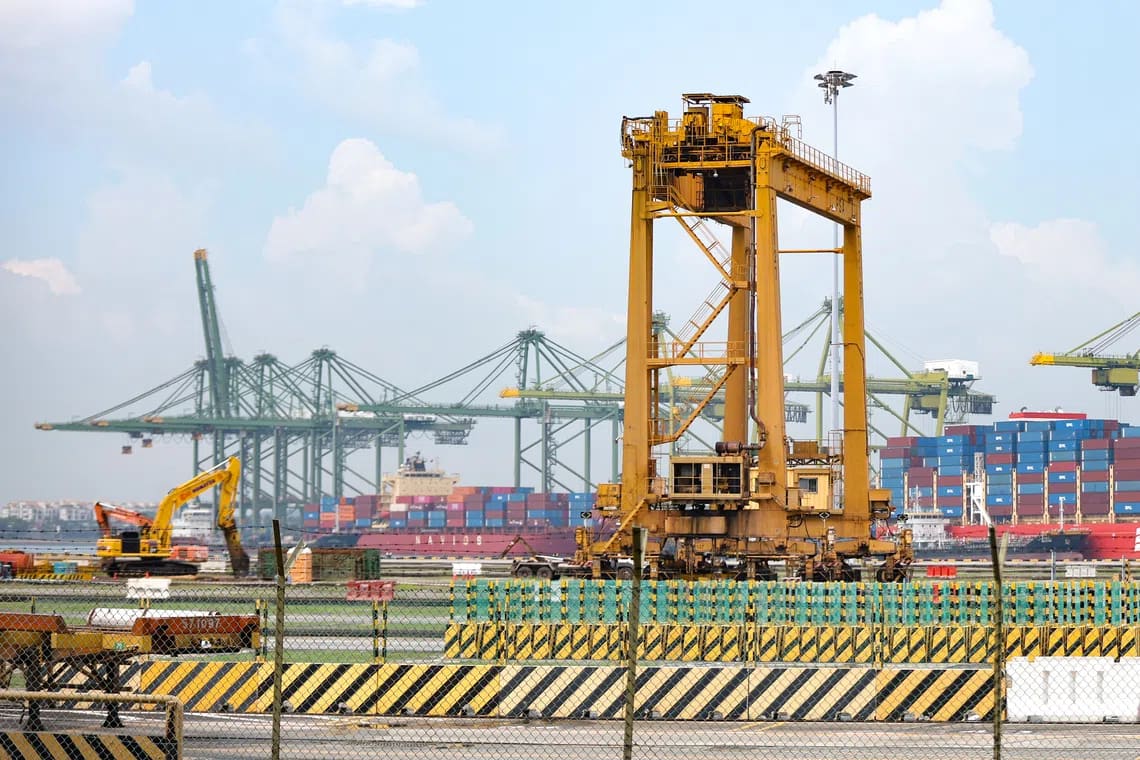
KEY TAKEAWAYS
- ·The White House has identified Singapore and 39 other jurisdictions as potential transit points for Chinese goods seeking to avoid US tariffs, estimating federal revenue losses between $40 billion and $303 billion.
- ·Washington plans to deploy an AI detection system called Detective Border to flag suspicious shipments, following an August 2025 decision to impose an additional 40 percent duty on illegally transshipped goods.
- ·Singapore Customs maintains that transshipment does not change a product's country of origin and that the city-state complies with World Customs Organization standards and cooperates with foreign enforcement agencies.
A New Front in Trade Enforcement
The Trump White House has placed Singapore on a watch list of 40 jurisdictions that could serve as waypoints for Chinese exporters seeking to dodge US import duties. The designation, disclosed August 13 in a document titled "The Great Transshipment Scam", reflects Washington's intensifying scrutiny of global supply chains in the wake of escalating trade friction with Beijing.
The report accuses Chinese manufacturers of routing products through lower-tariff countries to mask their true origin, a practice the administration says has drained federal coffers by between $40 billion and $303 billion in lost customs revenue. To counter the practice, the White House unveiled plans for an AI-powered "Detective Border" system designed to flag suspicious shipments in real time.
Three Tiers of Risk
Washington sorted the 40 jurisdictions into three categories based on trade volume and integration with Chinese manufacturing. Tier 1 includes Canada, the European Union, India, Israel, Japan, and Taiwan, described as major export platforms where suspected transshipment activity mingles with substantial legitimate commerce.
Tier 2 comprises economies deeply intertwined with Chinese production networks, among them Brazil, Indonesia, Malaysia, Thailand, Turkey, and Vietnam. Singapore falls into Tier 3, a grouping the report characterizes as smaller jurisdictions with attributes that make them attractive for opportunistic rerouting: free-trade zones, bonded warehouses, port infrastructure, and what the document calls "limited Customs enforcement capacity". Cambodia, Laos, Myanmar, and the Philippines also appear in this bracket.
The White House argues that as these economies grow more reliant on Chinese capital, inputs, and logistics networks, Beijing gains indirect access to the American market while exerting greater commercial and geopolitical influence.
Singapore's Response
Singapore Customs has maintained that the city-state adheres to international standards set by the World Customs Organization. In a statement issued in September 2025, the agency clarified that transshipment in Singapore refers strictly to the physical movement of cargo between conveyances and does not alter a product's country of origin. Goods passing through the port cannot be relabeled as Singaporean, the agency said.
Officials emphasized that companies using Singapore as a transit hub must comply with local laws and that the customs authority cooperates with foreign counterparts to detect and intercept illicit shipments. The Ministry of Trade and Industry has been approached for comment on the latest White House report.
The Numbers Behind the Allegation
Government and private-sector estimates cited in the White House document suggest that US import sourcing shifted markedly after tariffs on Chinese goods took effect in 2018. As China's direct share of American imports fell, the combined share supplied by the 40 flagged jurisdictions rose. The report acknowledges that not all of this shift represents illegal activity; some reflects genuine changes in production footprints and investment flows. Still, the timing and scale warrant closer investigation, according to the administration.
In August 2025, Washington imposed an additional 40 percent duty on any goods found to have been illegally transshipped to evade existing tariffs. The new AI detection initiative aims to make enforcement faster and more systematic, signaling what the White House calls the end of the "age of untraceable illegal transshipment".
What Comes Next
The report stops short of announcing immediate punitive measures against the 40 jurisdictions. Instead, it serves as a public declaration of intent: Washington will deploy technology and tighter scrutiny to close what it views as loopholes in the global trading system.
For Singapore, the designation carries reputational risk even in the absence of fresh sanctions. The city-state has built its economy on efficiency, rule of law, and predictability for multinationals. Being grouped alongside jurisdictions with weaker governance frameworks complicates that narrative, particularly as companies reassess supply chains amid US-China decoupling.
The broader question is whether the AI-powered border controls will distinguish between legitimate re-routing driven by tariff pressure and deliberate fraud. As global manufacturers continue to diversify away from China, the line between compliance and evasion will only grow harder to draw.
RELATED STORIES
Singapore Tightens Transshipment Rules Amid US Tariff Scrutiny
Lim Hui Ying · 4 min
Asian Routes Become Conduit for Billions in Tariff Evasion
Cheng Wei-Lun · 3 min
ComfortDelGro Pivots to Premium Transport as Taxi Profits Slide 40 Percent
Priyanka V. Rao · 3 min
Hao Mart Chairman's Company Sues OG Over Taste Orchard Eviction
Priyanka V. Rao · 3 min
Spot something wrong? Email editor@briefasia.com. We log every correction publicly.