Perspectives · Analysis
Washington's Coming Compromise on Strait of Hormuz Transit Fees
As military options narrow and regional dynamics shift, the Trump administration faces a strategic reality it has long resisted: Iran's leverage over the world's most critical oil chokepoint may force a transactional arrangement neither side wanted.
KEY TAKEAWAYS
- ·The collapse of the US-Iran memorandum has pushed both sides into familiar postures, but geographic and economic realities may compel Washington to accept an Iranian toll system for Hormuz transit.
- ·Asian importers including Japan, South Korea, and India collectively depend on millions of barrels per day through Hormuz and view a predictable fee structure as preferable to recurring supply disruptions.
- ·A toll arrangement would provide Iran steady revenue and de facto recognition of its control over the chokepoint, presenting significant political challenges for the Trump administration despite growing operational and cost constraints on military alternatives.
The Stalemate After the Deal
The memorandum of understanding between Washington and Tehran that collapsed in recent weeks represented months of quiet diplomacy aimed at managing tensions over the Strait of Hormuz. Since its failure, both capitals have reverted to familiar postures: the United States has issued warnings through official channels and leaked details of expanded military contingencies, while Iran has reinforced its naval presence in the narrow waterway through which roughly one-fifth of global oil supply passes.
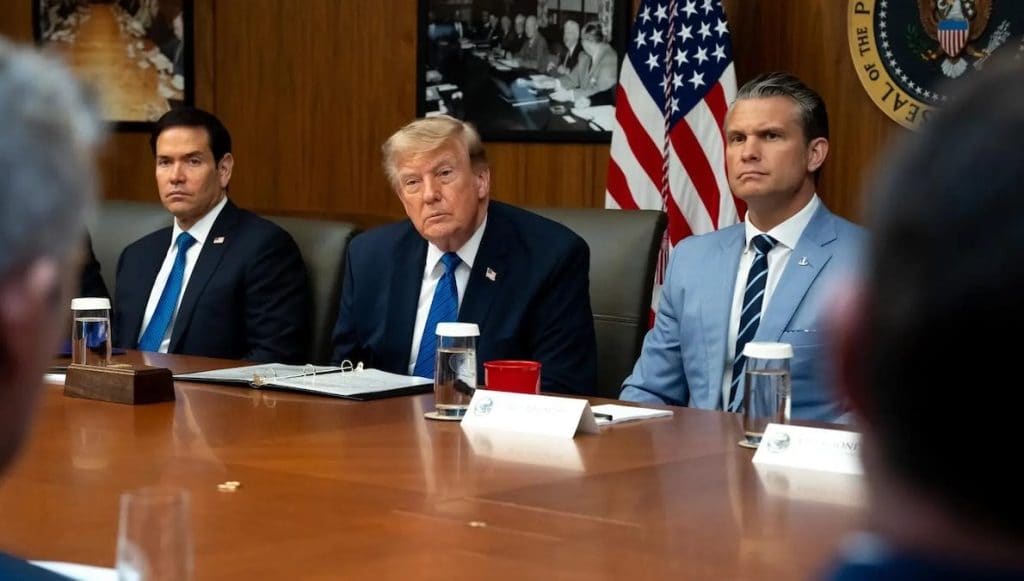
President Trump has publicly floated the possibility of strikes against Iranian infrastructure, echoing rhetoric from his first term. Yet the operational realities on the ground suggest a different calculus is taking hold within the administration. The strait remains as vulnerable as ever to disruption, and the economic consequences of a sustained closure would reverberate far beyond the Persian Gulf.
What has changed is not the military balance, which remains overwhelmingly in favor of US firepower, but the political willingness to sustain a prolonged confrontation in a region where American strategic priorities have shifted. The Trump administration came to office promising to reduce entanglements in the Middle East, yet finds itself once again drawn into the gravitational pull of Gulf security.
Geography as Leverage
Iran's geographic advantage in the Hormuz equation is not a recent development, but the country's ability to exploit that advantage has grown more sophisticated. Fast attack craft, shore-based missile batteries, and layered air defenses create a multi-domain threat that cannot be neutralized without significant risk and cost. More importantly, even a temporary closure of the strait would send oil prices spiking and disrupt supply chains across Asia, where many US allies depend on Gulf crude.
China, Japan, South Korea, and India collectively import millions of barrels per day through Hormuz. A prolonged crisis would force these economies to draw down strategic reserves, seek alternative suppliers at premium prices, or absorb higher energy costs that ripple through manufacturing and consumer markets. For Washington, the diplomatic fallout from such a scenario, particularly among Asian partners already wary of US reliability, presents a constraint as binding as any military consideration.
Tehran understands this leverage and has signaled, through intermediaries and back-channel communications, a willingness to formalize what has long been an implicit arrangement: guaranteed safe passage in exchange for a fee structure that provides Iran with revenue and a degree of international recognition for its role in securing the waterway.
The Toll Proposal and Its Precedents
The concept of a Hormuz toll is not without precedent in international shipping. The Suez Canal and Panama Canal both operate on fee-based models, with revenues funding maintenance, security, and infrastructure development. Iran's proposal, floated informally through Gulf intermediaries and discussed in regional forums, would establish a similar framework, with fees calculated based on vessel tonnage and cargo type.
What makes the Hormuz case politically sensitive is not the economic logic, which maritime insurers and shipping companies might even welcome as a predictable cost, but the symbolism. Accepting an Iranian toll would represent a de facto acknowledgment of Tehran's control over a chokepoint the US Navy has long pledged to keep open by force if necessary. It would also provide Iran with a steady revenue stream at a time when sanctions have squeezed its economy, effectively rewarding behavior Washington has spent years trying to punish.
Yet the alternatives are increasingly unattractive. A military campaign to degrade Iranian capabilities would require sustained air operations, likely involving strikes on radar installations, coastal missile sites, and naval facilities. Such a campaign would invite retaliation, not only against US assets but also against Gulf state infrastructure, including oil terminals and desalination plants that underpin the region's economic stability.
Asian Reactions and Regional Dynamics
The response from Asian capitals to the idea of a Hormuz toll has been cautiously pragmatic. Japanese officials, speaking privately, have indicated that Tokyo would prefer a negotiated arrangement to the uncertainty of recurring crises. South Korean energy planners have modeled the impact of various fee structures and concluded that a predictable toll would be preferable to the volatility of risk premiums currently embedded in insurance and shipping contracts.
China's position is more complex. Beijing has cultivated ties with Tehran, including investments in Iranian energy infrastructure and participation in regional connectivity projects. A toll arrangement that stabilizes Hormuz transit would serve Chinese interests by reducing supply risk, but it would also set a precedent for other chokepoints, including the Strait of Malacca, where China itself is vulnerable.
India, which imports a significant share of its oil from the Gulf, has publicly maintained that Hormuz must remain open under international maritime law, but New Delhi has also quietly explored the feasibility of fee-based arrangements as part of broader regional security dialogues. The key concern for Indian policymakers is ensuring that any toll structure is transparent, non-discriminatory, and subject to international oversight rather than unilateral Iranian control.
The Domestic Politics of Concession
For the Trump administration, the political optics of accepting a Hormuz toll are fraught. The president has built his foreign policy brand on projecting strength and extracting concessions from adversaries. Agreeing to a fee structure that benefits Iran would invite criticism from hawkish voices in Congress and from regional allies, particularly Israel and Saudi Arabia, who view any accommodation with Tehran as a strategic error.
Yet there is also a realist current within the administration that recognizes the limits of military solutions. Senior officials have privately acknowledged that the costs of maintaining a permanent naval presence capable of deterring Iranian actions in the strait are unsustainable, particularly as the US reorients its defense posture toward the Indo-Pacific. A toll arrangement, framed as a burden-sharing mechanism in which commercial shippers bear the cost of securing their own passage, could be sold domestically as reducing the American taxpayer's obligation to police distant waterways.
The precedent of the Suez Canal is instructive. When Egypt nationalized the canal in 1956, the initial reaction from Western powers was military intervention. Yet within a few years, a negotiated settlement emerged that preserved Egyptian sovereignty while ensuring international access. The Hormuz situation is not identical, but the underlying logic holds: geography and economics eventually impose their own discipline on political posturing.
What Comes Next
If a toll arrangement does materialize, the details will matter enormously. The fee structure, governance framework, dispute resolution mechanism, and enforcement provisions will determine whether the system reduces tensions or becomes a new source of friction. International shipping organizations, Gulf states, and major importers will all seek a voice in shaping the terms, and the United States will need to decide how much influence it is willing to cede in exchange for stability.
The broader implication is that the Trump administration, despite its rhetoric, is being forced to accept a transactional relationship with Iran in at least one critical domain. This does not signal a broader rapprochement, nor does it resolve the many other points of contention between Washington and Tehran, from nuclear enrichment to regional proxy conflicts. But it does suggest that on Hormuz, pragmatism is beginning to outweigh ideology, and that the era of free passage enforced solely by American naval power may be giving way to a more complex and negotiated order.
RELATED STORIES
Crude Prices Climb as Iran Tightens Grip on Hormuz Transit
Priyanka V. Rao · 3 min
Tehran Sets Conditions for Strait of Hormuz Access Despite Progress With Muscat
Priyanka V. Rao · 3 min

Oil Slides 4.7% as US-Iran Talks Set to Resume Monday
Cheng Wei-Lun · 3 min
Brent Crude Jumps 23 Percent as Iran Blocks Hormuz Exit
Priyanka V. Rao · 3 min
Spot something wrong? Email editor@briefasia.com. We log every correction publicly.