Asia · Business
Vietnam's Seafood Sector Prepares for Dual-Market Push at VIETFISH 2026
The annual trade exhibition will host 335 exhibitors from 17 nations as Hanoi positions domestic consumption alongside traditional export channels
KEY TAKEAWAYS
- ·VIETFISH 2026 will host 335 businesses from 17 countries as Vietnam's seafood sector pursues both export growth and domestic premium channels.
- ·Vietnamese seafood exports faced a 7 percent U.S. volume decline in early 2025 while domestic per-capita consumption climbed to 28 kilograms annually.
- ·The dual-market strategy reflects broader ASEAN trends as rising middle-class incomes create viable domestic alternatives to traditional export dependence.
A Strategic Pivot for Vietnamese Aquaculture
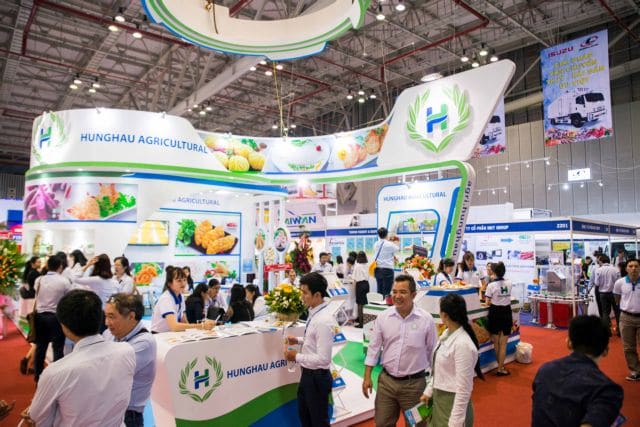
Vietnam's seafood industry is preparing to showcase a dual-market strategy at this year's flagship trade event, reflecting broader shifts in how Southeast Asian exporters are responding to both global demand volatility and growing wealth at home.
The Vietnam Fisheries International Exhibition (VIETFISH) 2026 will convene 335 participating businesses from 17 countries and territories, according to the event organizers. The scale underscores Vietnam's position as one of the world's top three seafood exporters, alongside Norway and China, with pangasius, shrimp, and tuna forming the backbone of an industry that earned the country over USD 9 billion in 2025.
What distinguishes this year's exhibition is the explicit emphasis on cultivating domestic channels for premium seafood products, a departure from the traditional export-first model that has defined Vietnamese aquaculture for three decades. As middle-class purchasing power rises across ASEAN's second most populous nation, processors and distributors are rethinking value-chain allocation.
Export Pressures Meet Domestic Opportunity
Vietnam's seafood sector has faced headwinds in key Western markets over the past 18 months. U.S. import data show a 7 percent year-on-year decline in Vietnamese shrimp volumes through the first half of 2025, driven by inventory overhang and tighter retail margins. European buyers, meanwhile, have increased scrutiny on traceability and sustainability certifications, raising compliance costs for smaller exporters.
These pressures arrive as urban Vietnamese consumers demonstrate willingness to pay premiums for quality seafood. Domestic per-capita seafood consumption reached 28 kilograms in 2025, up from 22 kilograms five years earlier, according to industry estimates. Supermarket chains in Ho Chi Minh City and Hanoi have expanded chilled seafood sections, and e-commerce platforms report double-digit growth in fresh fish delivery categories.
The dual focus at VIETFISH 2026 reflects this recalibration. Exhibitors will target both international buyers seeking contract volumes and domestic distributors looking to differentiate with traceable, value-added products. For processors operating on thin margins in export markets, the domestic channel offers higher per-kilogram returns, albeit at smaller scale.
Regional Context and Competitive Dynamics
Vietnam is not alone in this pivot. Thailand's seafood industry, historically export-dependent, has similarly emphasized domestic premiumization as Bangkok's middle class expands. Indonesian shrimp farmers are exploring direct-to-consumer models in Jakarta and Surabaya. Across maritime Southeast Asia, the equation is shifting: domestic demand is no longer a residual outlet for export rejects, but a strategic revenue stream.
The presence of 17 countries at VIETFISH also highlights Vietnam's role as a regional seafood hub. Processors import raw material from neighboring nations, add value through filleting, freezing, and packaging, then re-export under Vietnamese labels. This model has drawn trade remedy scrutiny in the past, but it remains central to the industry's competitiveness.
For smaller ASEAN producers, Vietnam's infrastructure and trade networks offer a path to global markets. For Vietnamese firms, the model provides volume and utilization rates that keep processing plants viable. The exhibition serves as a venue for negotiating these cross-border supply arrangements.
What Comes Next for Vietnam's Seafood Ambitions
The success of the dual-market strategy will hinge on execution. Domestic consumers expect consistent cold-chain logistics, transparent sourcing, and food safety standards that match or exceed export-grade products. Many Vietnamese processors still lack the branding, retail relationships, and quality control systems needed to compete with imported salmon or premium tuna in urban supermarkets.
Meanwhile, export markets remain the primary revenue source. Any significant recovery in U.S. or European demand could quickly reorient industry priorities back toward traditional channels. Currency fluctuations, feed costs, and disease outbreaks in shrimp ponds add further uncertainty.
VIETFISH 2026 will offer a snapshot of how Vietnam's seafood sector is navigating these crosscurrents. The 335 exhibitors represent a supply chain stretching from Mekong Delta fish farms to processing zones in the south and distribution networks reaching across Asia and beyond. Whether the domestic push proves a temporary hedge or a structural shift will become clearer in the quarters ahead, as consumption data and export orders reveal where the real margins lie.
RELATED STORIES

Vietnam Pours Capital Into Laos as Vientiane Seeks Relief From Beijing Debt
Priyanka V. Rao · 4 min

Thailand Faces Two Decades in Middle-Income Trap Without Workforce Upgrade
Priyanka V. Rao · 3 min
Shein Retreats From Vietnam Warehouse Bet as China Manufacturing Proves Irreplaceable
Cheng Wei-Lun · 4 min
Shein Scales Back Vietnam Expansion, Reinforces China Manufacturing Base
Cheng Wei-Lun · 3 min
Spot something wrong? Email editor@briefasia.com. We log every correction publicly.