Asia · Trade
Vietnam Pushes Rare Earth Processing to Strengthen Supply Chain Autonomy
As China Plus One evolves beyond factory diversification, Hanoi is tightening control over 3.5 million tonnes of rare earth reserves and blocking raw exports to capture more value.
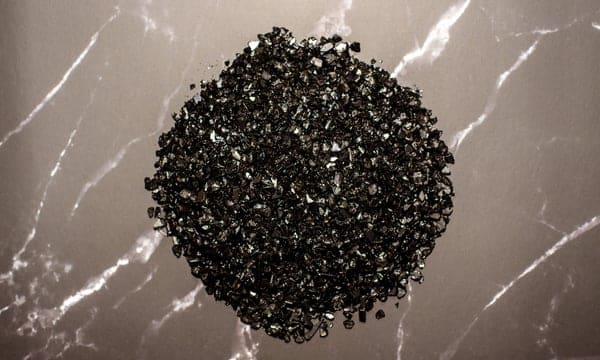
KEY TAKEAWAYS
- ·Vietnam amended its minerals law in December to ban raw rare earth exports and classify them as special strategic resources under state control.
- ·The country holds 3.5 million tonnes of rare earth reserves but operates only one light rare earth refining plant with 5,000 tonnes annual capacity.
- ·South Korean and Chinese magnet makers have opened facilities in Vietnam since 2023, creating downstream demand that domestic processing cannot yet meet.
From Factory Floors to Critical Minerals
Vietnam has spent the past five years attracting assembly lines and fabrication plants fleeing overconcentration in China. Amkor Technology's $1.6 billion semiconductor packaging facility in Bac Ninh province, operational since last year, exemplifies the shift. But the country now faces a deeper challenge: even diversified factories remain tethered to Chinese suppliers of the magnets, refined metals, and chemical precursors that make electronics and motors possible.
Rare earth elements sit at the center of this vulnerability. China controls over 90 percent of global refining and permanent magnet output, according to International Energy Agency figures. Beijing's export restrictions, tightened progressively since 2023, have exposed the gap between moving a production line and securing the materials that feed it.
Vietnam holds an estimated 3.5 million tonnes of rare earth reserves, per U.S. Geological Survey data. That stock is smaller than China's or Australia's, but it sits alongside a low-cost manufacturing base already wired into global electronics and automotive networks. The question is whether Hanoi can connect the two.
Policy Tightens Around Strategic Minerals
In December, Vietnam's National Assembly amended the Law on Geology and Minerals to reclassify rare earths as "special strategic" resources. The revision places exploration, mining, and processing under direct state oversight and bans the export of unprocessed rare earth ores. Only refined or downstream products may leave the country.
The move follows a decade of intermittent cooperation with Japan, which has sought alternative rare earth sources since a 2010 supply disruption. During Prime Minister Sanae Takaichi's visit to Hanoi in May, both governments reaffirmed rare earth development as a pillar of economic security collaboration.
Vietnam Rare Earths operates the country's sole light rare earth refining plant in Ha Nam province, with annual capacity of 5,000 tonnes. No facilities exist yet for separation or advanced processing of heavy rare earths, which are essential for high-performance magnets used in electric vehicle motors and precision electronics.
Magnet Makers Move Closer to Assembly Hubs
South Korea's Star Group Industrial opened an $80 million magnet production facility in Quang Nam province in 2024, sourcing feedstock from Vietnam and Australia. Baotou INST Magnetic, a Chinese producer listed among Apple's suppliers since 2021, established a Vietnam plant in 2023 after customers pressed for geographic diversification.
These investments reflect a structural shift. Magnet manufacturers are relocating to be near the electronics and automotive assemblers already in Vietnam, creating potential domestic demand for processed rare earths. But the supply chain remains incomplete. Vietnam still imports most refined rare earth compounds and intermediate materials, often from China.
The government's supporting-industry development program for 2026 through 2035 targets 40 to 45 percent localization rates in key sectors by 2030, up from current levels below 30 percent in electronics. Rare earth processing is explicitly named as a priority under the plan.
Scale and Technology Gaps Remain
Vietnam's rare earth infrastructure is rudimentary compared with China's decades of investment in separation chemistry, waste management, and integrated downstream production. The Ha Nam refinery processes low-grade concentrates but lacks the capacity to produce high-purity oxides or metal alloys at scale.
Building that capacity requires technology transfer, environmental safeguards, and capital. Japan has committed technical assistance through the Japan Oil, Gas and Metals National Corporation, while South Korean and Australian firms are exploring joint ventures. None have yet announced commitments large enough to close the refining gap.
Australia, Brazil, and Canada are also developing rare earth supply chains outside China, often with stronger technical and financial backing. Vietnam's advantage lies not in its reserves alone but in the proximity of those reserves to an established export manufacturing base that already consumes rare earth products.
What Comes Next
China Plus One began as a strategy to add factory capacity outside a single geography. It is now forcing a reckoning with the materials, components, and processing steps that underpin that capacity. Vietnam's rare earth reserves, combined with its role as a manufacturing hub, position it to capture part of that upstream shift, provided it can scale refining and separation.
The export ban signals intent. Whether Vietnam can attract the technology, capital, and expertise to build a vertically integrated rare earth supply chain will determine if intent translates into industrial reality. For now, the country's electronics assemblers and automotive suppliers still depend on the same Chinese inputs they sought to bypass by moving production in the first place.
RELATED STORIES
Vietnam's General Secretary Courts Australian Capital for Minerals and Tech
Priyanka V. Rao · 3 min
Vietnam's Durian Shipments to China Jump 43% as Harvest Season Peaks
Tran Quoc Bao · 3 min
Vietnam Faces Institutional Test as US Semiconductor Partnership Deepens
Cheng Wei-Lun · 2 min
Vietnam Textile Exports Climb to $27 Billion as Upstream Production Gains Momentum
Priyanka V. Rao · 3 min
Spot something wrong? Email editor@briefasia.com. We log every correction publicly.