Asia · Business
Vietnam's General Secretary Courts Australian Capital for Minerals and Tech
Tô Lâm's Canberra meetings with business leaders mark a push to translate the bilateral Comprehensive Strategic Partnership into commercial deals across critical sectors.
KEY TAKEAWAYS
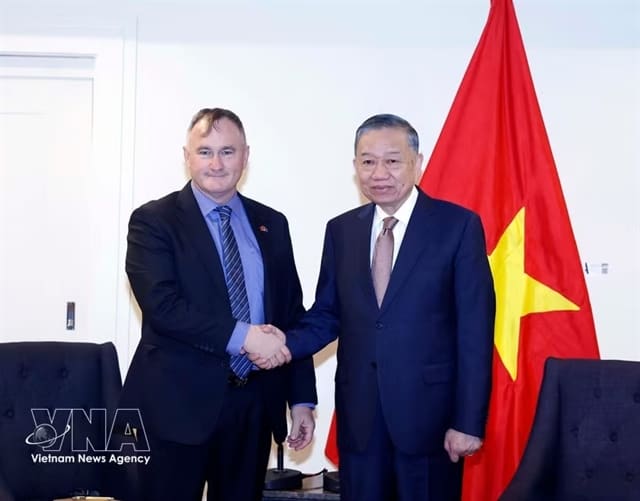
- ·Vietnamese General Secretary Tô Lâm met Australian business leaders in Canberra to promote cooperation in strategic minerals, high technology, and innovation.
- ·The meetings aim to translate the Vietnam-Australia Comprehensive Strategic Partnership, elevated in March 2024, into commercial projects across battery supply chains and advanced manufacturing.
- ·Vietnam seeks Australian lithium, nickel, and cobalt to build a vertical electronics and EV component stack, while Australia wants value-added processing partnerships in Southeast Asia.
Hanoi's Top Diplomat Turns to Business
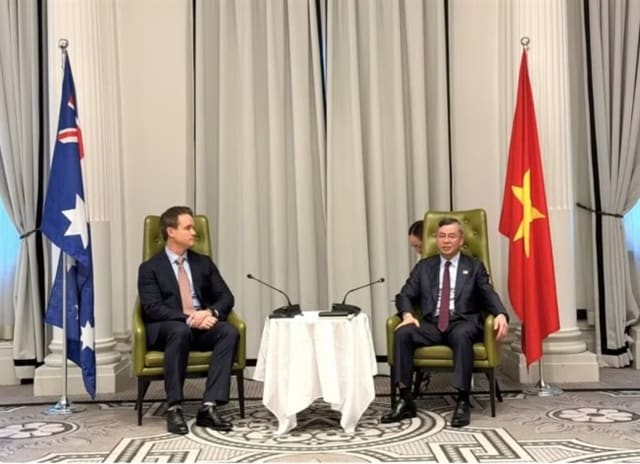
Vietnamese General Secretary Tô Lâm sat down with a group of Australian corporate executives in Canberra on Wednesday, steering the conversation toward strategic minerals, advanced technology, and innovation partnerships. The meetings came as both governments work to add commercial substance to the Comprehensive Strategic Partnership framework signed last year.
Lâm, who assumed the top post in the Communist Party in August 2024, has spent much of his early tenure courting foreign capital to fuel Vietnam's industrial upgrade. The Australian leg of his current tour reflects Hanoi's determination to diversify supply chains away from single‑country dependencies and to secure access to the rare‑earth elements, lithium, and cobalt that underpin electric‑vehicle batteries and renewable‑energy systems.
What Hanoi Wants
Vietnam is acutely aware it sits downstream in the global electronics and automotive supply chains yet upstream of almost nothing in critical minerals. The country imports most of its lithium and rare earths, even as domestic assembly lines churn out components for Samsung, LG, and a growing roster of EV manufacturers. Australian miners, by contrast, control some of the world's largest reserves of lithium, nickel, and cobalt, and Canberra has been explicit about wanting to move beyond bulk exports to value‑added processing.
That asymmetry creates room for a deal. Vietnam offers low‑cost manufacturing, a network of free‑trade agreements covering markets from the European Union to the Comprehensive and Progressive Agreement for Trans‑Pacific Partnership bloc, and a government willing to write incentives into law. Australia brings raw materials, mining expertise, and capital looking for stable jurisdictions in Southeast Asia.
The Partnership Framework
The Comprehensive Strategic Partnership, elevated from a lower‑tier arrangement in March 2024, lays out cooperation across defense, education, and trade. Yet the headline‑grabbing language on security has so far outpaced concrete commercial projects. Wednesday's roundtable was designed to close that gap, with Lâm pitching Vietnamese special economic zones, streamlined foreign‑investment approvals, and co‑investment in mineral processing plants that would sit inside Vietnam's tariff perimeter.
Australian firms at the table included representatives from mining, technology, and renewable‑energy sectors, though neither government released a participant list. Industry officials in Sydney said ahead of the visit that lithium hydroxide refining, battery‑component manufacturing, and joint research into solid‑state battery chemistry were likely discussion topics.
Regional Context
Vietnam's outreach to Australia fits a broader pattern across Southeast Asia. Singapore, Indonesia, and Thailand have all announced critical‑minerals partnerships with Canberra in the past eighteen months, each angling for a slice of the battery supply chain as Chinese dominance in processing prompts buyers in North America and Europe to seek alternative sources.
Hanoi's pitch carries extra weight because of its existing electronics base. The country already assembles smartphones, tablets, and laptops at scale; adding battery‑cell production and cathode manufacturing would complete a vertical stack that few regional rivals can match. Australian miners, meanwhile, face political pressure at home to capture more value domestically but lack the low‑cost labor and infrastructure that Vietnam can deploy quickly.
What Comes Next
The test will be whether Wednesday's meetings produce term sheets and memorandums of understanding in the coming months. Previous high‑level visits have generated joint statements but fewer signed contracts. Investors will be watching for specifics: equity stakes, off‑take agreements, and timelines for pilot plants.
Lâm's schedule includes additional stops in Sydney and Melbourne later this week, where he is expected to meet superannuation fund managers and infrastructure investors. Those conversations will likely focus on transport, port upgrades, and energy grid projects that would support expanded manufacturing.
For now, the Canberra meetings signal that Hanoi sees Australia as more than a commodity supplier. The question is whether Australian capital sees Vietnam as more than a low‑wage assembly hub and whether both sides can move faster than competing partnerships taking shape elsewhere in the region.
RELATED STORIES
Vietnam's Durian Shipments to China Jump 43% as Harvest Season Peaks
Tran Quoc Bao · 3 min
Vietnam Redraws State Ownership Lines in SOE Overhaul
Tran Quoc Bao · 2 min
Vietnam Textile Exports Climb to $27 Billion as Upstream Production Gains Momentum
Priyanka V. Rao · 3 min
Vietnam and Australia Eye Deeper Ties in Rice Production and Processing
Priyanka V. Rao · 4 min
Spot something wrong? Email editor@briefasia.com. We log every correction publicly.