Asia · Business
Vietnam Launches Domestic Aluminum Smelting With First Commercial Ingot Shipment
Stavian Industrial Metal begins distributing primary aluminum from the Dak Nong plant, completing the country's bauxite-to-metal value chain and reducing reliance on imported feedstock.
KEY TAKEAWAYS
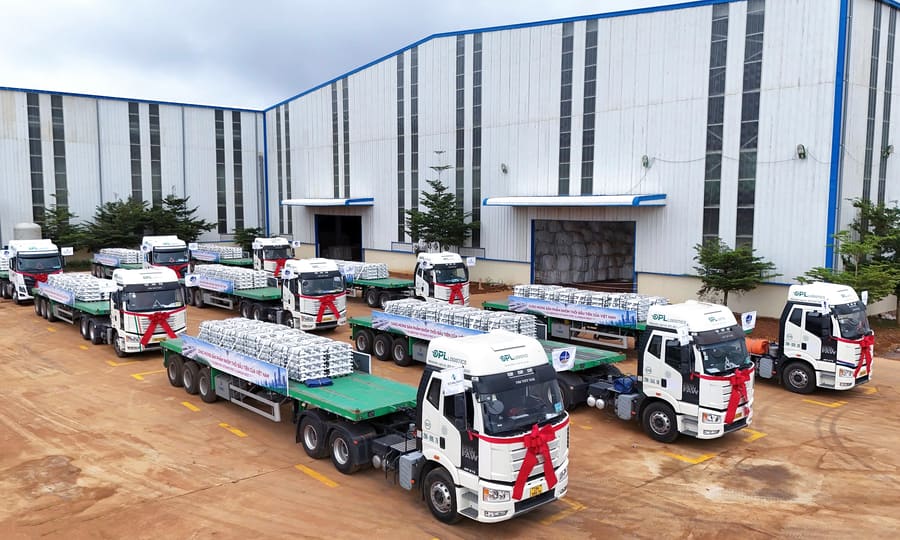
- ·Stavian Industrial Metal received the first commercial shipment of domestically smelted aluminum ingots from the Dak Nong plant on July 26, with an annual capacity of 450,000 metric tons.
- ·The facility completes Vietnam's bauxite-alumina-aluminum value chain, reducing reliance on imported primary metal for manufacturing and downstream processing industries.
- ·Stavian plans to distribute the ingots domestically and explore export routes through its network spanning more than 100 countries and territories.
A New Chapter in Vietnam's Metal Supply Chain
Vietnam delivered its first batch of domestically smelted primary aluminum ingots on July 26, marking a shift in the country's industrial materials landscape. Stavian Industrial Metal took delivery of the initial commercial shipment at the Dak Nong Aluminum Electrolysis Plant in Lam Dong Province, an event attended by government officials, ministry representatives, and executives from the metals and manufacturing sectors.
The handover ceremony, organized by Tran Hong Quan Metallurgy Co., Ltd., formalized Stavian Industrial Metal's role as one of the official distributors for the plant's output. The company will channel the material into domestic manufacturing and explore export routes through its parent group's network.
Nguyen Minh Tu, vice chairman of Stavian Group and chairman of Stavian Industrial Metal, said the project is expected to strengthen raw material availability for Vietnam's manufacturing base. The move addresses a longstanding gap in the country's metals supply chain, which until now has depended on imported primary aluminum to feed downstream processing and fabrication.
Closing the Loop From Bauxite to Ingot
The Dak Nong facility is Vietnam's first aluminum smelting plant, with an annual production capacity of 450,000 metric tons. Its commissioning completes a domestic value chain that begins with bauxite mining, progresses through alumina refining, and culminates in primary aluminum production.
Vietnam has significant bauxite reserves, concentrated in the Central Highlands, but has historically lacked the smelting infrastructure to convert refined alumina into metal. The result has been a bifurcated supply chain: domestic bauxite and alumina production on one side, and reliance on imported aluminum ingots on the other. The Dak Nong plant bridges that divide, offering manufacturers a local source of primary metal.
The facility's output will serve industries ranging from construction and transportation to electronics and packaging, sectors that have grown rapidly as Vietnam has become a manufacturing hub for multinational companies seeking alternatives to China-centric supply chains.
Distribution and Export Ambitions
Stavian Industrial Metal operates across steel, aluminum, copper, and zinc, serving both domestic clients and international buyers. The company plans to use Stavian Group's presence in more than 100 countries and territories to position Vietnamese aluminum in regional and global markets.
The timing aligns with broader efforts across Southeast Asia to capture more value from raw materials. Indonesia has restricted nickel ore exports to force domestic processing; Malaysia has invested in integrated aluminum smelting tied to hydropower; and now Vietnam is moving to retain more of the economic benefit from its bauxite reserves.
Whether the Dak Nong plant can compete on cost with established smelters in China, the Middle East, and other regions with cheap energy remains an open question. Aluminum smelting is energy-intensive, and electricity pricing will be a key determinant of the plant's competitiveness. Vietnam's power grid has faced capacity constraints and tariff pressures in recent years, factors that could weigh on operating economics.
Implications for Regional Supply Chains
The launch of domestic smelting capacity gives Vietnam a more complete metals portfolio as it seeks to attract higher-value manufacturing investment. Companies assembling electronics, automotive components, and industrial equipment often prefer suppliers with integrated upstream capabilities, reducing logistics complexity and exposure to import tariffs or trade restrictions.
The move also positions Vietnam to participate more directly in regional trade agreements that reward local content. Rules-of-origin provisions in the Comprehensive and Progressive Agreement for Trans-Pacific Partnership and the Regional Comprehensive Economic Partnership can favor goods made with domestically sourced materials, a consideration for exporters targeting preferential tariff treatment.
For Stavian Industrial Metal, the distribution agreement represents an opportunity to expand its metals portfolio and deepen relationships with manufacturers that are scaling up operations in Vietnam. The company's ability to bundle aluminum with its existing steel and copper offerings could appeal to clients seeking consolidated procurement.
The Dak Nong plant's 450,000-ton annual capacity is modest compared to mega-smelters in China or the Gulf, but it is a starting point. If the economics prove viable and demand justifies expansion, Vietnam could build additional capacity in phases, gradually reducing import dependence and capturing more value from its bauxite endowment.
The first shipment of ingots is a tangible step in that direction, turning years of planning and investment into metal that manufacturers can use. Whether it translates into a sustained competitive advantage will depend on execution, energy costs, and the ability to meet quality and delivery standards that global buyers expect.
RELATED STORIES
Vietnam's Trade Turnover Hits $770 Billion as Imports Surge Past Exports
Jun-ho Seo · 2 min
Samsung's Vietnam Operations Post 23% Profit Jump to $2.3 Billion
Tran Quoc Bao · 3 min
Southeast Asian Factories Adopt Proximity Planning to Retain Workers and Investors
Lim Hui Ying · 3 min
Vietnam Ships 1.7 Million Tonnes of Coffee as Brazil Delays and EU Rules Reshape Trade
Tran Quoc Bao · 3 min
Spot something wrong? Email editor@briefasia.com. We log every correction publicly.