Asia · Trade
Vietnam Courts Chinese Investors Ahead of Major 2026 Trade Show
Hanoi targets deeper supply chain integration with mainland buyers and distributors as regional manufacturing footprint shifts
KEY TAKEAWAYS
- ·Vietnam hosted approximately 80 Chinese trade officials, retail chains, and e-commerce platforms to promote the Vietnam Industrial Summit 2026, aiming to deepen supply chain integration.
- ·Bilateral trade between Vietnam and China exceeded 175 billion USD in 2025, with Chinese firms increasingly establishing satellite manufacturing operations in northern Vietnam.
- ·Hanoi targets 40 billion USD in foreign investment commitments for 2026, with Chinese enterprises accounting for roughly one-fifth of Vietnam's cumulative FDI stock.
Hanoi Pitches Regional Hub Status
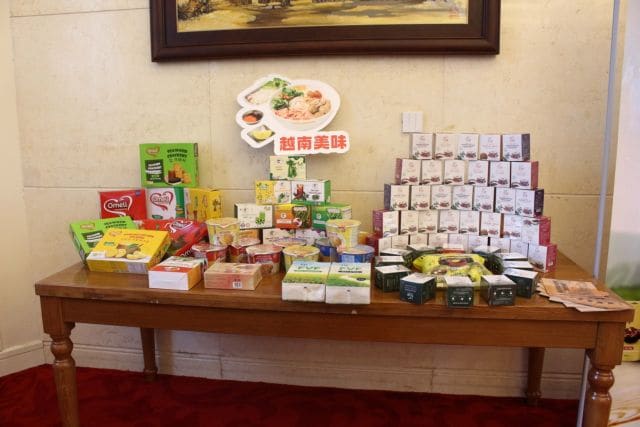
Vietnam convened approximately 80 representatives from Chinese trade promotion bodies, industry groups, major retail chains, import-export houses, e-commerce platforms, and professional buyers to preview the Vietnam Industrial Summit 2026. The gathering underscores Hanoi's strategy to position the country as a manufacturing and logistics node for Chinese firms navigating supply chain reconfiguration across Southeast Asia.
The summit, known as VIS 2026, is scheduled to take place next year and aims to draw multinational corporations, component suppliers, and distribution networks seeking alternatives to concentrated production bases. Vietnam's government has used similar events in recent years to attract foreign direct investment in electronics assembly, textiles, and automotive parts.
Supply Chain Realignment in Motion
China remains Vietnam's largest trading partner, with bilateral merchandise flows topping 175 billion USD in 2025. Yet the relationship is evolving: Chinese manufacturers are increasingly setting up satellite operations in Vietnam to serve export markets, while Vietnamese producers rely on Chinese intermediate goods, machinery, and raw materials. The promotional session reflects both sides' interest in formalizing that interdependence through joint ventures, contract manufacturing arrangements, and cross-border e-commerce partnerships.
Retail and digital commerce figured prominently in the attendee roster. Several large Chinese e-commerce platforms have expanded warehousing and fulfillment centers in northern Vietnam over the past eighteen months, drawn by proximity to the Pearl River Delta and improving road and rail links. Professional buyers from state-owned and private trading companies also attended, signaling demand for agricultural commodities, seafood, and light industrial goods.
Regional Context and Competitive Pressure
Vietnam competes with Thailand, Indonesia, and Malaysia for the same pool of relocating investment. Each country offers different advantages: Thailand has established automotive supply chains and a deeper capital market; Indonesia commands scale and domestic consumption; Malaysia provides a more mature legal framework and financial services sector. Vietnam's edge lies in competitive labor costs, a young workforce, and aggressive tax incentives for high-tech manufacturing.
The government in Hanoi has set a target of attracting 40 billion USD in committed foreign investment for 2026, with at least half earmarked for electronics, semiconductors, and renewable energy equipment. Chinese enterprises account for roughly one-fifth of cumulative FDI stock in Vietnam, concentrated in northern provinces near the border.
What Comes Next
VIS 2026 will feature pavilions for machinery, electronics components, textiles, and logistics services. Organizers plan site visits to industrial parks in Bac Ninh, Hai Phong, and Quang Ninh provinces, where Chinese-invested factories already operate alongside Taiwanese, South Korean, and Japanese plants. The event is part of a broader diplomatic and commercial calendar that includes the ASEAN-China Expo and several bilateral ministerial consultations on customs procedures and standards alignment.
For Chinese businesses, the calculus is straightforward: Vietnam offers a hedge against tariff risk, shorter lead times to ASEAN markets, and membership in multiple free-trade agreements, including the Comprehensive and Progressive Agreement for Trans-Pacific Partnership and the Regional Comprehensive Economic Partnership. For Vietnam, deeper integration with Chinese supply networks brings capital, technology transfer, and employment, but also raises questions about over-reliance on a single dominant partner.
The promotional session in late July sets the stage for negotiations that will unfold over the next twelve months. Whether those talks yield transformative deals or incremental expansions will depend on infrastructure readiness, regulatory clarity, and the broader trajectory of regional trade policy.
RELATED STORIES
Vietnam Draws $7.5 Billion From Singapore in Seven Months
Priyanka V. Rao · 3 min

Vietnam's Offshore Oil Find Tests Hanoi's Will Against Beijing
Priyanka V. Rao · 5 min
Vietnam Bets $76 Billion Funding Gap Can Lure Capital Without Copying Rivals
Priyanka V. Rao · 4 min
Chinese Brands Capture Vietnam's $92 Million Robot Vacuum Market
Siti Nuraini · 3 min
Spot something wrong? Email editor@briefasia.com. We log every correction publicly.