Asia · Business
Vietnam Bets $76 Billion Funding Gap Can Lure Capital Without Copying Rivals
The country's twin-city financial hub offers direct access to domestic growth instead of replicating regional entrepôt models
KEY TAKEAWAYS
- ·Vietnam's new financial hub spanning Ho Chi Minh City and Da Nang has attracted $21 billion in commitments six months after launch, with domestic banks preparing wholly owned units.
- ·The country needs $76 billion annually through 2030 to fund infrastructure and growth, facing a 145 per cent credit-to-GDP ratio that leaves banks unable to provide long-term financing.
- ·Detailed frameworks for capital flows, fund structures and licensing are expected within six to twelve months, with formal operations phasing in through 2027.
A Different Pitch for Global Money
Vietnam needs $76 billion every year until 2030 to finance infrastructure, manufacturing expansion and a double-digit growth target that its domestic banks cannot fund alone. The solution Hanoi is offering foreign investors: a financial hub that provides entry into the economy itself, rather than another offshore trading platform.
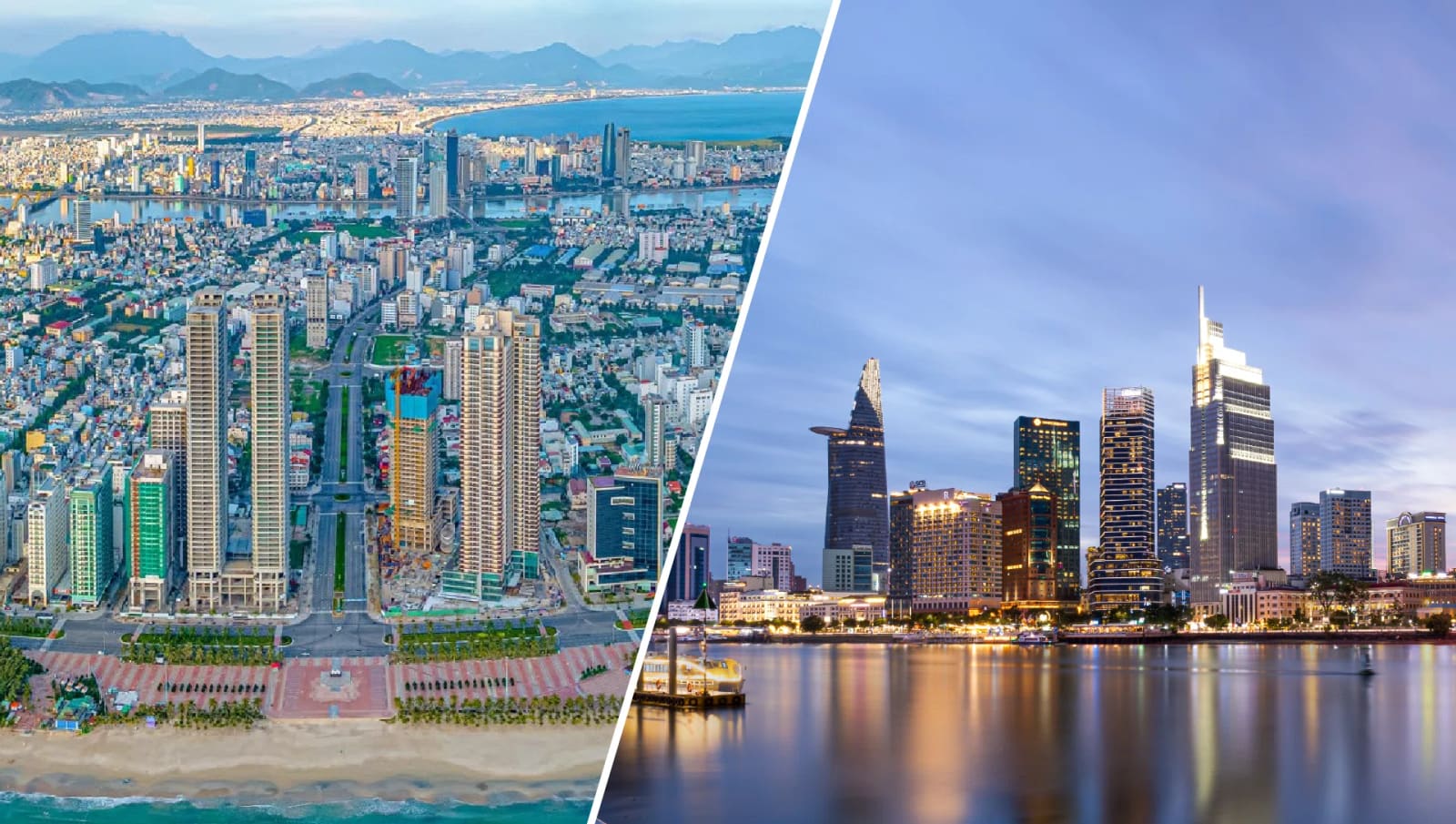
Six months after operations began, the Vietnam International Financial Centre has pulled in roughly $21 billion in capital commitments to its Ho Chi Minh City component, according to figures from the executive authority. Da Nang, the coastal city handling the fintech and innovation portfolio, counts 12 formal members and 11 prospective participants, with another 90-plus exploring entry.
The country's credit-to-GDP ratio reached 145 per cent in 2025, the highest in Southeast Asia, per World Bank data. That concentration in bank lending creates a maturity mismatch: lenders drawing on short-term deposits hesitate to extend the decade-plus tenors needed for ports, airports and power projects.
"We are building a distinctive, real-economy-anchored financial hub," said Rich McClellan, chief executive of VIFC-HCMC. The competitive edge lies in connectivity to domestic growth rather than attempting to rival established regional centres, he added.
Two Cities, One Rulebook
The government calls the structure "one centre, two destinations." Both cities operate under shared governance, supervisory standards and incentives, but divide the market vertically.
A development plan released in July assigned Ho Chi Minh City responsibility for capital markets, banking, asset management and green finance. Da Nang takes fintech innovation, digital assets, tokenisation and regulatory sandboxes.
The geographic split aims to distribute economic benefits beyond the south. Central Vietnam historically captures less financial activity; Da Nang's inclusion redirects some of that flow.
Ho Chi Minh City's footprint spans 898 hectares covering the existing business district and the Thu Thiem New Urban Area across the Saigon River. Da Nang designated around 300 hectares, including a 6.17-hectare core district and 282 hectares in a bay reclamation zone.
Physical construction is moving ahead of full regulatory clarity. Sun Group started work in April on a $1.14 billion mixed-use complex in Ho Chi Minh City. UOB broke ground in July on a $450 million headquarters. Two metro lines connecting the hub to downtown and the new Long Thanh International Airport are slated for 2030 completion.
Da Nang's initial offering includes part of Software Park No 2, a 20-storey building with 27,000 square metres earmarked for funds, tech firms and sandbox tenants.
Pressure to Deliver Tradable Products
Prime Minister Le Minh Hung has pushed officials to prioritize transactional capability over physical development. At an April meeting, he likened the centre to a market with no stalls or merchandise. By June, he was directing agencies to launch a narrow set of priority instruments rather than wait for comprehensive regulation.
Medium and long-term bonds tied to municipal infrastructure projects are among the products under consideration. Hung emphasized that capital raised through the hub should finance the broader economy, not circulate within the financial district.
Muralidharan Ramakrishnan, head of Asia-Pacific utilities at Fitch Ratings, noted that attracting offshore capital across debt and equity remains essential. Market participants do not expect large inflows immediately, he said, because policies and processes are still taking shape.
Building Familiarity with Foreign Institutions
Vietnam's challenge extends beyond product design to establishing credibility with international players unfamiliar with its legal and administrative systems.
The July plan commits to a transparent, stable legal framework aligned with international practices. It promises dispute-resolution mechanisms that recognize international awards and simplified, digitalized administrative procedures.
McClellan said the hub intends to allow global institutions to operate in English and US dollars, rely on common-law principles and international arbitration, and access clearer foreign-exchange convertibility and cross-border capital movement.
The goal is predictable entry and exit for investors navigating an unfamiliar system. Detailed frameworks covering capital flows, fund structures, tax treatment and licensing for banks, custodians and asset managers are expected within six to twelve months. The shift from pre-licensing engagement to formal operations will phase in through 2027.
On August 17, the VIFC launched a one-stop registration and accreditation platform, though specialized financial institutions still follow separate licensing paths.
Domestic Lenders Line Up
Several of Vietnam's largest banks plan to establish wholly owned units in Ho Chi Minh City's financial district. Vietcombank, MB and HDBank have announced intentions to open operations in the zone.
The early institutional commitments have focused heavily on real estate and infrastructure. McClellan cautioned that institutional and regulatory foundations should be established before physical development to avoid speculative overbuilding. Development pacing will track market absorption through the city's master planning and investment processes, he said.
Success Measured in Recurring Flows
The VIFC's credibility will ultimately rest on its membership roster, rule sets, product offerings, supervisory standards and capital flows rather than the physical towers, McClellan said. The true measure of success will be recurring transaction activity and capital retention.
Vietnam's pitch hinges on whether it can translate structural funding needs into a compelling value proposition for foreign investors. The country is not offering a low-tax entrepôt or a gateway to third markets. Instead, it is selling direct exposure to an economy that requires $76 billion annually and cannot source it domestically.
Whether that proves sufficient to compete with established financial centres will depend on how quickly Hanoi can deliver tradable products, predictable legal frameworks and the operational infrastructure that global institutions require to move capital in and out with confidence.
RELATED STORIES
Vietnam Draws $7.5 Billion From Singapore in Seven Months
Priyanka V. Rao · 3 min

Vietnam Urged to Move Up Value Chain in ASEAN Digital Economy Push
Tran Quoc Bao · 3 min
Singapore and Vietnam Launch Strategic Dialogue on Talent and Technology
Priyanka V. Rao · 3 min
Vietnam's National Assembly Closes Extraordinary Session With Nuclear and Renewable Energy Approvals
Tran Quoc Bao · 3 min
Spot something wrong? Email editor@briefasia.com. We log every correction publicly.