Technology · Policy
US Chip Stocks Tumble on Reports of Chinese Lithography Breakthrough
AMD, Nvidia, and Micron fell sharply as Shanghai Yuliangsheng's reported DUV machine production threatens to narrow the semiconductor technology gap.
KEY TAKEAWAYS
- ·AMD fell 8 per cent and Nvidia nearly 5 per cent after reports that Shanghai Yuliangsheng is manufacturing immersion DUV lithography machines domestically.
- ·Domestic lithography production would reduce China's reliance on ASML and accelerate processor development despite existing export restrictions.
- ·The breakthrough could narrow the performance gap between Chinese and US artificial intelligence models by improving access to advanced chips.
Sharp Decline Across Semiconductor Leaders
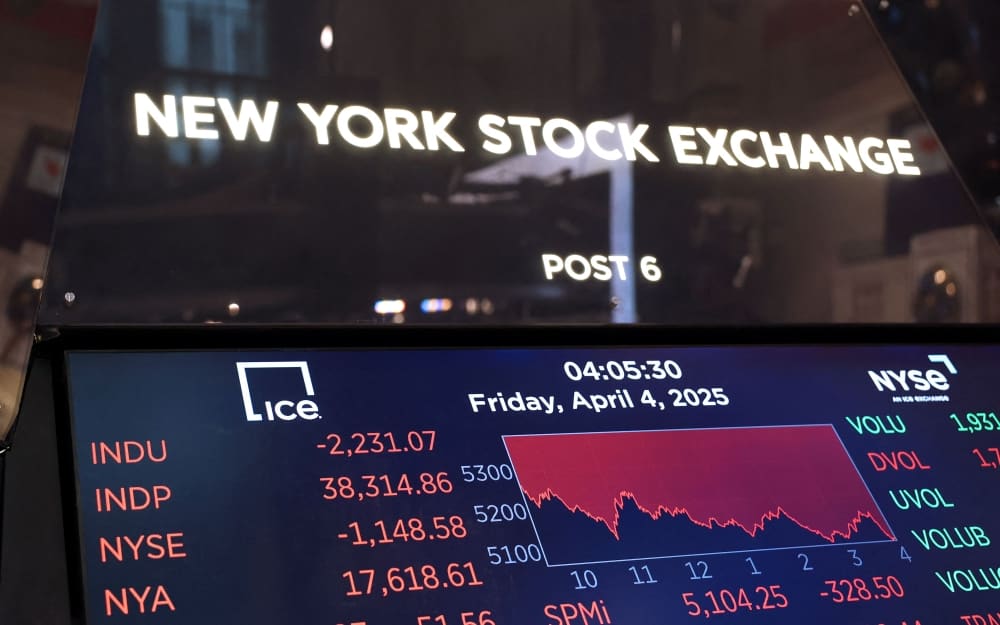
Major US semiconductor manufacturers saw significant losses Monday following reports that a Chinese company has achieved a critical breakthrough in lithography technology. AMD shares dropped as much as 8 per cent, while Nvidia declined nearly 5 per cent. Micron fell 5 per cent and Intel slipped 3.7 per cent during trading.
The sell-off was triggered by a report indicating that Shanghai Yuliangsheng has developed the capability to manufacture immersion deep ultraviolet lithography machines. These systems use ultraviolet light to etch microscopic circuits onto silicon wafers, a fundamental process in semiconductor production.
Breaking Dependence on European Suppliers
The development carries strategic weight for China's semiconductor ambitions. Currently, Chinese chipmakers rely heavily on ASML, the Dutch company that dominates the global lithography equipment market. ASML faces export restrictions that limit the sale of its most advanced systems outside the European Union, a constraint that has slowed China's progress in cutting-edge chip production.
If Shanghai Yuliangsheng can produce functional DUV lithography equipment domestically, Chinese semiconductor manufacturers would gain a crucial alternative to Western suppliers. The move would reduce vulnerability to export controls that have increasingly shaped the global chip industry landscape over the past three years.
Narrowing the Technology Gap
Access to domestically produced lithography tools could accelerate China's ability to develop and manufacture advanced processors. The country's chip industry has invested heavily in building self-sufficient production capabilities, but has consistently lagged behind American and Taiwanese manufacturers in process node advancement and production volume.
Two companies with reported ties to Yuliangsheng, SiCarrier and Huawei, did not respond to requests for comment. Yuliangsheng itself also remained silent when contacted.
The reported progress would have immediate implications for China's artificial intelligence sector. Leading Chinese AI firms have struggled to access the most advanced chips due to export restrictions, forcing them to work with older-generation hardware or seek workarounds. Improved domestic chip production would narrow the performance gap between Chinese AI models and those developed by frontier US companies.
Market Reaction Reflects Strategic Concerns
The swift market response underscores investor sensitivity to any shift in the semiconductor competitive landscape. US chip companies have benefited from a technology lead measured in years, not months. That advantage has translated into premium pricing, dominant market share, and the ability to set industry standards.
A functional Chinese lithography capability would not immediately erase that lead. Developing competitive chip designs, scaling production, and achieving acceptable yield rates require years of iterative engineering. But the market reaction suggests investors view even incremental progress as a threat to long-term growth assumptions.
The timing is particularly sensitive. US semiconductor firms are navigating a complex environment of export controls, geopolitical tension, and questions about sustained AI demand. Any development that potentially accelerates competition from Chinese manufacturers introduces fresh uncertainty into already volatile market conditions.
Lithography equipment represents one of the highest barriers to entry in semiconductor manufacturing. ASML spent decades perfecting its extreme ultraviolet systems, which cost upwards of USD 150 million per unit. If Chinese firms can produce even less advanced DUV systems reliably, it would mark a significant step toward technological self-reliance in one of the world's most strategically important industries.
RELATED STORIES
Arm Unveils Mobile Compute Platform Targeting China's AI Handset Sector
Tran Quoc Bao · 3 min

LG Pivots to AI-Defined Vehicle Platform as Korea Chases China's Self-Driving Lead
Jun-ho Seo · 3 min

China's Auto Chip Race Shifts to Volume as Horizon Robotics Crosses 15 Million Units
Jun-ho Seo · 3 min

China Scrubs 5.6 Million AI-Generated Posts in Platform Cleanup
Cheng Wei-Lun · 3 min
Spot something wrong? Email editor@briefasia.com. We log every correction publicly.