Technology · Products
Arm Unveils Mobile Compute Platform Targeting China's AI Handset Sector
Second-generation CSS integrates accelerated processing across CPU, GPU and interconnect layers as chipmaker deepens mainland footprint
KEY TAKEAWAYS
- ·Arm launched Compute Subsystem for Mobile 2 in Shanghai, distributing AI acceleration across CPU, GPU and system interconnect rather than using discrete blocks.
- ·The platform targets China's smartphone sector, which shipped approximately 680 million units in 2025, roughly 53 per cent of global volume.
- ·Devices incorporating the second-generation subsystem are unlikely to reach market before the second half of 2027 given semiconductor design and manufacturing lead times.
Platform Architecture Shift
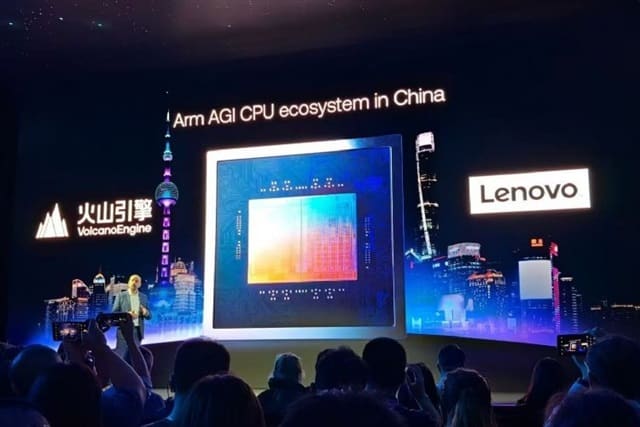
Arm introduced Compute Subsystem for Mobile 2 at its annual China event in Shanghai on 8 September, embedding machine learning acceleration directly into the processor core, graphics unit and system fabric. The architecture marks a departure from discrete AI accelerator blocks toward distributed compute across the entire system-on-chip.
The subsystem integrates processing elements that handle neural network inference at multiple stages of the data path, rather than routing workloads through a single dedicated block. This approach aims to reduce latency for on-device AI tasks common in smartphone applications, from computational photography to real-time translation and voice processing.
Arm announced the platform at its Arm Everywhere China gathering, an annual event that has become the company's primary channel for mainland product launches. The venue choice underscores China's weight in the global handset supply chain; mainland manufacturers shipped approximately 680 million smartphones in 2025, representing roughly 53 per cent of global volume, according to industry estimates.
China Market Calculus
The Shanghai launch reflects Arm's strategic bet on China's smartphone sector, even as geopolitical friction complicates semiconductor trade. Chinese handset makers including Xiaomi, Oppo, Vivo and Honor rely on Arm instruction set architectures for their mobile processors, typically designed by domestic chipmakers such as MediaTek and Unisoc or in-house design teams.
Arm's licensing model positions it as a critical node in this ecosystem. The company provides core intellectual property that Chinese chip designers integrate into custom silicon, avoiding the capital intensity of developing instruction sets from scratch. That model has insulated Arm's China business from some export control pressures, though licensing terms remain subject to evolving regulations.
The second-generation CSS arrives as Chinese smartphone brands push AI features to differentiate in a saturated domestic market. Local manufacturers have prioritised on-device large language model inference, image generation and enhanced camera processing as upgrade incentives, creating demand for silicon that can handle these workloads without excessive power draw or thermal constraints.
Integration Strategy
Compute Subsystem for Mobile 2 bundles CPU cores, GPU architecture and interconnect fabric into a pre-integrated package that chip designers can license as a complete unit. This contrasts with Arm's traditional approach of licensing individual components separately, requiring customers to handle integration work.
The subsystem model accelerates time to market for chipmakers, particularly smaller design houses that lack the engineering resources to optimise complex interactions between processor, graphics and memory subsystems. For Arm, bundling generates higher per-design licensing fees and strengthens customer lock-in, as switching costs rise when multiple components are tightly coupled.
The platform's AI capabilities span matrix multiplication units within the CPU cluster, tensor processing extensions in the GPU and dedicated data paths in the interconnect that reduce memory bottlenecks during inference operations. Arm has not disclosed specific performance benchmarks or power efficiency targets for the new subsystem.
Competitive Landscape
Arm's China push unfolds against intensifying competition in mobile silicon. Qualcomm remains the dominant supplier of high-end smartphone processors globally, while MediaTek has gained share in China's mid-tier segment with aggressive pricing and feature parity. Domestic players including Huawei's HiSilicon division have accelerated in-house chip development, though US export restrictions have constrained access to advanced manufacturing nodes.
The subsystem launch also coincides with broader industry uncertainty around AI feature adoption. While smartphone makers have invested heavily in on-device AI marketing, consumer willingness to pay premiums for these capabilities remains unclear. Early AI-focused handset launches in China have shown mixed sales results, with some models failing to command expected price points.
Arm's integrated approach attempts to lower the barrier for chipmakers to add competitive AI features, potentially accelerating diffusion across price tiers. Whether that translates to device sales depends on software ecosystems and application developer uptake, variables outside Arm's direct control.
The company has not announced commercial availability timelines for chips incorporating the second-generation CSS, nor identified which mainland design partners have licensed the platform. Smartphone models featuring the new subsystem are unlikely to reach retail channels before the second half of 2027, given typical design and manufacturing lead times in the semiconductor industry.
RELATED STORIES
LG Pivots to AI-Defined Vehicle Platform as Korea Chases China's Self-Driving Lead
Jun-ho Seo · 3 min
China's Battery Dominance Faces Quality Test as CALB Defect Spreads
Anand Sundaram · 3 min

China's Auto Chip Race Shifts to Volume as Horizon Robotics Crosses 15 Million Units
Jun-ho Seo · 3 min
China's Chip Makers Split Three Ways Beneath the Revenue Growth
Tran Quoc Bao · 3 min
Spot something wrong? Email editor@briefasia.com. We log every correction publicly.