Finance · Deals
Unitree Robotics IPO Oversubscribed 2,700 Times as Investors Bet on China's Robot Push
Hangzhou robotics maker's Shanghai listing draws US$22 per share in debut that reflects surging appetite for humanoid and quadruped automation across Asia's largest economy
KEY TAKEAWAYS
- ·Unitree Robotics' Shanghai IPO drew offline subscriptions 2,760 times the initial offering size at 150.80 yuan per share, raising approximately 6.10 billion yuan.
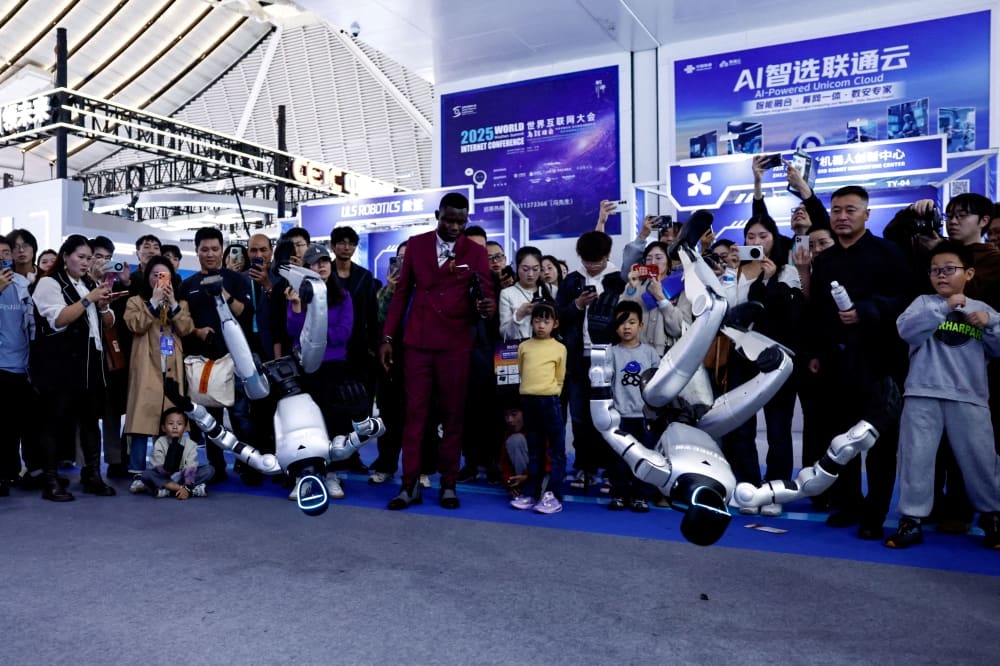
- ·The Hangzhou company shipped over 5,500 humanoid robots in 2025 and sold 33,294 quadruped units between 2023 and 2025, demonstrating volume production capability.
- ·The extreme oversubscription signals strong institutional appetite for Chinese robotics firms and may accelerate IPO timelines for regional peers in Shenzhen and Hong Kong.
Extreme Demand Signals Market Confidence
Unitree Robotics opened subscriptions for its Shanghai Stock Exchange debut on August 10, revealing demand that dwarfed supply by a factor of 2,760. The Hangzhou-based robotics manufacturer is offering 40.4 million shares at 150.80 yuan (approximately US$22) each on the sci-tech innovation board, commonly known as the STAR Market. The placement represents 10 percent of post-offering share capital and is expected to raise roughly 6.10 billion yuan in gross proceeds.
After excluding invalid bids and the highest-priced segment of proposed subscriptions, offline institutional demand totaled 71.5 billion shares, according to the issuance announcement. The oversubscription ratio positions Unitree among the most sought-after mainland IPOs this year and underscores growing institutional conviction in China's robotics buildout.
Product Portfolio and Commercial Traction
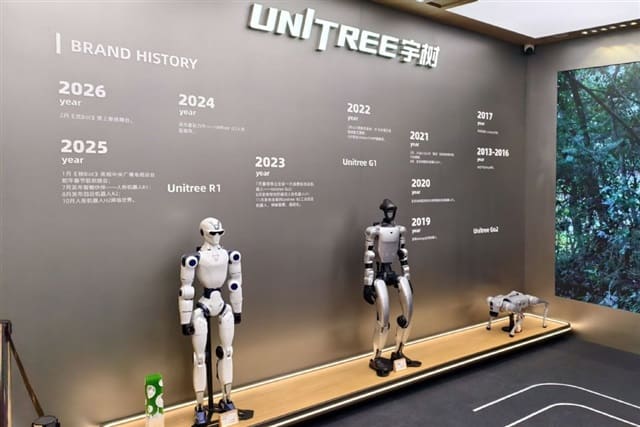
Unitree specializes in high-performance general-purpose humanoid and quadruped robots, alongside robot components and embodied intelligence models. The company describes itself as a civilian robotics firm with leadership in core robot parts, motion control, and sensing technologies.
Between 2023 and 2025, Unitree sold 33,294 quadruped robots and 5,632 humanoid robots, according to its prospectus. Humanoid robot shipments alone exceeded 5,500 units in 2025, a figure that excludes wheeled dual-arm configurations. The velocity of humanoid unit sales suggests Unitree has moved beyond prototype demonstrations into volume production, a threshold few robotics startups achieve.
Regulatory Green Light and Market Positioning
China's securities regulator approved Unitree's IPO registration on July 1, clearing the final hurdle for the listing. The STAR Market, launched in 2019 to channel capital toward strategic technology sectors, has become the preferred venue for Chinese robotics, semiconductor, and AI companies seeking public capital.
Unitree's listing arrives as Beijing intensifies policy support for robotics and automation, viewing the sector as central to manufacturing competitiveness and demographic resilience. The State Council has set targets for annual humanoid robot production to reach volume scale by 2025 and mass adoption by 2027, creating tailwinds for companies with proven commercial traction.
Asia's Robotics Capital Cycle
The extreme oversubscription reflects broader capital flows into Asia's robotics ecosystem. Japan's SoftBank recently increased its stake in humanoid developers, while South Korea's Hyundai Motor Group continues to expand Boston Dynamics' operational footprint in the region. Singapore sovereign wealth funds have allocated fresh capital to robotics venture funds targeting Southeast Asian logistics and manufacturing applications.
Unitree's pricing at 150.80 yuan per share implies a valuation that will be closely watched by regional peers. If the stock performs strongly in early trading, it may accelerate IPO timelines for other Chinese robotics firms preparing listings in Shenzhen and Hong Kong.
What Comes After the Listing
Post-IPO, Unitree will face pressure to demonstrate margin expansion and international revenue diversification. While domestic demand remains robust, export markets in Southeast Asia, the Middle East, and Europe represent the next growth frontier. The company's ability to navigate export controls on advanced robotics technology, particularly components with dual-use potential, will shape its trajectory.
Investor appetite at this scale also raises the bar for execution. Unitree must convert capital into R&D output, scale manufacturing without quality erosion, and build service networks to support deployed units. The IPO provides resources; the next twelve months will reveal whether operational delivery matches market expectations.
The offering closes this week, with trading expected to commence shortly after allocation. Early price action will set the tone for China's robotics IPO pipeline through year-end.
RELATED STORIES

China's Star Fund Managers Lose Ground After Rotating Into AI Stocks
Cheng Wei-Lun · 4 min

State Funds Step In as AI Volatility Tests China's Bull Market Strategy
Cheng Wei-Lun · 3 min
Unitree Targets $622 Million IPO as Meituan and Tencent Circle China's Humanoid Robot Play
Cheng Wei-Lun · 4 min

DeepSeek Backs Unitree With $20.8 Million Stake in Shanghai IPO
Cheng Wei-Lun · 3 min
Spot something wrong? Email editor@briefasia.com. We log every correction publicly.