Technology · Dev
UMC Commits $5 Billion to Silicon Photonics and Advanced Packaging
Taiwan's fourth-largest contract chipmaker targets AI-driven expansion in Tainan and Singapore as advanced packaging market set to double by 2030
KEY TAKEAWAYS
- ·United Microelectronics Corp will invest $5 billion over two to three years to expand silicon photonics and advanced packaging capacity in Tainan and Singapore.
- ·The company expects AI-related revenue to reach $300 million this year and exceed $1 billion within three years as the advanced packaging market doubles by 2030.
- ·UMC raised 2026 capital expenditure guidance from $1.5 billion to $2 billion and plans substantial price increases in the second half to reflect higher material costs.
Major Capacity Push Across Two Countries
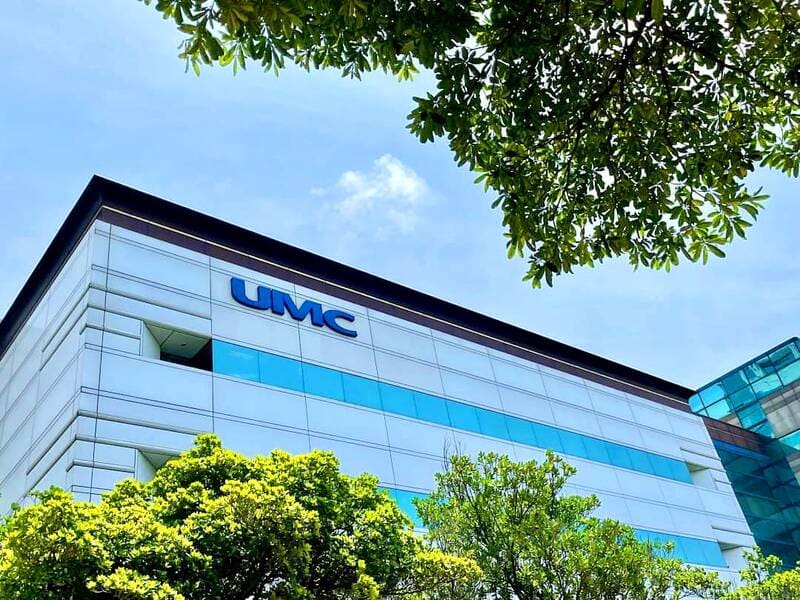
United Microelectronics Corp has committed $5 billion over the next two to three years to expand silicon photonics and advanced packaging operations, positioning itself to capture accelerating demand from artificial intelligence applications. The world's fourth-largest contract chipmaker will deploy the investment across facilities in Tainan and Singapore, according to CEO Jason Wang.
The company raised its capital expenditure forecast for this year from $1.5 billion to $2 billion. UMC now counts more than 10 active customers in advanced packaging with over 35 products under development, Wang told an earnings conference.
Advanced packaging has emerged as a critical bottleneck in AI chip production, where multiple dies must be integrated into single high-performance modules. The addressable market for these services is projected to more than double by 2030, according to UMC.
AI Revenue Trajectory
UMC expects AI-related revenue to reach approximately $300 million this year and surpass $1 billion within three years. The company views silicon photonics and advanced packaging as essential growth engines, particularly as hyperscalers and data center operators push for higher bandwidth interconnects.
Silicon photonics technology uses light rather than electrical signals to transmit data between chips, offering speed and power efficiency advantages crucial for AI training clusters. UMC's expansion plans align with long-term product roadmaps from key customers in the space.
The company reported second-quarter net profit of NT$42.26 billion ($1.31 billion), up 161 percent year-on-year, driven by significant non-operating income. Revenue expanded 17 percent to NT$68.74 billion. Earnings per share jumped from NT$1.29 to NT$3.39.
Utilization and Pricing Outlook
Factory utilization is expected to improve to more than 90 percent this quarter from 85 percent in the prior period, while wafer shipments are likely to grow at a high-single-digit percentage. Gross margin would rise from 32.5 percent to approximately 35 percent, Wang said.
UMC plans substantial price increases in the second half of this year to reflect higher material costs. The company anticipates more meaningful pricing increases in 2027, citing constructive discussions with customers and clearer business visibility. Chip prices are expected to remain steady in the near term before the increases take effect.
For the first time, 22-nanometer and 28-nanometer chips became the largest revenue contributors last quarter, accounting for 37 percent of sales. These represent UMC's most advanced process nodes currently in volume production.
Intel Collaboration and Technology Roadmap
UMC's 12-nanometer technology development in collaboration with Intel Corp is progressing as planned, with volume production scheduled for 2028. The partnership represents a strategic effort to bring more advanced nodes into UMC's portfolio without the capital intensity of leading-edge processes below 10 nanometers.
The company's optimistic outlook is driven by both AI-related and non-AI demand, with particular strength in automotive, industrial, and specialty applications. These segments have shown resilience even as consumer electronics markets remain mixed.
Taiwan's contract chipmaking sector has emerged as a focal point for global semiconductor supply chains, with UMC positioned as a critical player in mature and specialty nodes. The company's expansion into silicon photonics and advanced packaging reflects broader industry recognition that performance gains increasingly depend on system-level integration rather than transistor scaling alone.
UMC's capital deployment also underscores Southeast Asia's growing role in semiconductor manufacturing. Singapore has attracted significant investment from chipmakers seeking geographic diversification and proximity to growing electronics hubs in the region.
RELATED STORIES
Taiwan Indicts Nvidia Manager in Chip-Smuggling Investigation
Cheng Wei-Lun · 4 min

Manila's Chip Industry Still Stalled in Assembly While Taipei Built Fabs
Priyanka V. Rao · 4 min

Itochu and Taiwan IT Leader Back Taiwanese Chip Firms' Kyushu Push
Cheng Wei-Lun · 3 min

South Korea's Chip Concentration Carries Lower Risk Than Taiwan's, Financial Analysis Shows
Cheng Wei-Lun · 3 min
Spot something wrong? Email editor@briefasia.com. We log every correction publicly.