Technology · Policy
Manila's Chip Industry Still Stalled in Assembly While Taipei Built Fabs
A University of the Philippines study traces how divergent spending on R&D, vocational training, and industrial policy left one economy designing cutting-edge semiconductors and the other testing chips designed elsewhere.
KEY TAKEAWAYS
- ·The Philippines and Taiwan both entered semiconductor assembly in the late 1960s, but Taiwan now controls 90% of advanced chip production while Manila operates no wafer fabs.
- ·Taiwan funded 49% of TSMC's startup capital and built Hsinchu Science Park next to engineering universities, while Philippine export zones sat isolated from research centers and received under 1% of the national budget for science.
- ·A UP study warns the new Pax Silica zone in New Clark City risks repeating the failures of the 1972 Bataan zone unless the government funds shared facilities, research consortia, and technology transfer programs.
A Tale of Two Starting Lines
Both economies entered the semiconductor business in the late 1960s performing the same low-margin work: assembling, testing, and packaging chips that foreign companies had already designed. Fifty years later, Taiwan supplies roughly 90% of the world's most sophisticated processors, while Manila has yet to operate a single wafer fabrication plant.
A discussion paper released in July by the University of the Philippines Center for Integrative and Development Studies argues that market dynamics explain far less of that divergence than the industrial strategies each government chose between 1970 and the mid-1990s. The authors, Lianne Angelico Depante and Kirsten Lianne Mae Dedase, examined budget allocations, education priorities, and the design of export processing zones to understand why one archipelago remained an assembler and the other became a designer and manufacturer.
Bataan's Legacy
Manila opened the Bataan Export Processing Zone in 1972 with a straightforward goal: pull in multinational manufacturers through tax holidays, duty-free imports, and full foreign ownership. Intel and Texas Instruments set up shop, and the model looked successful enough that Baguio, Cavite, and Cebu each gained their own zones.
Yet no technology migrated into the domestic economy. According to the UP study, Bataan sat too far from Metro Manila and from any university with a strong engineering faculty. Firms had little reason to collaborate or share know-how, and the zone generated jobs but not spillovers. When the Philippine government enacted the PEZA law in 1995 and handed zone development to private operators, foreign investment climbed, but the parks became what the researchers call isolated enclaves with minimal ties to local suppliers or research institutions.
Taiwan took a different path. Its Hsinchu Science Park opened in 1980 adjacent to National Tsing Hua University and National Chiao Tung University, within easy reach of the state-run Industrial Technology Research Institute. ITRI would later incubate Taiwan Semiconductor Manufacturing Company, with the government directly funding 49% of TSMC's initial capital. Public labs were empowered to co-invest, and the park operated as a deliberate cluster linking firms, universities, and research bodies under a unified industrial strategy.
Funding the Future, or Not
Taiwan poured public money into risky, unproven semiconductor projects. The Philippines did the opposite. The Department of Science and Technology has received less than 1% of the national budget for years, a figure the UP paper describes as paltry. Without sustained research funding, local firms had no pathway to move upstream into design or fabrication.
The contrast extends to education. By 1980, technical and vocational students in Taiwan outnumbered university enrollees by more than half, creating a pipeline of technicians and engineers aligned with industrial needs. The Philippine system, by comparison, left higher education to market signals. Students gravitated toward law, business, education, and the humanities, leaving science and engineering underrepresented. Vocational training remained largely private and oriented toward services rather than manufacturing, and cultural norms reinforced the perception that technical careers carried less prestige than white-collar professions.
Brain Drain Versus Brain Gain
Taiwan ran aggressive programs to lure overseas engineers and executives back home, offering them roles in nascent tech giants and state research labs. The Philippines launched its own Balik Scientist Program in the early 2010s, modeled explicitly on Taipei's example. Of the 320 scientists who enrolled, more than half eventually left again, according to the study, because the domestic economy lacked the high-tech jobs that would justify staying. The researchers describe this as a retention problem rooted in a limited industrial base.
The Pax Silica Gamble
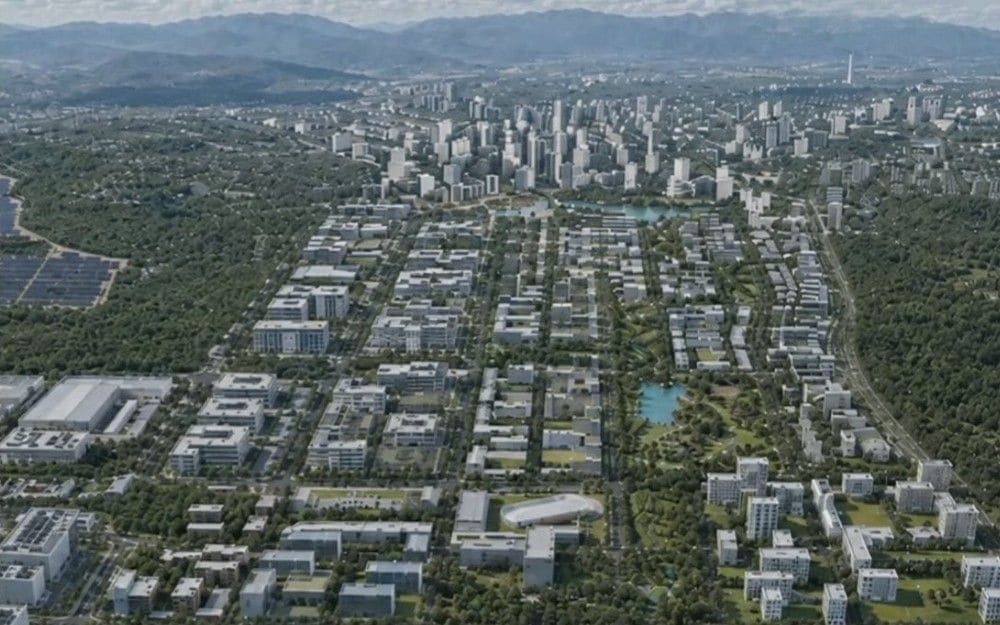
President Ferdinand Marcos Jr. highlighted the Pax Silica initiative in his recent State of the Nation Address. The centerpiece is a 1,619-hectare economic security zone in New Clark City, part of a larger Luzon Economic Corridor backed by the United States that connects Subic, Clark, Manila, and Batangas.
The UP study cautions that building roads, ports, and tax-free zones will not by itself produce a semiconductor cluster. The researchers argue that without shared fabrication and testing facilities, research consortia, dedicated spinoff funding, and policies that encourage technology transfer and local supply-chain development, the site risks becoming another logistics hub rather than an innovation engine. They note that the government has, in effect, tried this before.
What Needs to Change
The paper offers seven recommendations. Public research agencies should receive mandates that permit calculated risk-taking, including the authority to incubate spinoff companies and conduct applied research in chip design, advanced packaging, and lab-scale wafer production. Tolerating failure, the authors write, is an inherent part of learning.
Governments must also finance capital-intensive segments that private investors avoid in the absence of state commitment. For the Philippines, the study proposes a dedicated semiconductor development fund that would provide equity, matching grants, concessional loans, or research subsidies to local firms and startups. Support should be tied to measurable outcomes such as technology transfer, workforce training, supplier development, and patent generation, not profit alone.
The authors are careful not to declare Pax Silica doomed. A genuine cluster of assembly firms, startups, universities, and prospective fabrication companies remains possible, they write, but only if industrial and fiscal policy go beyond infrastructure. Without that shift, the zone exposes the country to geopolitical risk without delivering commensurate development gains.
RELATED STORIES

Xiaomi Unveils 3nm Mobile Processor to Challenge Qualcomm and MediaTek
Cheng Wei-Lun · 3 min

Philippines Builds Twin Export Engine on Electronics and Workforce Scale
Priyanka V. Rao · 3 min

Philippine Economic Zones Pull Record ₱216 Billion in Eight Months
Priyanka V. Rao · 3 min
Philippines Central Bank Raises Rate to 5% Despite Economic Slowdown
Priyanka V. Rao · 3 min
Spot something wrong? Email editor@briefasia.com. We log every correction publicly.