Perspectives · Analysis
When Companies Skip Disclosure: The UltraGreen.ai Warning for Asia's Growth Markets
An independent analyst caught what regulators and investors missed - revealing a transparency gap that threatens Singapore's ambitions to attract high-growth listings.
KEY TAKEAWAYS
- ·An independent analyst revealed that UltraGreen.ai failed to disclose regulatory approvals granted to two US competitors in its core medical dye market.
- ·The silence highlights a transparency gap as Singapore and other Asian exchanges compete to attract growth companies with lighter disclosure standards.
- ·Institutional investors should demand proactive disclosure of competitive threats from firms seeking valuations based on future potential rather than current earnings.
- ·SGX and MAS face a credibility test: tighten continuous disclosure rules or risk losing investor trust in high-growth listings.
The Weekend E-mail That Exposed a Silence
Over the National Day long weekend in Singapore, Jamal Aliyev - an independent analyst with no institutional backing - sent a short research note to a handful of journalists. His message was straightforward: UltraGreen.ai, the medical dye manufacturer that listed on SGX in December, had competition closing in. Two companies, Zydus Lifesciences and Provepharm, had recently secured regulatory approvals to supply indocyanine green dye in the United States, the market that matters most for UltraGreen.ai's revenue model.
The detail that made Aliyev's note significant was not the competitive threat itself. Markets are competitive; new entrants are normal. What stood out was the silence. UltraGreen.ai had disclosed nothing about these developments to shareholders, despite their materiality to the company's US market position.
That silence raises a question worth examining across Asia's capital markets: when exchanges court high-growth, high-promise companies, what standards of transparency should investors expect in return?
The Mismatch Between Promise and Practice
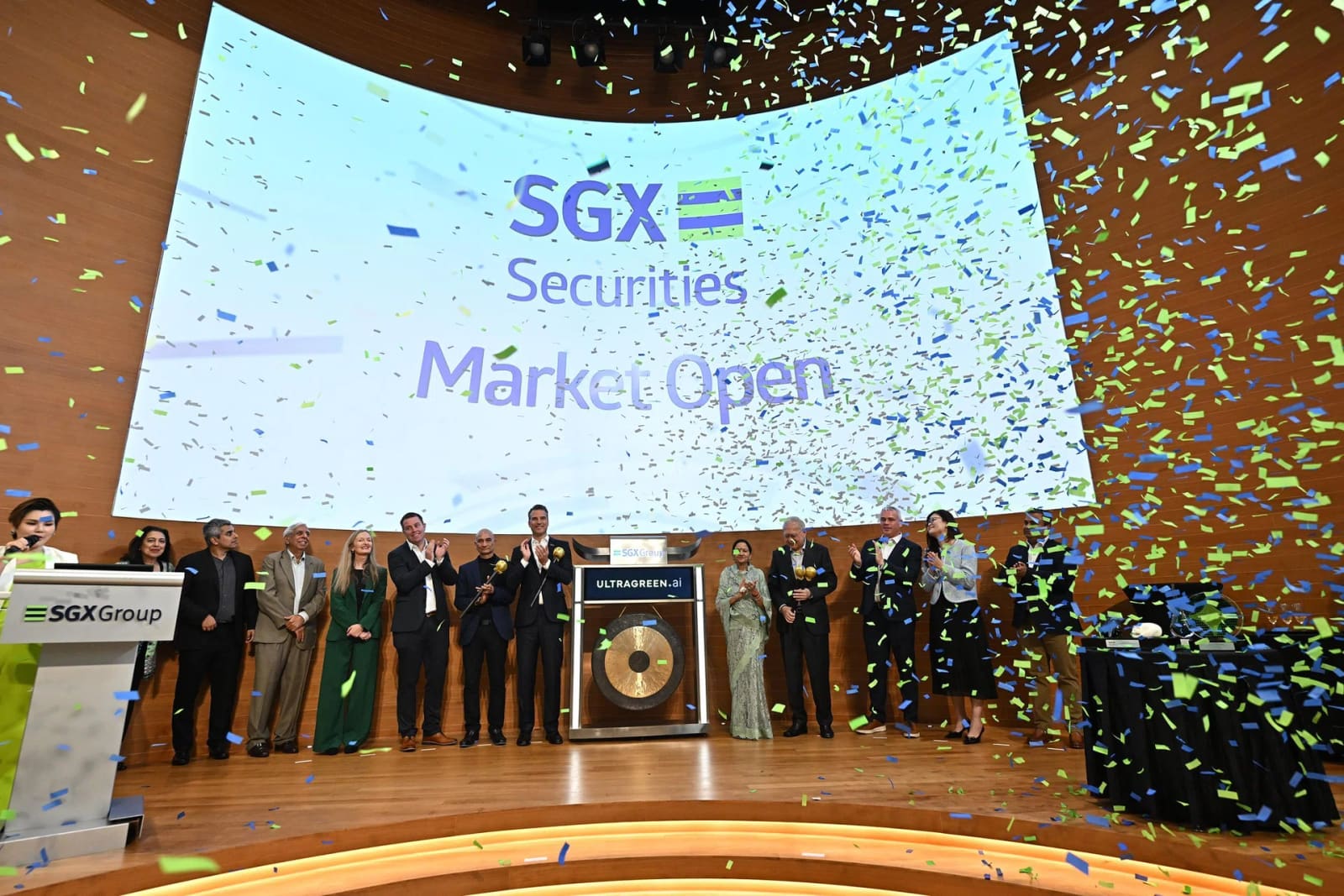
UltraGreen.ai is precisely the type of listing Singapore has been working to attract. The Monetary Authority of Singapore and SGX have spent years refining rules and investor frameworks to accommodate growth-oriented firms, particularly those in healthcare, technology, and sustainability. The goal is clear: diversify the exchange beyond its traditional base of real estate investment trusts and banks, and position Singapore as a destination for companies building tomorrow's industries.
UltraGreen.ai fits that profile. Its product - ICG dye used in surgical imaging - addresses a real clinical need. The company carried a narrative about innovation, regulatory approval pathways, and expansion into lucrative markets like the US. Investors who bought in at listing were pricing in future potential, not just current earnings.
But potential-based valuations require a different social contract. When a company asks to be priced on what it might become rather than what it is, transparency stops being a regulatory nicety and becomes the foundation of the investment case. Shareholders need to know when the assumptions underpinning that potential are shifting.
In this instance, they did not. It took an independent analyst working outside normal market hours to surface information that should have been disclosed by the company itself.
The Competitive Context Investors Deserved to Know
The US market for ICG dye is not infinite. Regulatory approval from the Food and Drug Administration is a bottleneck that limits supply and protects margins. When Zydus Lifesciences and Provepharm received their approvals, the competitive landscape shifted. More suppliers mean pricing pressure, potential market share dilution, and a changed risk profile for any company dependent on that market.
These are material facts. They affect revenue forecasts, margin assumptions, and the probability of achieving the growth targets that justified UltraGreen.ai's valuation at listing. Investors making buy or sell decisions in the months following those approvals were operating with incomplete information.
The failure to disclose is particularly striking given UltraGreen.ai's recent stock performance. Shares have fallen sharply since the December listing, and while broader market conditions and sector rotation have played a role, the lack of visibility into competitive dynamics has compounded uncertainty. Investors dislike surprises. They dislike avoidable surprises even more.
What Singapore's Listing Strategy Demands
Singapore is not alone in trying to attract growth companies. Hong Kong, Tokyo, Seoul, and even emerging bourses in Jakarta and Bangkok are all competing for the same pool of listings. Each has adjusted listing criteria, introduced dual-class share structures, or softened profitability requirements to make themselves attractive to founders and early-stage investors.
The risk in this competition is a race to the bottom on governance and disclosure. If exchanges prioritise deal flow over investor protection, they may win listings in the short term but lose credibility in the long term. Capital is mobile. Institutional investors, particularly those allocating to Asia from New York, London, or Zurich, will go where they trust the information environment.
UltraGreen.ai's silence on competitive threats is a case study in what not to do. The company benefited from Singapore's accommodating listing framework and the reputational halo that comes with an SGX listing. In return, it owed shareholders - and the market - a higher standard of communication.
The Role of Independent Research
Aliyev's intervention is a reminder that formal disclosure regimes are not self-enforcing. Regulators set rules, but compliance depends on company culture and the willingness of market participants to hold firms accountable. Independent analysts, activist investors, and financial journalists all play a role in surfacing gaps between what companies disclose and what investors need to know.
The fact that this information came from an independent analyst rather than a sell-side research desk or the company itself is telling. Sell-side analysts often have access and relationships that independent researchers lack, but they also face conflicts of interest, particularly when their firms have investment banking relationships with the companies they cover. Independent voices, by contrast, have fewer constraints and can ask uncomfortable questions.
Markets work better when there are multiple layers of scrutiny. Singapore's ecosystem benefits from having analysts like Aliyev who operate outside the usual institutional structures and are willing to dig into regulatory filings, competitor disclosures, and cross-border data that others might overlook.
What Investors Should Demand Going Forward
The UltraGreen.ai episode should prompt a broader conversation about disclosure expectations for growth companies in Asia. Several principles are worth codifying, even if they are not yet mandated by regulation.
First, companies that list on the promise of future growth should proactively disclose material changes to their competitive environment. This includes regulatory approvals granted to competitors, shifts in pricing dynamics, and any developments that could affect market share assumptions embedded in analyst models and investor presentations.
Second, firms should adopt a presumption of disclosure rather than a minimalist interpretation of regulatory requirements. The question should not be "Are we legally required to disclose this?" but rather "Would a reasonable investor want to know this?"
Third, exchanges and regulators should monitor not just what companies disclose, but how quickly they disclose it. Timeliness matters. Information that arrives months late is often useless for investment decisions.
Finally, institutional investors need to apply consistent pressure. If a company's disclosure practices fall short, that should be reflected in valuation multiples, shareholder votes, and the willingness of capital allocators to participate in future fundraising rounds.
A Test Case for Market Credibility
Singapore's ambition to become a hub for growth-oriented listings is reasonable and achievable. The city-state has the regulatory infrastructure, the talent pool, and the capital base to compete with Hong Kong and other regional centres. But success depends on maintaining a reputation for transparency and investor protection.
UltraGreen.ai's listing was meant to be a proof point for that strategy. Instead, it has become a cautionary tale. The company's failure to disclose competitive threats undermines confidence not just in UltraGreen.ai itself, but in the broader proposition that Singapore is a safe place to invest in high-growth, high-risk companies.
The good news is that this is fixable. SGX and MAS have the tools to tighten continuous disclosure requirements and to signal to listed companies that selective silence will not be tolerated. The question is whether they will use them.
For now, the UltraGreen.ai case stands as a reminder that attracting listings is only half the battle. Keeping investor trust is the other half, and it requires a culture of transparency that starts with the companies themselves.
RELATED STORIES

Singapore Bank Stocks Dip as Gold Extends Rally to $4,600
Cheng Wei-Lun · 5 min

Jardine Cycle & Carriage Exits Singapore and Malaysia Auto Operations in S$265 Million Deal
Priyanka V. Rao · 3 min

Singapore Pushes Back on US Tariff Expectations as Trade Tensions Reshape Global Order
Priyanka V. Rao · 3 min
Singapore Eyes Retail Fund Expansion as Seoul's Leveraged ETF Losses Sound Warning
Priyanka V. Rao · 4 min
Spot something wrong? Email editor@briefasia.com. We log every correction publicly.