Technology · Dev
TSMC Japan Plant Shutdown After 7.1 Quake Expected to Have Minimal Revenue Impact
Kumamoto facility halted production temporarily but sustained no major damage, with analyst projecting less than 0.03 percent effect on quarterly earnings
KEY TAKEAWAYS
- ·A magnitude 7.1 earthquake forced TSMC's Kumamoto plant offline, though the facility sustained no major structural damage and is gradually restoring operations.
- ·Potential revenue loss from a one-week shutdown would total roughly $14 million, representing only 0.03 percent of TSMC's projected $45.2 billion third-quarter revenue.
- ·Equipment recalibration and continued aftershocks create uncertainty around full recovery timeline despite the plant's intact infrastructure and safety systems.
Plant Infrastructure Intact Despite Magnitude 7.1 Tremor
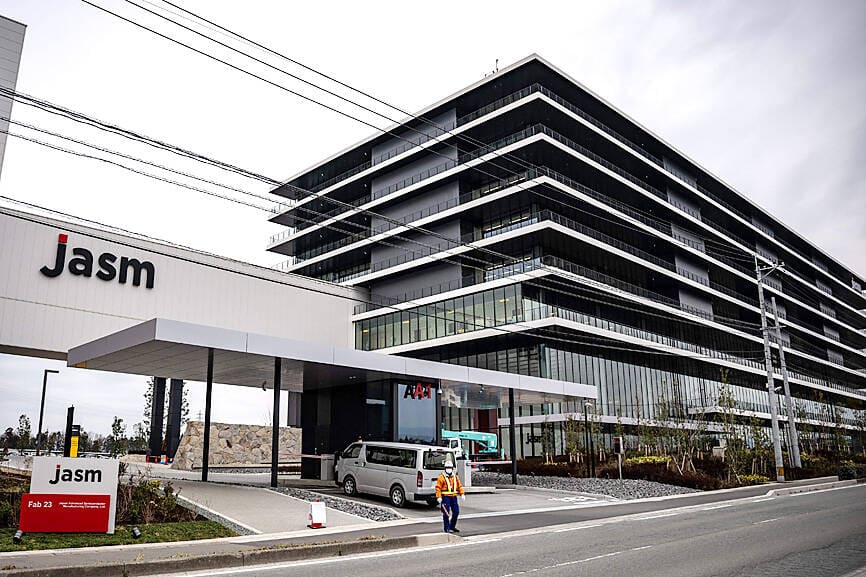
A magnitude 7.1 earthquake that struck Japan's Kumamoto Prefecture on Tuesday forced Taiwan Semiconductor Manufacturing Co to temporarily halt operations at its local fabrication plant, though the facility sustained no major structural damage. The plant, operated through the company-led joint venture Japan Advanced Semiconductor Manufacturing Inc, maintained intact water supply, power, and safety systems throughout the incident, according to TSMC.
The chipmaker deployed resources to support the site and confirmed that raw material supplies remained unaffected. However, the company noted that production equipment requires adjustment and recalibration before operations can fully resume, without providing a specific timeline for complete restoration.
Equipment Sensitivity Creates Recovery Challenge
Semiconductor manufacturing equipment faces particular vulnerability during seismic events. The tools used in wafer fabrication are highly sensitive to vibrations, and earthquakes can cause wafer losses while pushing process parameters out of specification, according to Digitimes analyst Roger Huang. Production lines must undergo thorough inspection and recalibration before resuming operations, making recovery a gradual process that involves safety checks, equipment inspections, and process verification.
The Kumamoto facility's first wafer fab operates with a planned monthly capacity of 55,000 12-inch wafers, utilizing 28-nanometer, 22-nanometer, 16-nanometer, and 12-nanometer processes. The plant serves applications including image sensors for Sony Group Corp, logic chips, automotive electronics, and industrial products.
Limited Financial Exposure for TSMC
Current market conditions reduce the potential revenue impact from the shutdown. Weak demand for automotive and smartphone applications has kept the plant's monthly output at approximately 20,000 wafers, well below its designed capacity, Huang said.
A one-week production halt would translate to roughly $14 million in potential lost revenue, representing only about 0.03 percent of TSMC's projected third-quarter revenue of $45.2 billion, according to Huang's analysis. This minimal exposure reflects both the facility's current production levels and its relatively small contribution to TSMC's global manufacturing footprint.
Aftershocks Complicate Timeline
While the building structure remained safe and production lines have begun recovering, the timeline for full restoration faces uncertainty. Continued aftershocks in the region could delay the completion of checks on key equipment and potentially affect customer delivery schedules. The recovery process requires completing all safety protocols and equipment verification before production can return to normal levels.
TSMC's Japan operations represent part of the company's broader strategy to diversify manufacturing locations and serve regional customers more directly. The Kumamoto plant marks the chipmaker's first fabrication facility in Japan, established through partnership with local stakeholders to address supply chain considerations and customer proximity.
The earthquake's limited impact on TSMC's overall operations underscores the scale of the company's global manufacturing capacity, where even a facility designed for 55,000 wafers monthly represents a small fraction of total output. As the world's largest contract chipmaker continues expanding across multiple geographies, individual site disruptions increasingly pose manageable risks to quarterly financial performance, though operational recovery remains a complex technical undertaking requiring careful attention to equipment precision and process integrity.
RELATED STORIES

Taiwan Indicts Nvidia Manager in Chip-Smuggling Investigation
Cheng Wei-Lun · 4 min

Itochu and Taiwan IT Leader Back Taiwanese Chip Firms' Kyushu Push
Cheng Wei-Lun · 3 min

Tokyo Summit Pushes Trilateral Tech Alliance Among Taiwan, Japan, and US
Cheng Wei-Lun · 3 min

AI Demand Tightens Memory Markets as HBM4 Production Strains Supply
Cheng Wei-Lun · 3 min
Spot something wrong? Email editor@briefasia.com. We log every correction publicly.