Technology · AI
AI Demand Tightens Memory Markets as HBM4 Production Strains Supply
September's semiconductor landscape saw Intel raise CPU prices while memory inventories contracted under pressure from high-bandwidth memory and server requirements.
KEY TAKEAWAYS
- ·DRAM and NAND inventories tightened in September 2026 as HBM4 production and server demand pulled capacity away from consumer and industrial memory segments.
- ·Intel raised CPU prices while Qualcomm and MediaTek targeted industrial PC and IoT markets, intensifying competition in segments where Arm-based designs are gaining traction.
- ·Micron, Taiwan Mobile, ASML, Synopsys and Eaton advanced AI infrastructure and advanced-node manufacturing projects, signalling continued capital deployment across the semiconductor supply chain.
Memory Inventories Contract Under AI Pressure
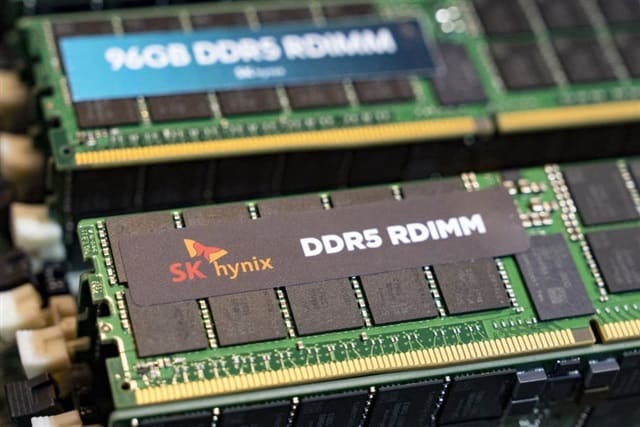
Artificial intelligence infrastructure demand is compressing memory supply across Asia's semiconductor sector. DRAM and NAND inventories tightened during the second week of September 2026 as production capacity shifted toward high-bandwidth memory generation four and server-grade components, creating supply constraints in adjacent market segments.
The strain reflects manufacturing trade-offs inherent in advanced memory production. HBM4 fabrication requires process tools, cleanroom capacity and testing infrastructure that overlap with conventional DRAM lines. When foundries and memory manufacturers allocate more capacity to high-margin AI components, availability for consumer and industrial applications contracts accordingly.
Samsung Electronics and other major memory producers are navigating this tension as hyperscale data-centre operators place orders for next-generation server platforms. The shift is structural rather than cyclical; AI training clusters and inference deployments consume memory bandwidth at rates that conventional server workloads do not approach.
Intel Adjusts Pricing as Competitors Target Niche Segments
Intel raised CPU prices during the same period, a move that coincides with competitive pressure from Qualcomm and MediaTek in industrial PC and Internet of Things categories. The price adjustment spans multiple product lines, though the company has not disclosed percentage increases or specific SKUs affected.
Qualcomm and MediaTek are leveraging their mobile and connectivity expertise to enter segments where Intel traditionally held dominant share. Industrial computing and IoT applications represent growing revenue pools as factories, logistics networks and smart-city deployments expand across Southeast Asia and Greater China.
The competitive dynamic illustrates a broader disaggregation of the x86 ecosystem. Arm-based designs are gaining traction in edge computing and embedded systems, where power efficiency and integration matter more than raw single-thread performance. Intel's pricing strategy may reflect an effort to defend margin in its core markets while competitors chip away at adjacent categories.
Infrastructure Buildout Advances Across Supply Chain
Micron, Taiwan Mobile, ASML, Synopsys and Eaton announced or progressed initiatives tied to AI infrastructure and advanced-node manufacturing during the week. These moves span memory production, telecommunications backbone upgrades, lithography equipment, electronic design automation tools and power management systems.
Taiwan Mobile's involvement signals that AI workloads are driving investment beyond semiconductor fabs and assembly plants. Network operators are preparing for edge AI deployments and distributed inference, which require low-latency connectivity and higher backhaul capacity than previous mobile generations provided.
ASML and Synopsys activity points to continued investment in sub-3-nanometre manufacturing. Extreme ultraviolet lithography tools and design software are bottlenecks for advanced nodes; any capacity expansion or capability upgrade in these domains enables downstream production increases at foundries.
Eaton's participation underscores the infrastructure reality behind AI scaling. Data centres running large language models and training runs consume power at densities that older facilities cannot support. Electrical distribution, cooling and backup systems must be re-engineered, creating demand for industrial electrical components and power electronics.
Regional Implications
Asia's position as the hub for semiconductor manufacturing means supply tightness in DRAM and NAND ripples through electronics supply chains globally. Contract prices for memory components typically adjust quarterly, but spot markets react faster when inventories fall below normal levels.
For systems integrators and original equipment manufacturers across the region, the memory supply situation complicates procurement planning. Lead times for server DRAM and enterprise SSDs have lengthened, and some buyers are securing supply through advance purchase agreements rather than relying on spot availability.
The Intel pricing shift and competitive moves by Qualcomm and MediaTek also carry implications for Asia's industrial and IoT sectors. Many of the region's smart manufacturing and logistics initiatives depend on cost-effective compute modules. If Intel prices rise while Arm-based alternatives improve performance, adoption curves for non-x86 platforms may steepen.
Foundry and memory producers face capital allocation decisions with multi-year consequences. Capacity built for HBM4 today will serve AI workloads through the decade, but if demand patterns shift or new memory architectures emerge, utilisation rates could fall. The industry is making large bets on the persistence of current AI infrastructure trends.
RELATED STORIES

Taiwan's AI Supply Chain Posts Record $89.7 Billion in August Revenue
Jun-ho Seo · 2 min

MediaTek Executive Projects Million-GPU Clusters as Mid-Tier by 2030
Cheng Wei-Lun · 3 min

Integrated Systems Will Drive Next Wave of AI Growth, Says TSMC
Cheng Wei-Lun · 4 min

Manila's Chip Industry Still Stalled in Assembly While Taipei Built Fabs
Priyanka V. Rao · 4 min
Spot something wrong? Email editor@briefasia.com. We log every correction publicly.