Technology · Startups
Tokyo University Lab Becomes Incubator for Japan's Satellite Startup Wave
Intelligent Space Systems Laboratory has launched 15 microsatellites and trained founders now driving commercial space ventures
KEY TAKEAWAYS
- ·The University of Tokyo's Intelligent Space Systems Laboratory has developed 15 microsatellites now in orbit and trained multiple startup founders.
- ·The lab was previously led by a mentor known as the father of satellite startups, establishing cost-efficient design protocols now used commercially.
- ·Japan is pursuing a university-led innovation model distinct from US venture capital or Chinese state-directed space programs.
Academic Roots of a Commercial Boom
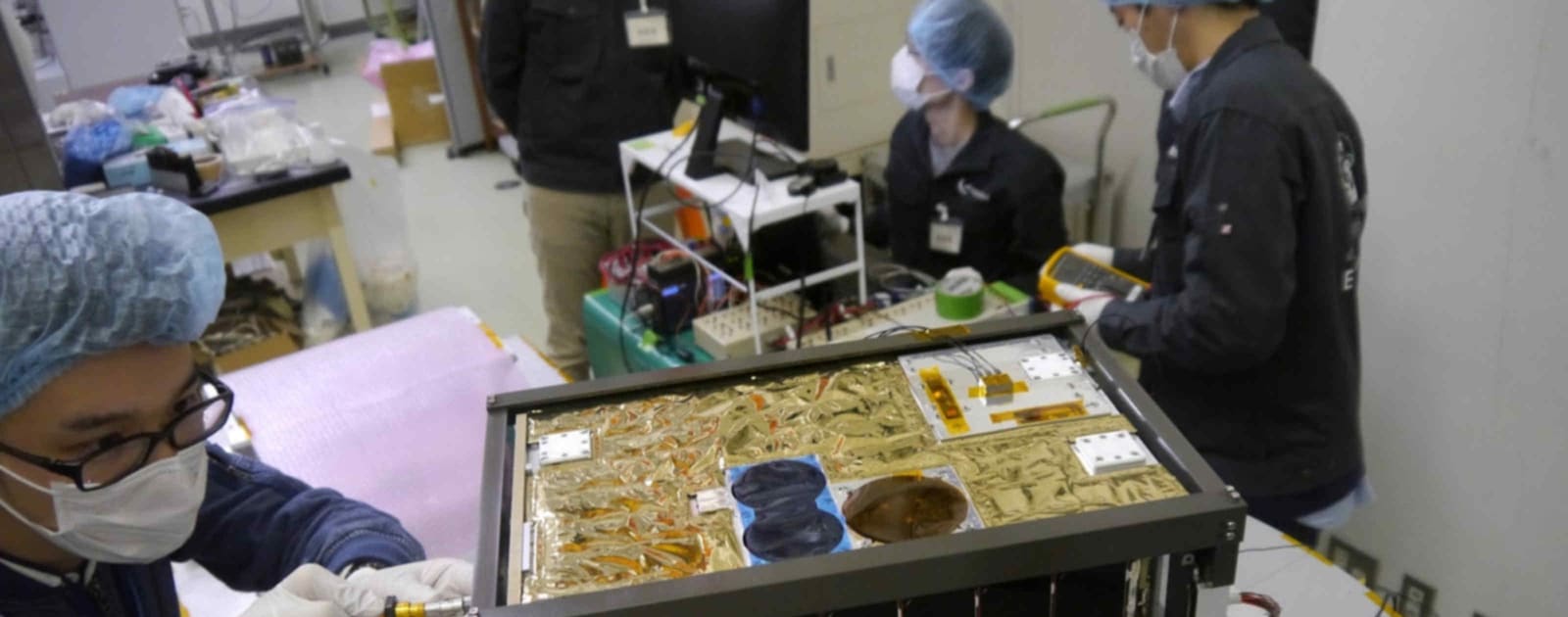
Japan's commercial space industry is tracing much of its technical DNA back to a single university laboratory. The University of Tokyo's Intelligent Space Systems Laboratory has developed 15 microsatellites that have reached orbit, creating a talent pipeline and technology base that underpins multiple private ventures now competing in the global satellite market.
The lab's influence extends beyond hardware. Researchers trained in its programs have gone on to establish or lead startup companies, carrying forward methodologies and design philosophies refined over years of academic projects. That transfer of knowledge from campus to company represents a rare example of university research translating directly into commercial momentum in Asia's space sector.
The laboratory was previously led by a figure known in industry circles as the "father of satellite startups," a reference to his role in mentoring founders and shaping the technical foundations of multiple ventures. His tenure established protocols for rapid prototyping and cost-efficient satellite design that have since become standard practice among Japanese space companies.
From Microsatellites to Market
The 15 microsatellites developed by the laboratory serve as proof of concept for technologies now being scaled by commercial operators. These platforms demonstrated capabilities in areas including Earth observation, communications relay, and in-orbit experimentation, validating designs that required only a fraction of the budget traditional aerospace programs demanded.
Microsatellites typically weigh between 10 and 100 kilograms, a size category that has attracted significant investment globally as launch costs have declined. The University of Tokyo's work in this segment provided Japanese engineers with hands-on experience in systems integration, power management, and thermal control, skills that are directly applicable to commercial satellite production.
Several startups now active in Japan's space economy employ alumni from the laboratory, and some have licensed or adapted technology originally developed for academic missions. This lineage is visible in the design choices and operational strategies of companies pursuing contracts in telecommunications, remote sensing, and space logistics.
Policy and Industrial Context
Japan's government has signaled interest in fostering competition within its domestic space industry, seeking to cultivate capabilities that can rival established players such as SpaceX. Recent policy initiatives have focused on streamlining regulations, supporting public-private partnerships, and encouraging universities to commercialize research outcomes through global collaborations.
The University of Tokyo's role fits within a broader national strategy to leverage academic institutions as innovation hubs. Other Japanese universities have launched similar programs, but the Intelligent Space Systems Laboratory remains the most prominent in terms of satellite development track record and founder output.
Launch infrastructure has also improved. The successful deployment of Japan's H3 rocket and dedicated small-satellite launch vehicles has reduced barriers for domestic operators, making it more feasible for university-developed satellites to transition from research projects to commercial services.
Regional Dynamics
Asia's space sector is experiencing a period of rapid expansion, with multiple countries investing in sovereign capabilities and private companies entering markets previously dominated by government agencies. Taiwan, South Korea, and India have all announced ambitious satellite programs, while China continues to expand its launch cadence and orbital infrastructure.
Japan's university-led model offers a distinct pathway compared to the venture capital-intensive approaches seen in the United States or the state-directed programs characteristic of China. By anchoring early-stage development in academic labs, Japanese startups can de-risk technology before seeking large-scale funding, a strategy that may prove advantageous in capital-constrained environments.
The availability of skilled engineers remains a limiting factor across the region. University programs that provide practical satellite development experience, such as the one at the University of Tokyo, address this bottleneck by producing graduates with operational knowledge rather than purely theoretical training.
What Comes Next
The next test for Japan's space startups will be scaling production and securing repeat customers. University labs can demonstrate feasibility, but commercial success requires manufacturing efficiency, reliable supply chains, and the ability to meet customer specifications on schedule.
Several companies with ties to the University of Tokyo are now pursuing contracts in Southeast Asia, where demand for satellite services is growing but local capacity remains limited. These markets represent an opportunity for Japanese firms to establish regional footholds before larger international competitors dominate.
Meanwhile, the laboratory continues to develop new satellite platforms, maintaining its role as both a training ground and a testbed for emerging technologies. Whether this academic foundation can sustain a competitive commercial sector will depend on how effectively startups translate research advantages into market performance.
RELATED STORIES
Mitsubishi Electric Prepares Satellite Production Surge as Japan Accelerates Launch Cadence
Cheng Wei-Lun · 4 min
Japan Plans Lending Rule Changes to Unlock Startup Capital
Aiko Nakamura · 3 min
BYD Targets Japan's Regional Markets With Racco Mini EV
Aiko Nakamura · 4 min
TSMC and Sony Launch $4.69 Billion Sensor Joint Venture in Japan
Cheng Wei-Lun · 3 min
Spot something wrong? Email editor@briefasia.com. We log every correction publicly.