Asia · Business
Cambodia Accelerates Four Infrastructure Projects Under China Partnership
Phnom Penh fast-tracks Diamond Hexagon projects as Beijing controls three-quarters of foreign investment and kingdom races toward middle-income target
KEY TAKEAWAYS
- ·Cambodia and China agreed to fast-track four priority infrastructure projects under the Diamond Hexagon framework, with Chinese capital representing roughly 75% of Cambodia's total foreign direct investment.
- ·The acceleration supports Cambodia's Pentagonal Strategy, which targets upper-middle-income status by 2030 and requires sustained GDP growth above 6% annually to nearly double current per capita income.
- ·Heavy reliance on a single investment source exposes Cambodia to policy shifts and economic headwinds, while infrastructure deficits and regulatory complexity limit diversification efforts toward Japan, South Korea, and ASEAN partners.
Strategic Alignment
Cambodia has moved to accelerate four priority infrastructure projects under the Diamond Hexagon cooperation framework with China, a development that underscores the depth of economic ties between Phnom Penh and Beijing. Chinese capital now represents approximately 75% of all foreign direct investment flowing into the Southeast Asian nation, positioning the bilateral relationship as the central pillar of Cambodia's development strategy.
The fast-tracking decision comes as Cambodia pursues ambitious economic goals under its Pentagonal Strategy, a domestic development blueprint targeting upper-middle-income status by 2030 and high-income classification in subsequent years. The timeline creates urgency around infrastructure delivery, particularly in transport corridors, energy networks, and digital connectivity that underpin broader industrialization efforts.
Diamond Hexagon Framework
The Diamond Hexagon initiative, launched as a structured mechanism for bilateral cooperation, identifies priority sectors including transport infrastructure, agricultural modernization, energy development, digital economy, green growth, and cross-border connectivity. The four projects now receiving expedited treatment have not been publicly detailed, though infrastructure observers note that recent bilateral discussions have centered on highway extensions linking Cambodia to southern China, port upgrades along the Gulf of Thailand, and power transmission networks.
Cambodia's Ministry of Economy and Finance has emphasized that foreign investment remains critical to closing the infrastructure financing gap, estimated in the billions of dollars annually. Domestic revenue generation, while improving, cannot yet support the scale of capital expenditure required to meet the 2030 target. Chinese state-owned enterprises and policy banks have filled much of that gap, offering concessional loans and build-operate-transfer arrangements that align with Cambodia's fiscal constraints.
Economic Transformation Timeline
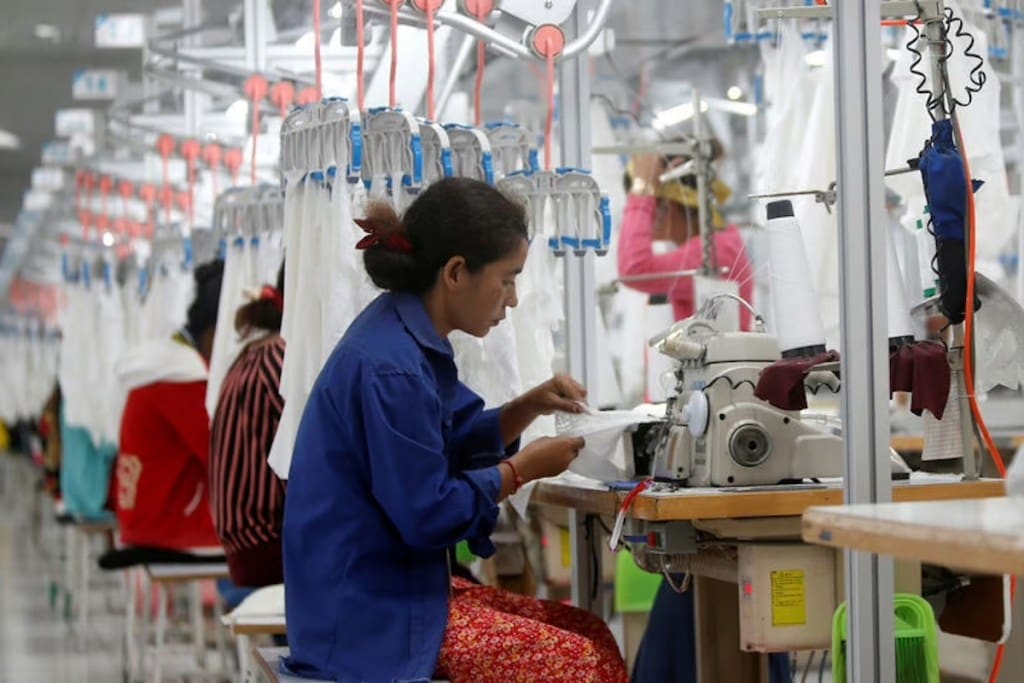
The Pentagonal Strategy sets out a phased approach to economic transformation. Reaching upper-middle-income status by 2030 requires sustained GDP growth above 6% annually, continued diversification beyond garments and agriculture, and significant improvements in human capital and productivity. Current per capita income sits in the lower-middle-income band, meaning Cambodia must nearly double that figure within four years to hit the World Bank threshold.
Infrastructure bottlenecks remain a constraint. Road and rail networks lag regional peers, energy costs are higher than in neighboring Vietnam and Thailand, and logistics inefficiencies add to the cost of doing business. The four priority projects are intended to address these pain points, though execution timelines and financing structures will determine whether the acceleration translates into measurable economic impact before the decade closes.
Concentration Risk
The concentration of foreign investment sources presents both opportunity and vulnerability. Chinese capital has enabled rapid infrastructure rollout and industrial zone development, supporting export growth and employment. At the same time, dependence on a single source for three-quarters of FDI exposes Cambodia to shifts in Chinese policy priorities, changes in bilateral relations, or broader economic headwinds in China itself.
Regional analysts note that Cambodia has sought to attract investment from Japan, South Korea, and ASEAN partners, but flows from these sources remain modest compared to Chinese commitments. The kingdom's strategic location between Thailand and Vietnam, combined with preferential trade access to the European Union and other markets, offers potential for diversification. Yet infrastructure deficits and regulatory complexity continue to limit appeal to investors seeking alternatives to Vietnam or Thailand.
Regional Context
Cambodia's infrastructure push occurs amid broader competition for investment across Southeast Asia. Vietnam has drawn significant manufacturing relocation driven by supply chain reconfiguration, while Thailand leverages its established industrial base and connectivity. Cambodia's lower labor costs offer an advantage, but that edge narrows as wages rise and neighboring countries improve their own investment climates.
The Diamond Hexagon framework also fits within China's broader Belt and Road Initiative, which has seen project pipelines slow in some regions due to debt concerns and political shifts. Cambodia has maintained consistent support for Chinese-led infrastructure, viewing it as essential to closing development gaps. Whether the four accelerated projects deliver on time and within budget will test the model and influence future commitments on both sides.
The clock is indeed ticking. Four years to upper-middle-income status leaves little room for delays, cost overruns, or shifts in external financing conditions. Cambodia's ability to execute infrastructure at scale, while managing fiscal sustainability and diversifying investment sources, will shape whether the 2030 target remains within reach or slips further into the future.
RELATED STORIES
Laos Struggles to Monetize China Railway Despite Rising Traffic
Cheng Wei-Lun · 2 min

Washington Builds Domestic Critical Minerals Chain to Counter Beijing's Market Grip
Priyanka V. Rao · 4 min

Honda-Tata Partnership Signals Shift in India Auto Strategy
Priyanka V. Rao · 3 min

China's Inflation Slows to Six-Month Low as Deflation Risks Return
Cheng Wei-Lun · 4 min
Spot something wrong? Email editor@briefasia.com. We log every correction publicly.