Asia · Business
Thailand Drops $30 Billion Land Bridge After Economics Turn Against Megaproject
A government panel found the 100-kilometer shipping corridor would now generate losses, with cargo projections falling 16% and nine of the world's ten largest shipping firms already invested elsewhere.
KEY TAKEAWAYS
- ·Thailand's government recommends canceling the $30 billion land bridge after a revised study showed the project would generate losses, with expected returns falling to 4.8% from 8% and cargo volumes down 16%.
- ·Nine of the world's ten largest shipping companies have already invested in competing infrastructure, leaving limited interest in the Thai corridor designed to bypass the Malacca Strait.
- ·The government panel cited environmental risks to Ranong's mangrove forests, marine ecosystems, and coastal communities, recommending port upgrades and rail improvements instead.
The Numbers No Longer Add Up
Thailand's government is pulling the plug on a long-debated megaproject that promised to reshape Southeast Asian shipping lanes. Finance Minister Ekniti Nitithanprapas announced July 24 that a government committee now recommends abandoning the proposed land bridge connecting the Gulf of Thailand to the Andaman Sea, a reversal driven by deteriorating economics and environmental concerns.
The project carried an estimated price tag of 1 trillion baht, roughly $30 billion. An updated feasibility study concluded the infrastructure would generate an overall loss, according to Ekniti, contradicting earlier assessments that projected net economic gains. Expected financial returns collapsed to 4.8% from an initial 8%, while projected cargo volumes came in 16% below original forecasts.
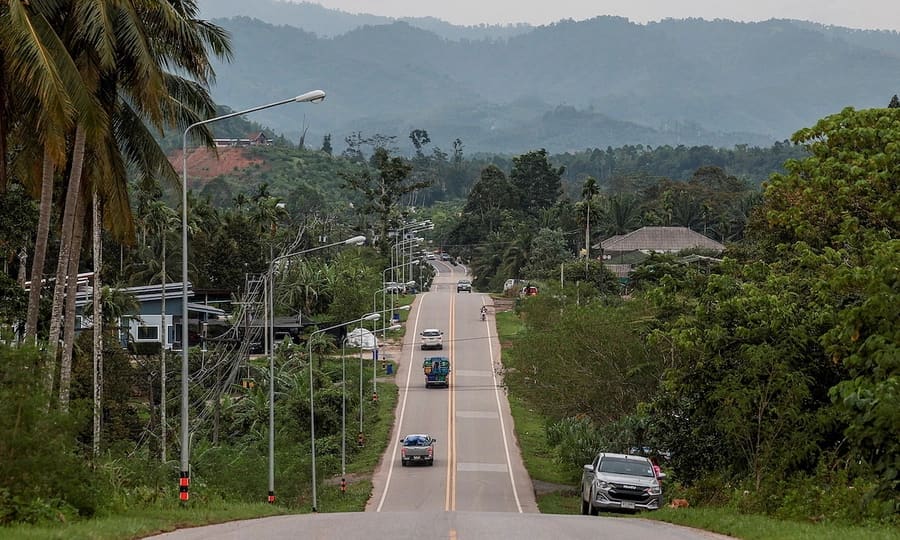
The 100-kilometer corridor was designed to bypass the Malacca Strait, offering vessels a faster route between the Indian and Pacific oceans. Twin seaports on opposite coasts of Thailand's southern peninsula would be linked by highway and rail. The concept replaced an older proposal to dig a canal through the Kra Isthmus.
Geopolitical Interest Fades
The land bridge gained renewed attention in 2026 after tensions around the Strait of Hormuz exposed vulnerabilities in global shipping routes. In April, Deputy Prime Minister Phiphat Ratchakitprakarn signaled the government would accelerate the project. That momentum proved short-lived.
Ekniti noted that nine of the world's ten largest shipping companies have already committed capital to competing infrastructure projects, leaving little appetite for the Thai corridor. The minister did not specify which projects drew that investment, but the finding suggests Thailand's window to capture cargo volume has narrowed.
The recommendation now moves to Prime Minister Anutin Charnvirakul and the Cabinet for final approval. Ekniti emphasized the government has not incurred losses because no land acquisition or construction ever began.
Environmental Red Flags
The government panel raised concerns beyond the financial model. Ranong Province, site of the proposed western port, hosts mangrove forests, marine ecosystems, and fisheries that would face disruption. Tourism and coastal communities also appeared in the risk assessment.
The panel instead recommended upgrading the existing port at Ranong and improving rail connections to strengthen logistics capacity without the environmental footprint of new construction.
Ekniti framed the decision as a lesson in infrastructure planning. Large projects should start with a clear evaluation of strategic priorities and environmental factors before agencies commit resources to detailed engineering and feasibility work, he said.
Regional Implications
The cancellation leaves Southeast Asia's shipping infrastructure landscape largely unchanged. Singapore's dominance as a transshipment hub remains unchallenged in the near term, and the Malacca Strait will continue to handle the bulk of container and bulk carrier traffic between Europe, the Middle East, and East Asia.
Thailand's retreat also signals caution among regional governments weighing expensive infrastructure bets. With global shipping lines consolidating and forming alliances, capturing meaningful cargo share requires not just physical infrastructure but also network effects and service agreements that take years to build.
The land bridge would have competed with Malaysia's own plans to develop ports on its eastern and western coasts, as well as Indonesia's efforts to position itself as an alternative logistics corridor. Thailand's withdrawal may reduce pressure on those projects to accelerate, though it also removes a potential catalyst for regional cooperation or rivalry.
For now, the Thai government appears ready to focus on incremental improvements to existing facilities rather than betting on a greenfield megaproject whose economics have shifted against it.
RELATED STORIES

Mitsubishi Motors Brings Back Pajero SUV With Thailand Launch
Cheng Wei-Lun · 3 min
Southeast Asian Factories Adopt Proximity Planning to Retain Workers and Investors
Lim Hui Ying · 3 min

Thailand's Telecom Regulator Faces Paralysis as Board Crisis Deepens
Priyanka V. Rao · 3 min

Thailand Urged to Tie EV Investment to Local Supply Chain Development
Priyanka V. Rao · 3 min
Spot something wrong? Email editor@briefasia.com. We log every correction publicly.