Asia · Trade
Thai Exporters Face 12.5% US Tariff but See Little Competitive Shift
Thailand's trade bodies say Washington's new levies affect most rivals equally, though forced labour compliance and diversification now top the agenda
KEY TAKEAWAYS
- ·The Trump administration imposed a 12.5% tariff on Thai goods from Friday, affecting 60 trading partners on forced labour grounds, with Cambodia, India, Indonesia and Malaysia receiving a lower 10% rate.
- ·Thailand exported $38 billion to the US in the first five months of 2026, up 40% year-on-year, but uncertainty over trade policy is delaying buyer orders and complicating production planning.
- ·Thai industry groups are urging faster labour law enforcement, supply chain traceability and trade diversification to India, the Middle East, Africa and Latin America to reduce reliance on the US market.
Tariff Spread Narrows Competitive Gap
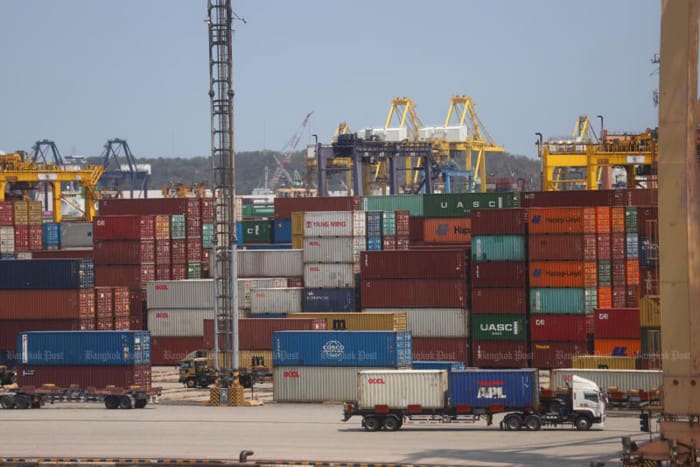
Thailand's export lobby has assessed the Trump administration's latest tariff round as manageable, primarily because the levies hit most of the country's competitors at comparable rates. The 12.5% duty that took effect on Friday night US time applies to goods from 60 trading partners, including Thailand, on grounds related to forced labour allegations.
The Thai Chamber of Commerce said the tariff landscape remains largely level. While Cambodia, India, Indonesia and Malaysia secured a lower 10% rate, the 2.5 percentage-point difference is unlikely to shift market share in any dramatic way. "The gap is much narrower compared with previous measures," the chamber noted.
Thailand shipped $38 billion worth of goods to the United States in the first five months of 2026, a 40% year-on-year increase, according to the Federation of Thai Industries. That surge now meets a fresh cost layer, yet industry groups see the real challenge elsewhere.
Uncertainty Weighs on Order Books
The Thai National Shippers' Council flagged a more immediate problem: buyers are postponing purchase orders because US trade policy has become difficult to forecast. Exporters struggle to lock in production schedules when tariff rules and enforcement criteria remain in flux.
Dhanakorn Kasetrsuwan, who chairs the council, said the 12.5% rate is lower than initial proposals but still represents a meaningful cost burden. "The primary concern among the private sector is not only the tariff rate itself, but also the uncertainty surrounding US trade policy," he explained.
Washington differentiated tariff levels based on the severity of forced labour allegations, though the administration has not published detailed criteria. Most nations received the 12.5% rate; the four Southeast and South Asian economies with the 10% levy are viewed as having less severe infractions under the US assessment framework.
Labour Compliance Moves to Front Burner
Thai industry leaders are urging faster passage and enforcement of labour protection legislation to align with international standards and remove any pretext for future penalty tariffs. The Federation of Thai Industries said manufacturers already comply with national and international labour rules, but traceability across supply chains needs to be airtight.
Pimjai Leeissaranukul, who chairs the federation, said exporters should open their facilities to trading-partner inspections. "This advantage should be harnessed to ensure full traceability of products and raw materials across supply chains," she noted. Demonstrating robust worker protections will build confidence with US authorities and strengthen Thailand's hand in any bilateral trade talks.
The chamber emphasised that systemic forced labour has not been a feature of Thailand's export sector for many years, yet formal legal frameworks must catch up to that reality. Closing the gap would put the country on equal footing with economies that might secure exemptions in later negotiating rounds.
Diversification and Trade Agreement Push
Both the chamber and the shippers' council are pressing the government to accelerate trade negotiations under the Agreement on Reciprocal Trade framework, which aims to rebalance flows with the United States. At the same time, they want Bangkok to open new markets in India, the Middle East, Africa and Latin America to reduce exposure to any single destination.
The chamber said public and private sectors should jointly prepare data and negotiating positions that deliver mutual gains. The shippers' council warned that over-reliance on the US market amplifies the impact of any policy shift in Washington, making geographic spread a strategic priority.
The federation echoed that view, noting that market diversification is now essential. "Thailand should not be overly reliant on certain markets," the group said.
Excess Capacity Rules Still Pending
Washington has signalled that concerns about excess production capacity will inform future measures, though details remain under development. The Thai Chamber of Commerce said those rules could affect specific product categories and that Thailand should track the process closely to understand which sectors face additional scrutiny.
Industry groups see the current tariff round as a catalyst to improve labour standards, enhance supply chain transparency and lock in preferential trade agreements that reduce barriers over the long term. The chamber framed the challenge as an opportunity to strengthen competitiveness by addressing compliance gaps before they widen.
RELATED STORIES
Delta Electronics Thailand Hits $100 Billion Market Cap Milestone
Priyanka V. Rao · 4 min
Thailand and New Zealand Set $8 Billion Trade Target Under New Partnership
Priyanka V. Rao · 3 min

Mitsubishi Motors Brings Back Pajero SUV With Thailand Launch
Cheng Wei-Lun · 3 min
Southeast Asian Factories Adopt Proximity Planning to Retain Workers and Investors
Lim Hui Ying · 3 min
Spot something wrong? Email editor@briefasia.com. We log every correction publicly.