Asia · Business
Tesla Explores Exit From China Operations Ahead of Possible SpaceX Combination
Executives briefed on separation scenarios as regulatory and national security concerns loom over potential merger between Musk's two trillion-dollar companies
KEY TAKEAWAYS
- ·Tesla has instructed executives to prepare separation scenarios for its China operations, including sale or spin-off, as it explores a potential merger with SpaceX.
- ·Shanghai Gigafactory accounts for over half of Tesla's global deliveries with annual capacity exceeding 950,000 vehicles and serves as the primary export hub for Europe and Asia-Pacific.
- ·SpaceX's USD 1.48 trillion valuation and US defence contracts create regulatory and national security hurdles in China, where Tesla operates wholly owned manufacturing facilities.
Separation Plans Under Discussion
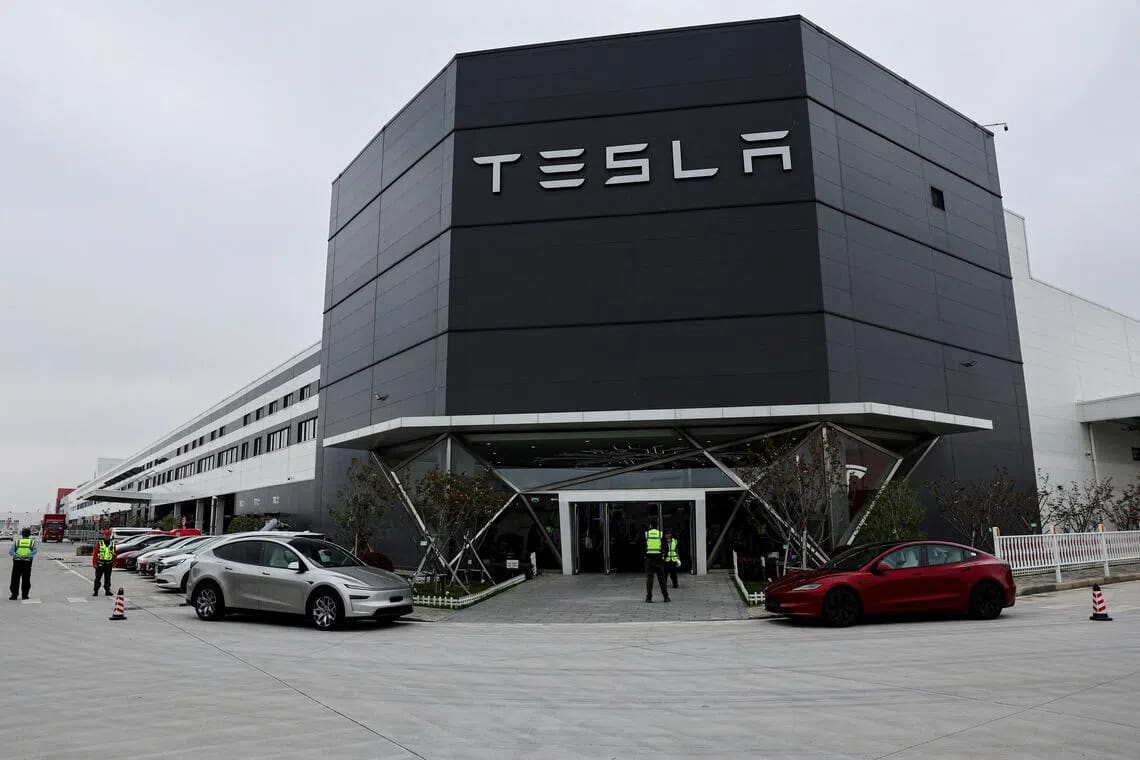
Tesla has directed senior executives to prepare for the separation of its China operations, a move tied to ongoing discussions about combining with SpaceX. Advisers have examined multiple pathways, including outright sale, spin-off, or closure of the business, according to people familiar with the deliberations.
The timing and final structure remain uncertain. Tesla's China footprint presents unique complications for any merger scenario because SpaceX holds major US defence contracts and operates sensitive satellite infrastructure, while Tesla runs wholly owned manufacturing facilities on the mainland.
Elon Musk has spent recent years instructing management to organize Tesla with a clear division between its US and China operations. The goal, sources say, was to ensure that if geopolitical tensions escalated, at least the American half of the company would remain intact and operational.
Shanghai's Outsized Role
Tesla's Gigafactory Shanghai is the company's largest and most productive plant worldwide. The facility has annual capacity exceeding 950,000 vehicles and serves as the primary export hub for Europe and the broader Asia-Pacific region. Historically, Shanghai has accounted for more than half of Tesla's global deliveries.
Unlike most foreign automakers operating in China, Tesla does not share ownership with a local partner. The company maintains full control of its manufacturing entity, a structure that simplified operations but now complicates any potential divestiture.
China remains Tesla's second-largest market after the United States. June deliveries of China-made Model 3 and Model Y vehicles climbed 24.4 per cent year-over-year, while second-quarter sales and exports from Shanghai rose 32.8 per cent. However, the company faces mounting pressure from domestic rivals, particularly BYD, which has rapidly expanded market share.
Export Entity and Data Walls
Executives have also discussed creating a separate sales entity dedicated to handling exports from the Shanghai plant. Under one scenario, Tesla would establish isolated office systems and restrict China-based employees from accessing other parts of the company's network, effectively creating data walls between operations.
A Tesla China executive previously noted that the company achieved its lowest manufacturing costs for Model 3 and Model Y vehicles at the Shanghai facility, supported by more than 400 domestic suppliers. Over 60 of those suppliers also serve Tesla's global operations. The company sources locally more than 95 per cent of components for China-made Model 3 and the refreshed Model Y.
Regulatory and National Security Barriers
Musk left the door open to a Tesla-SpaceX combination earlier in July, declining to rule out the possibility and pointing to growing operational overlap between the two companies. Gwynne Shotwell, SpaceX president and chief operating officer, told CNBC in June that consolidating the companies might streamline management and "make Elon's life a little easier."
SpaceX completed a record USD 75 billion initial public offering in June and closed at a valuation of USD 1.48 trillion on July 30. Tesla's market capitalisation stands at USD 1.22 trillion.
Analysts at JPMorgan have highlighted regulatory approval as a "practical bottleneck," particularly in China, where national security concerns over SpaceX's ties to the US government could trigger objections. SpaceX's work on defence and satellite programmes makes it a sensitive player in Washington's strategic technology landscape, a factor that Beijing is unlikely to overlook in any merger review.
The separation discussions underscore the challenge of untangling a business that has become deeply embedded in China's manufacturing ecosystem while simultaneously pursuing a corporate combination that would bring together two of the world's most valuable companies under intensifying geopolitical scrutiny.
RELATED STORIES
India's Chinese Import Bill Climbs Despite Self-Reliance Push
Priyanka V. Rao · 3 min
GAC and FAW Explore Merger of Toyota Joint Ventures in China
Cheng Wei-Lun · 3 min
China Targets 84% Share of AR-HUD Production by 2031
Cheng Wei-Lun · 3 min
China's August Inflation Accelerates on Energy and Typhoon Disruption
Tran Quoc Bao · 2 min
Spot something wrong? Email editor@briefasia.com. We log every correction publicly.