Technology · Policy
Tesla Denies Plans to Exit China as SpaceX Merger Speculation Swirls
Elon Musk dismisses reports of selling Chinese operations while navigating geopolitical complexity between Washington and Beijing
KEY TAKEAWAYS
- ·Tesla denied reports it is exploring a sale of its Chinese operations, with Elon Musk calling the claims fake news amid SpaceX merger speculation.
- ·The Shanghai Gigafactory remains critical to Tesla's global supply chain and Asia-Pacific market access, even as geopolitical tensions mount.
- ·Potential deeper integration with SpaceX could complicate Tesla's China operations given SpaceX's role in U.S. national security infrastructure.
Tesla Pushes Back on Exit Rumors
Tesla dismissed claims Friday that it is exploring a sale of its Chinese operations, pushing back against reports circulating amid broader speculation about the electric vehicle maker's relationship with SpaceX. Elon Musk characterized the rumors as "absurdly fake news," according to Tesla.
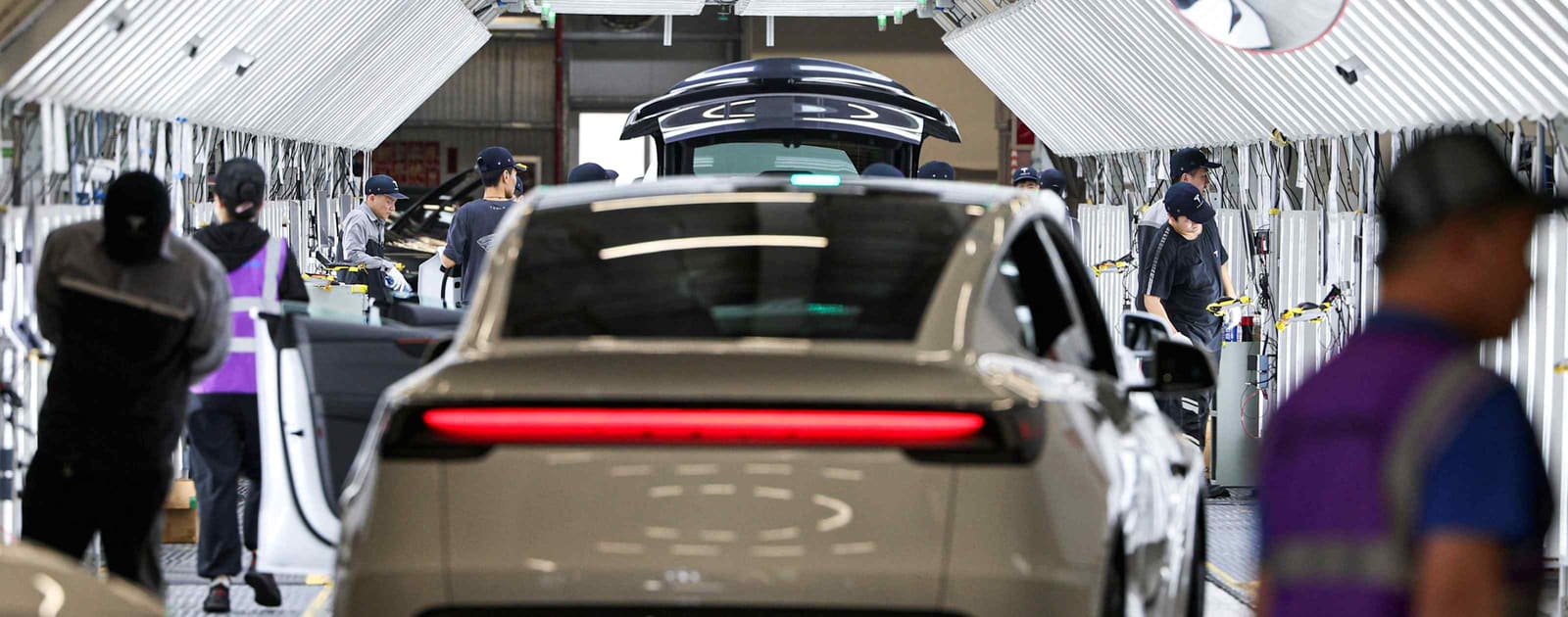
The denial comes as the company faces intensifying scrutiny over its strategic position in China, where it operates a major manufacturing hub in Shanghai and competes in the world's largest automotive market. Tesla's Gigafactory in Shanghai serves both domestic demand and export markets across Asia and Europe, making it a critical component of the company's global supply chain.
Questions about Tesla's China footprint have gained urgency as geopolitical tensions between Washington and Beijing affect technology and manufacturing companies with operations straddling both economies. For Tesla, the calculus is particularly complex: China represents both a vital production base and a massive consumer market, yet the company's ties to U.S. defense and space infrastructure through Musk's other ventures add layers of regulatory and political risk.
The SpaceX Connection
Speculation about a possible merger or closer integration between Tesla and SpaceX has added another dimension to the discussion. Such a combination would raise fresh questions about how a unified entity would manage relationships with Beijing, given SpaceX's role in U.S. national security infrastructure and satellite communications.
SpaceX has already taken steps to insulate sensitive operations from Chinese influence, reportedly moving to exclude Chinese nationals from certain supply chain roles and limit the use of components sourced from China in critical systems. Those measures reflect the heightened scrutiny aerospace and defense contractors face regarding foreign access to technology and personnel.
For Tesla, any deeper alignment with SpaceX could complicate its ability to operate freely in China, where authorities closely monitor foreign companies with defense or dual-use technology ties. Chinese regulators have previously restricted Tesla vehicles from military installations and certain government facilities over data security concerns, a reminder of the sensitivities surrounding the company's operations.
Strategic Calculus in Asia's Largest Market
Tesla's Shanghai factory has been a cornerstone of its global expansion, delivering vehicles at scale and helping the company achieve cost efficiencies that improved its competitive position. The facility also anchors Tesla's presence in the broader Asia-Pacific region, supplying markets from Japan to Australia.
Yet the company faces stiffening competition from domestic Chinese manufacturers, led by BYD, which have rapidly scaled production, improved technology, and captured market share with lower-priced models. Chinese rivals have also begun expanding aggressively into Southeast Asia and Europe, challenging Tesla on multiple fronts.
The question of whether Tesla would consider divesting its Chinese business reflects broader anxieties about the sustainability of cross-border manufacturing and technology strategies in an era of supply chain nationalism and export controls. For now, Tesla appears committed to maintaining its operations, but the company's long-term positioning will depend on how geopolitical and competitive pressures evolve.
Navigating a Fragmented Landscape
Musk's dual role leading both Tesla and SpaceX places him at the intersection of competing interests. Tesla's business model depends on access to Chinese manufacturing capacity and consumers, while SpaceX's contracts and technology development are deeply embedded in U.S. national security priorities.
The tension is not unique to Musk's companies. Semiconductor firms, telecommunications equipment makers, and advanced manufacturing operations across Asia are all recalibrating strategies as governments impose new restrictions on technology transfer, investment, and supply chain partnerships.
For executives and investors watching Tesla's moves in China, the denial of divestment plans offers short-term clarity but does little to resolve the underlying strategic dilemma. The company must balance operational efficiency, market access, and regulatory risk across two of the world's most important economies, a balancing act that will only grow more difficult as technology competition intensifies.
RELATED STORIES
China's Auto Chip Race Shifts to Volume as Horizon Robotics Crosses 15 Million Units
Jun-ho Seo · 3 min
Li Auto Expands Battery Roster with CALB as Third Supplier
Siti Nuraini · 2 min
BYD Sets Sights on 2 Million Overseas Sales in 2026 After Brazil, Europe Surge
Cheng Wei-Lun · 3 min

Nio Sets 40,000-Unit Monthly Delivery Target for Q4
Anand Sundaram · 3 min
Spot something wrong? Email editor@briefasia.com. We log every correction publicly.