Finance · Markets
Taiwan Stock Exchange Moves Odd-Lot Trading Start Time Forward
December reform aligns retail-friendly trading windows with standard block sessions, part of broader push to boost market accessibility
KEY TAKEAWAYS
- ·Taiwan Stock Exchange will start intraday odd-lot trading at 9am from December 7, ten minutes earlier than current schedules, with brokerages accepting orders from 8:30am.
- ·Odd-lot trading allows purchases below the standard 1,000-share lot, making high-priced stocks like TSMC accessible to retail investors at NT$2,410 per share versus NT$2.41 million for a full lot.
- ·The reform aligns with President William Lai's June announcement of plans to transform Taiwan's capital market into an Asian equivalent of Nasdaq for regional technology start-ups.
Trading Window Shifts Earlier
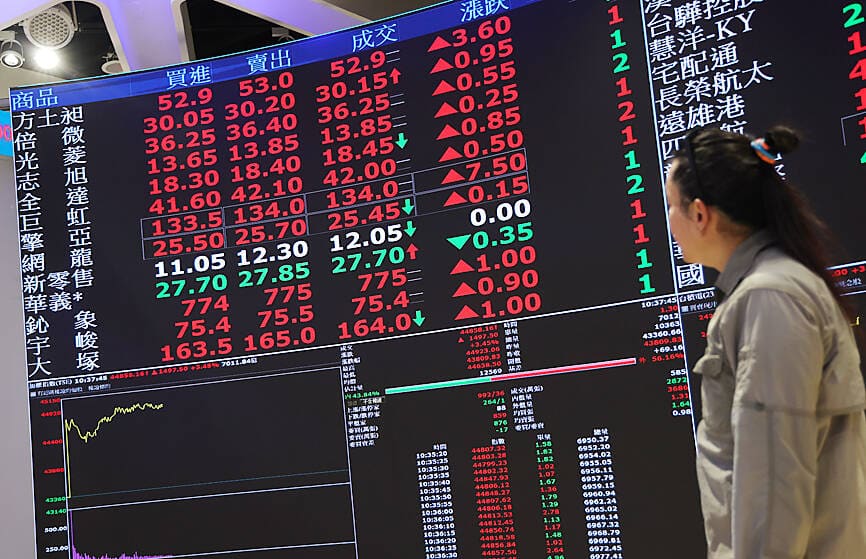
The Taiwan Stock Exchange announced Thursday that intraday odd-lot trading will begin at 9am on every trading day starting December 7, moving the execution window ten minutes earlier than the existing schedule. Brokerages will accept orders from 8:30am, also thirty minutes ahead of current practice.
The timing adjustment brings odd-lot sessions into alignment with standard block trading hours. The exchange described the change as an effort to streamline operations and improve convenience for individual investors who use the mechanism to access high-priced equities.
Odd-lot trading permits purchases below the standard 1,000-share lot, lowering the barrier for retail participation in stocks that would otherwise require substantial capital outlays. A single Taiwan Semiconductor Manufacturing Co share, for instance, costs NT$2,410 at recent closing prices, versus NT$2.41 million for a full lot.
Independent Mechanisms Create Pricing Complexity
The exchange said it will introduce pre-market information disclosure and delayed opening protocols specifically for odd-lot sessions to maintain orderly price discovery. Because odd-lot and standard block trading operate as separate mechanisms, opening prices and execution times for the same security may differ between the two systems.
That structural independence means investors will need to track two sets of opening data when participating in both markets. The exchange acknowledged the complexity and pledged to continue reviewing the odd-lot framework to balance transparency with market stability.
Broader Capital Market Ambitions
The December reform forms part of a larger regulatory agenda to modernize Taiwan's capital markets. In early June, President William Lai outlined plans to transform the island's equity infrastructure into an Asia-Pacific equivalent of the Nasdaq, positioning Taipei as a hub for technology start-ups across the region.
Lai's roadmap includes relaxing restrictions on odd-lot trading and day trading, which allows investors to open and close positions within a single session. Both measures target retail participation, a key constituency as Taiwan competes with Hong Kong, Singapore, and Seoul for regional listing and trading volumes.
Retail Access and Liquidity Trade-Offs
Odd-lot trading has grown in popularity as Taiwan's benchmark index has climbed and share prices of leading technology names have risen. The mechanism addresses a practical constraint: retail investors with limited capital can now hold fractional positions in blue-chip names without waiting for share splits or pooling funds into collective vehicles.
Yet the dual-track structure introduces friction. Price discovery in odd-lot sessions can lag or diverge from the main board, and liquidity remains thinner. The exchange's decision to implement delayed opening mechanisms suggests concern that mismatches between the two systems could create arbitrage opportunities or confuse less sophisticated participants.
Regulators have signaled they will monitor execution quality and price alignment closely after the December rollout. Further adjustments to lot sizes, trading hours, or settlement procedures remain possible as the market adapts to the new timetable.
Regional Context
Taiwan's push to lower trading barriers mirrors efforts elsewhere in Asia. Japan's Tokyo Stock Exchange has encouraged listed companies to improve liquidity and attract individual investors, while South Korea has experimented with extended trading hours and fractional share programs. Hong Kong, facing capital outflows and competition from mainland bourses, has likewise explored retail-friendly reforms.
The common thread is demographic: aging populations across Northeast Asia hold significant savings in bank deposits, and policymakers see equity market participation as both a wealth-building tool and a source of long-term capital for domestic enterprises. By making high-value shares more accessible, exchanges hope to convert conservative savers into active investors and deepen domestic liquidity pools.
The December 7 implementation date gives brokerages and market infrastructure providers roughly three months to update systems and educate clients on the revised schedule. The exchange said it would release detailed operational guidelines in the coming weeks.
RELATED STORIES

King Slide Founder Tops Taiwan Wealth Rankings on AI Server Boom
Cheng Wei-Lun · 3 min
Taiwan's Currency Weakens Past NT$32.4 as Foreign Funds Exit
Cheng Wei-Lun · 4 min

Taiwan Mobile Targets 14% ICT Market Share Through Systex Acquisition
Cheng Wei-Lun · 4 min
Taiwan's Idle Funds Set to Triple in Two Years as AI Exports Surge
Cheng Wei-Lun · 3 min
Spot something wrong? Email editor@briefasia.com. We log every correction publicly.