Finance · Markets
Taiwan's Currency Weakens Past NT$32.4 as Foreign Funds Exit
The New Taiwan dollar posted its steepest single-day drop in months, driven by institutional outflows and exporter hedging activity, while regional currency volatility persists
KEY TAKEAWAYS
- ·Taiwan's currency dropped NT$0.146 to close at NT$32.438 per US dollar as foreign institutions withdrew NT$19.19 billion from local equity markets despite a 266-point gain in the TAIEX benchmark.
- ·The central bank intervened during late trading hours to limit volatility, while exporters converted US dollar holdings at favorable rates, providing partial support for the weakening currency.
- ·Currency dealers project the exchange rate may test NT$32.6 in coming weeks as dividend repatriation flows continue and foreign institutional outflows persist through the third quarter.
Sharp Decline Amid Capital Flight
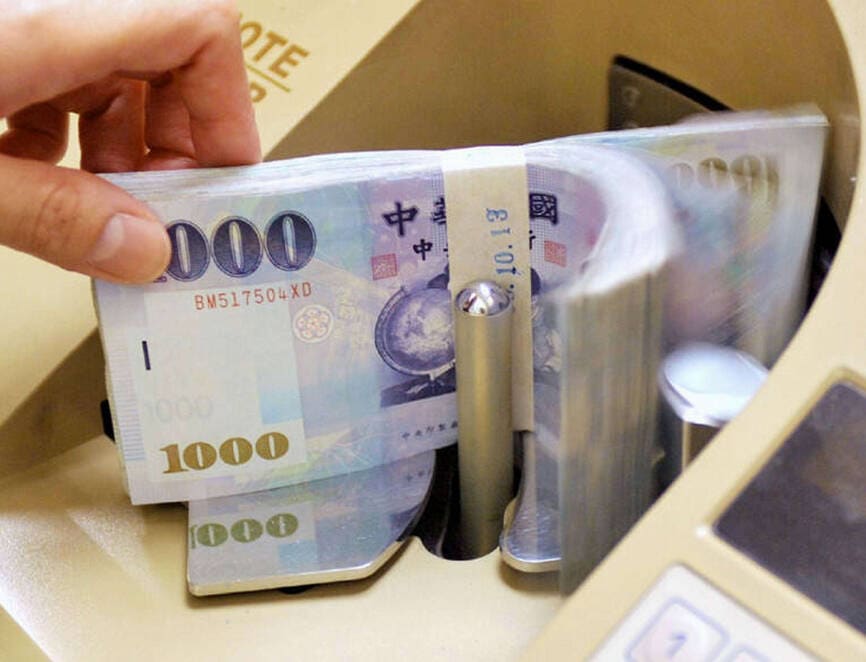
Taiwan's currency weakened substantially in trading yesterday, closing at NT$32.438 per US dollar after losing NT$0.146 of its value. The session saw the local currency touch an intraday trough at NT$32.490, marking one of its most pronounced retreats in recent months. Trading volumes across the Taiwan Foreign Exchange and Cosmos Foreign Exchange platforms reached US$3.92 billion, according to official exchange data.
The depreciation came despite the broader TAIEX benchmark climbing 266.66 points to settle at 43,386.41, illustrating a disconnect between equity market strength and currency performance. Foreign institutional investors offloaded NT$19.19 billion worth of Taiwanese stocks on a net basis, equivalent to approximately US$591.6 million, continuing a pattern of outflows that has pressured the local unit.
Currency dealers reported that the session opened with the New Taiwan dollar gaining ground as the US dollar index, which measures the greenback's performance against six major currencies, registered declines. That early strength proved fleeting. Once the local currency reached its daily peak, momentum reversed sharply as offshore institutional players executed large-scale conversions of New Taiwan dollar holdings into foreign currency, creating sustained selling pressure.
Exporter Dynamics and Official Intervention
Taiwan's export-oriented corporations played a dual role during the turbulent session. Many manufacturers seized the opportunity presented by the weakened exchange rate to convert their US dollar receivables, a strategic move that provided some counterbalance to the downward spiral. These corporate transactions helped prevent the currency from breaching even deeper support levels, according to market participants.
The central bank deployed intervention measures during the final hours of trading to dampen volatility. While monetary authorities in Taiwan rarely confirm specific market operations, dealers familiar with the transactions noted the characteristic pattern of official smoothing activity aimed at preventing disorderly movements. This marks the latest in a series of interventions as policymakers navigate the challenge of maintaining export competitiveness while avoiding excessive currency weakness that could fuel import inflation.
The timing of the central bank's actions suggests a tolerance threshold around the NT$32.5 level, beyond which officials appear inclined to defend the currency more actively. Taiwan's monetary authority has historically preferred gradual adjustment over sharp swings, seeking to balance the interests of exporters who benefit from a weaker currency with importers and consumers facing higher costs for foreign goods.
Regional Currency Pressures
The New Taiwan dollar's weakness unfolded against a backdrop of coordinated currency intervention efforts elsewhere in Asia. The United States and Japan have publicly confirmed joint measures designed to support the yen by applying downward pressure on the dollar. Yet despite this coordinated push by two of the world's largest economies, Taiwan's currency continued to slide, reflecting the intensity of capital outflows specific to the island's markets.
This divergence highlights the localized nature of Taiwan's current currency challenge. While Japanese authorities have succeeded in stemming yen depreciation through a combination of verbal intervention and actual market operations, Taiwan faces a different set of pressures tied to equity market flows and corporate dividend cycles. The disconnect between regional currency coordination efforts and Taiwan's experience underscores how domestic capital movements can override broader international monetary dynamics.
Market observers note that Taiwan's technology-heavy equity market has become increasingly sensitive to shifts in global risk appetite. When foreign funds rotate out of Asian technology exposure, the impact on Taiwan's stock market and currency can be disproportionately severe given the concentration of semiconductor and electronics manufacturers in the TAIEX index.
Near-Term Outlook and Dividend Flows
Looking ahead, currency specialists project further downside risk for the New Taiwan dollar in the immediate term. Several dealers indicated that the exchange rate could test the NT$32.6 level as foreign institutional investors continue repatriating funds. A significant portion of these outflows relates to cash dividend payments from Taiwanese corporations, which typically concentrate in the third quarter of the calendar year.
Taiwan's listed companies have distributed record dividend yields in recent years, reflecting strong profitability in the semiconductor and technology sectors. However, when foreign shareholders receive these payments and convert them back into their home currencies, the resulting demand for US dollars and other major currencies creates predictable seasonal pressure on the New Taiwan dollar.
The dividend repatriation cycle typically extends through August and into early September, suggesting that currency weakness may persist for several more weeks unless offset by renewed foreign buying of Taiwanese equities or a significant shift in global risk sentiment. Currency strategists are closely monitoring whether foreign institutions will view the weakened exchange rate as an attractive entry point for rebuilding positions in Taiwan's technology sector, or whether concerns about global growth will keep them on the sidelines.
Implications for Trade and Inflation
The currency's depreciation carries mixed implications for Taiwan's economy. Exporters gain improved competitiveness in international markets, particularly important as global demand for consumer electronics and industrial components shows signs of moderating. A weaker New Taiwan dollar effectively reduces the price of Taiwanese goods for foreign buyers when converted into other currencies, potentially supporting order volumes for the island's manufacturers.
Conversely, import costs rise when the local currency weakens, feeding through to domestic inflation. Taiwan relies heavily on imported energy, raw materials, and intermediate goods, meaning that sustained currency depreciation can erode purchasing power for consumers and compress margins for businesses unable to pass higher input costs to customers. The central bank must calibrate its intervention strategy to balance these competing considerations while maintaining confidence in the currency's stability.
The current episode also tests Taiwan's financial market infrastructure and the depth of its foreign exchange market. With daily turnover approaching US$4 billion, the market demonstrates sufficient liquidity to absorb large institutional flows, though not without significant price impact. As Taiwan continues integrating with global capital markets, these periodic volatility episodes may become more frequent, requiring both market participants and policymakers to adapt their risk management approaches.
RELATED STORIES
Taiwan Stock Exchange Moves Odd-Lot Trading Start Time Forward
Cheng Wei-Lun · 3 min

Fubon Hyundai Life Returns to Profit in First Half on Asset Management Gains
Cheng Wei-Lun · 2 min

Taiwan UPS Maker Eyes Record Quarter on Data Center Demand
Cheng Wei-Lun · 3 min

MediaTek Launches 2nm Chip to Challenge Qualcomm in Premium Phones
Siti Nuraini · 3 min
Spot something wrong? Email editor@briefasia.com. We log every correction publicly.