Technology · AI
MediaTek Launches 2nm Chip to Challenge Qualcomm in Premium Phones
Taiwan's MediaTek unveils Dimensity 9600 Pro built on TSMC's most advanced process, targeting flagship smartphones with on-device AI capabilities as component costs reshape the market.
KEY TAKEAWAYS
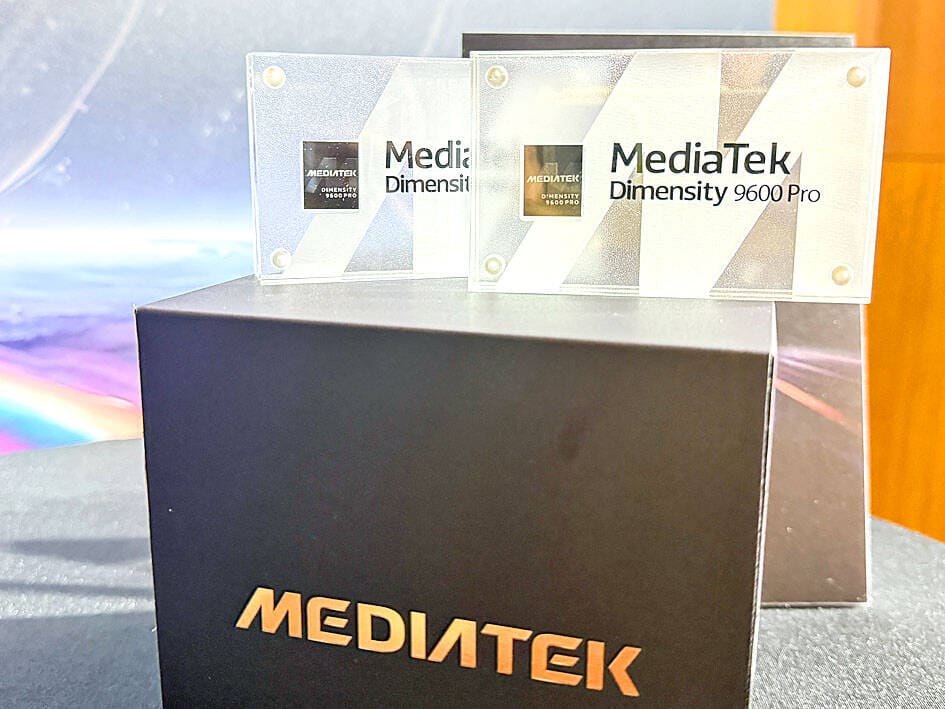
- ·MediaTek unveiled the Dimensity 9600 Pro, its first smartphone chip built on TSMC's 2-nanometre process, targeting the premium handset market with on-device AI capabilities.
- ·The neural processing unit delivers a 51 per cent improvement in prompt processing speed over the previous generation, though MediaTek did not disclose detailed benchmarks.
- ·MediaTek raised USD 3.9 billion in August, with Nvidia investing USD 3.5 billion, as the company expands into AI accelerators for cloud infrastructure alongside mobile processors.
First 2nm Mobile Processor
MediaTek introduced the Dimensity 9600 Pro on 15 September, its inaugural smartphone chip manufactured using TSMC's 2-nanometre process technology. The Hsinchu-based semiconductor designer positions the processor as a direct competitor to Qualcomm in the premium smartphone segment, where artificial intelligence features and higher device prices deliver improved margins for chipmakers.
The company simultaneously launched the Dimensity 9600M, built on TSMC's 3-nanometre process and aimed at a wider range of flagship devices. Both chips are scheduled to appear in smartphones launching soon, with existing customers including Xiaomi, Oppo, and Vivo expected to integrate the new processors into their product lines.
On-Device AI Performance
The 9600 Pro incorporates a dedicated neural processing unit designed to execute generative AI applications locally on the handset rather than relying on cloud servers. According to MediaTek, the NPU delivers a 51 per cent improvement over the previous generation in processing user prompts before an AI model begins generating responses, though the company did not disclose benchmark methodology or comparison points.
This shift towards on-device AI processing reflects broader industry efforts to reduce latency, preserve privacy, and lower data transmission costs for AI-powered smartphone features. The move aligns with similar strategies from Apple and Google, both of which have emphasised local AI execution in recent product announcements.
Supply Chain Pressures and Pricing
J.C. Hsu, corporate senior vice president at MediaTek, acknowledged that the AI boom is straining supply chains and driving up component costs. The executive said MediaTek is collaborating with handset manufacturers to mitigate the impact on consumer pricing, though rising prices across the flagship segment remain inevitable.
"As the overall market moves to higher prices, I believe there is still room for us to increase our share of the flagship segment," Hsu said during the launch event in Taipei.
The comment comes as premium smartphone prices climb sharply. Apple's new foldable iPhone, announced the previous week, retails for up to USD 3,199 in the United States for the highest-capacity model, illustrating the pricing ceiling that advanced hardware and AI features now command.
Market Position and Diversification
MediaTek's market capitalisation surpassed Qualcomm's earlier in 2026, marking a symbolic shift in the mobile chip industry. The company, traditionally strong in mid-range and budget devices, has spent recent years expanding into premium segments where Qualcomm has long dominated.
Beyond mobile processors, MediaTek is diversifying into AI infrastructure. Its first AI accelerator designed for a major US cloud service provider is scheduled to enter mass production in the fourth quarter of 2026. The company raised USD 3.9 billion in August through a convertible bond sale, with Nvidia investing USD 3.5 billion and Alphabet also participating, underscoring investor confidence in MediaTek's AI roadmap.
Regional Context
The launch highlights Taiwan's central role in the global semiconductor supply chain. TSMC's ability to deliver 2-nanometre production at commercial scale gives Taiwan-based chip designers like MediaTek a competitive edge in time-to-market for advanced nodes. Rival Samsung Foundry has struggled to match TSMC's yield rates and customer adoption at leading-edge processes, leaving TSMC with a 72.5 per cent share of the global foundry market in the second quarter of 2026, according to TrendForce.
For MediaTek, the challenge lies in translating manufacturing advantage into sustained gains in the premium segment. Qualcomm retains strong relationships with Samsung, Google, and other flagship Android device makers, while Apple designs its own chips. MediaTek's success will depend on whether Chinese smartphone brands can maintain or grow their global market share, and whether the company can expand its customer base beyond its current stronghold in Asia.
RELATED STORIES
Integrated Systems Will Drive Next Wave of AI Growth, Says TSMC
Cheng Wei-Lun · 4 min
MediaTek Raises AI Chip Target to 20% Market Share by 2027
Cheng Wei-Lun · 3 min

Xiaomi Unveils 3nm Mobile Processor to Challenge Qualcomm and MediaTek
Cheng Wei-Lun · 3 min

MediaTek Executive Projects Million-GPU Clusters as Mid-Tier by 2030
Cheng Wei-Lun · 3 min
Spot something wrong? Email editor@briefasia.com. We log every correction publicly.