Asia · Business
Bayan Resources Halts Coal Deliveries After Indonesia Quota Dispute
The billionaire-backed miner invoked force majeure across three subsidiaries as government approval on revised production limits remains pending, threatening supply to customers.
KEY TAKEAWAYS
- ·PT Bayan Resources and three subsidiaries declared force majeure on coal contracts after Indonesia's government withheld approval of revised 2026 mining quotas.
- ·The miner, founded by billionaire Low Tuck Kwong, faces a 3 billion dollar takeover bid from Indonesian tycoon Andi Syamsuddin Arsyad.
- ·Supply disruptions at one of Indonesia's largest thermal coal exporters could tighten Asia-Pacific seaborne coal markets and push spot prices higher.
Government Approval Bottleneck
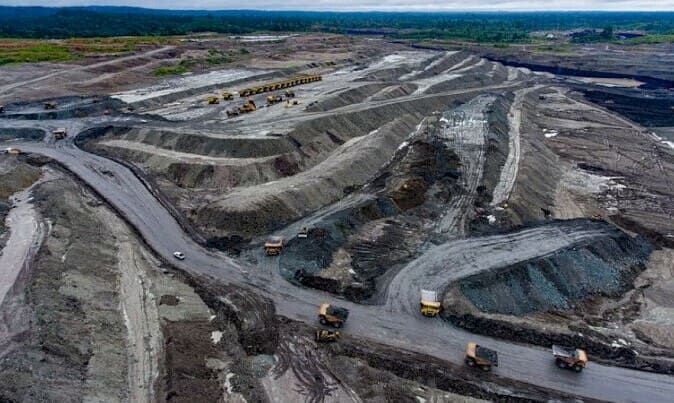
PT Bayan Resources, the Indonesian coal miner founded by Singapore-born billionaire Low Tuck Kwong, suspended coal deliveries to customers on 14 September after the Indonesian government failed to approve revised production quotas for three of its operating units. The company disclosed the force majeure declaration in a filing to the Indonesia Stock Exchange, citing an inability to meet contractual obligations without updated mining allocations.
Three subsidiaries are affected: PT Tiwa Abadi, PT Tanur Jaya, and PT Fajar Sakti Prima. Each submitted requests to revise their 2026 mining quotas earlier this year, according to Bayan Resources, but approvals have not been granted. Indonesian mining law requires operators to secure annual production permits that align with national output targets and environmental compliance standards. Without updated quotas, the subsidiaries cannot legally extract coal beyond their current limits, effectively halting operations at those sites.
The company stated that the quota revision is essential to continue production and that the delay "affected the ability of the company and subsidiaries to fulfil its obligations to customers." Force majeure clauses in supply contracts typically shield sellers from penalties when external circumstances beyond their control prevent delivery. Bayan Resources did not specify which customers are impacted or the volume of coal affected.
Timing and Takeover Context
The force majeure announcement arrives as Bayan Resources navigates a potential change in ownership. An entity controlled by Indonesian tycoon Andi Syamsuddin Arsyad, also known as Haji Isam, has offered approximately 3 billion US dollars in cash for a 62 per cent stake in the company. That bid values the miner at roughly 4.8 billion dollars and would hand majority control to Arsyad, a coal industry veteran with interests across Kalimantan's mining belt.
Bayan Resources is one of Indonesia's largest thermal coal producers, with operations concentrated in East Kalimantan. The company exports primarily to Asia-Pacific markets, including China, India, and South Korea, where coal remains a baseload power source despite regional decarbonisation commitments. Indonesia is the world's largest exporter of thermal coal, and supply disruptions at major producers like Bayan can ripple through regional spot markets, pushing up benchmark prices.
Regulatory Pressure and Quota Politics
Indonesia's Ministry of Energy and Mineral Resources sets annual production quotas for coal miners to balance export revenue, domestic energy security, and environmental targets. In recent years, the government has tightened quota administration, requiring miners to demonstrate reserves, submit updated mine plans, and comply with progressive land reclamation rules before approvals are granted. Delays in quota issuance are not uncommon, but they have grown more frequent as Jakarta prioritises downstream processing and seeks to limit raw material exports in favour of value-added industries.
Bayan Resources has not disclosed whether the delay stems from incomplete documentation, regulatory backlog, or policy friction. However, the timing is notable. The Indonesian government has signalled interest in raising coal royalties and accelerating the transition to nickel-based battery materials, both of which affect the economics of traditional thermal coal mining. Producers operating in East Kalimantan have also faced heightened scrutiny over land-use permits and community impact assessments, adding layers of approval required before quota revisions can proceed.
Market Implications
Coal supply from Indonesia underpins electricity generation across much of Southeast and East Asia. Any prolonged disruption at Bayan Resources could tighten the seaborne thermal coal market, particularly if other Indonesian miners face similar quota delays. Spot prices for Indonesian coal with 4,200 kilocalories per kilogramme, a common export grade, have traded in a narrow range near 50 dollars per tonne in recent months, supported by steady demand from Indian and Chinese utilities.
Bayan Resources has not indicated how long the force majeure will remain in effect or whether alternative supply arrangements are being negotiated with affected customers. The company's ability to resume shipments hinges entirely on the Indonesian government's decision to approve the revised quotas. Until then, the three subsidiaries remain in operational limbo, and the broader takeover discussion unfolds against a backdrop of regulatory uncertainty that could reshape the miner's production profile for the remainder of 2026.
RELATED STORIES

Five ASEAN Members Back Regional Oil Stockpile as Study Nears Completion
Tran Quoc Bao · 3 min

Southeast Asian Firms Overlook Digital Pact Worth USD 2 Trillion
Lim Hui Ying · 4 min
CIMB Commits to 55% Dividend Floor as Regional Portfolio Offsets Indonesia Pressure
Priyanka V. Rao · 4 min

Indonesian Digital Banks Outpace Regional Peers on Deposits and Loan Growth
Priyanka V. Rao · 3 min
Spot something wrong? Email editor@briefasia.com. We log every correction publicly.