Perspectives · Analysis
Taiwan's Opening in America's Space Defense Supply Chain
As the US Space Force consolidates satellite production around SpaceX, the real opportunity for Asian suppliers shifts to components and ground terminals
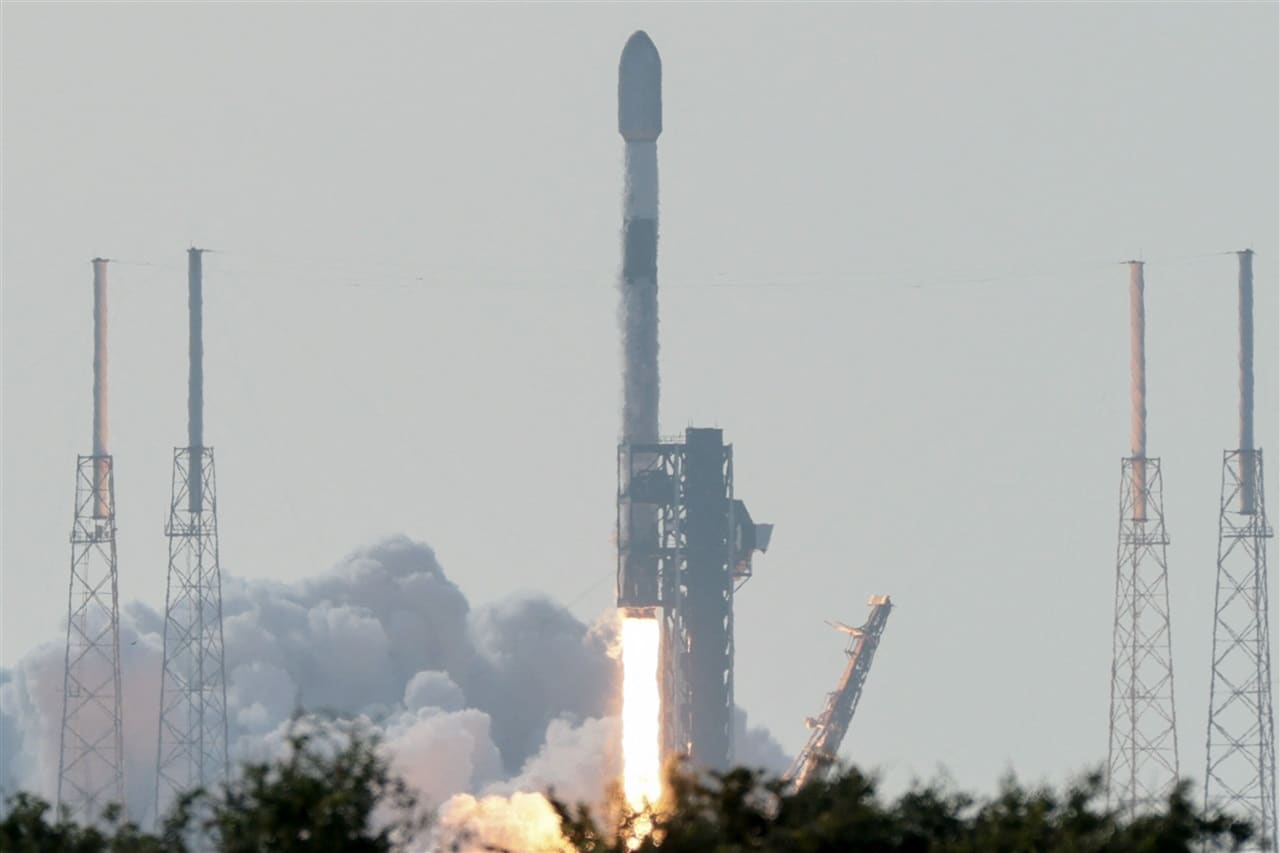
KEY TAKEAWAYS
- ·The US Space Force's shift to SpaceX-led satellite production redirects Taiwan supplier opportunities from complete satellite contracts to component manufacturing and ground terminal supply.
- ·The Proliferated Warfighter Space Architecture requires hundreds of satellites with three to five year lifespans, creating sustained demand for precision components Taiwan's electronics sector can produce.
- ·Taiwan firms face export control barriers but benefit from US policy prioritizing trusted supply chain partnerships, with government coordination helping navigate ITAR licensing.
- ·Ground terminals connecting warfighters to satellite networks present a parallel opportunity where Taiwan's commercial terminal experience translates to military variants with faster timelines than traditional defense contractors.
The Consolidation That Opens Doors
Washington's defense spending debates rarely make waves in Taipei's electronics districts, but the fiscal 2027 fight over the Space Development Agency tells a different story. While legislators argue over whether to dismantle the SDA, Taiwan's aerospace suppliers are watching something more concrete: SpaceX's tightening grip on the Proliferated Warfighter Space Architecture transport layer.
The conventional read suggests fewer prime contractors means fewer opportunities. That interpretation misses the structural shift underway in military space procurement. The US Space Force isn't merely picking winners among satellite manufacturers. It's moving toward a model that requires industrial-scale component production and continuous hardware replacement - a model that plays directly to Taiwan's manufacturing strengths.
From Platform Sales to Component Streams
The traditional defense space business revolved around large, bespoke satellite orders - single contracts worth hundreds of millions, delivered over years. The PWSA model inverts that logic. It envisions hundreds of smaller satellites in low Earth orbit, designed for three-to-five-year operational lives, requiring constant replenishment.
SpaceX's dominance in launching and assembling these satellites doesn't eliminate supply chain needs. It amplifies them. Each satellite requires dozens of specialized components: phased-array antennas, radiation-hardened processors, power management systems, optical transceivers for inter-satellite links. These aren't commodity parts. They demand precision manufacturing at volume - exactly the capability Taiwan has spent three decades building for commercial tech.
The numbers clarify the scale. The Space Development Agency plans to field more than 300 satellites in its transport layer by 2028, with follow-on tranches expanding the constellation further. Even assuming SpaceX builds the platforms, each satellite needs components sourced from a supply base the Pentagon wants diversified beyond traditional defense primes.
Taiwan's semiconductor ecosystem positions it well for this pivot. Firms that produce gallium nitride amplifiers for 5G base stations can adapt designs for space-based phased arrays. Companies manufacturing high-reliability connectors for data centers understand the quality standards military space demands. The technical gap is narrower than it appears.
The Terminal Opportunity
Ground infrastructure presents a parallel opening. The PWSA architecture depends on terminals that connect warfighters to the satellite mesh - thousands of units deployed across bases, ships, and mobile platforms. These terminals blend RF engineering, signal processing, and ruggedized enclosures. Taiwan produces all three at scale.
The Space Force has signaled it wants terminal production to ramp quickly, with procurement timelines measured in months, not years. That pace disadvantages traditional defense contractors accustomed to multi-year development cycles. It favors manufacturers who can iterate rapidly and scale production without building new factories.
Several Taiwan firms have already entered adjacent markets. Companies supplying Starlink user terminals understand the core technologies. The military variants require tighter specifications - encryption, anti-jam features, environmental hardening - but the underlying design principles overlap. Adapting commercial terminal platforms for defense use offers a faster path than clean-sheet military designs.
Navigating Export Controls
The barrier isn't technical capability. It's regulatory access. US export control frameworks - ITAR and the more recent restrictions on emerging technologies - create friction for foreign suppliers entering defense space programs. Taiwan's firms face the same clearance hurdles as European or Japanese competitors, but with an advantage: the US government has explicitly prioritized Taiwan in trusted supply chain initiatives.
The CHIPS and Science Act, while focused on semiconductors, established precedent for deep US-Taiwan technology collaboration. The Space Force's own supply chain reviews have identified Taiwan as a priority partner for resilient sourcing. These policy signals don't guarantee contracts, but they lower the bureaucratic barriers that often kill foreign supplier bids before they reach evaluation.
Taiwan's government has moved to smooth the process. The National Space Organization has begun coordinating with the Ministry of Economic Affairs to help companies navigate US export licensing. Several firms have opened US subsidiaries or partnered with American system integrators, structures that simplify ITAR compliance while keeping core manufacturing in Taiwan.
The Competitive Landscape
Taiwan isn't alone in spotting this opportunity. South Korea's defense contractors are pursuing similar strategies, leveraging their experience in military electronics. Japanese firms bring deep space heritage through commercial satellite programs. Europe's suppliers have established relationships with US primes.
Taiwan's edge lies in manufacturing agility and cost structure. Korean and Japanese space components often carry price premiums rooted in domestic labor costs. European suppliers face longer lead times. Taiwan's electronics sector operates at a scale and efficiency that commercial tech markets have validated. Translating that to defense space requires proving reliability and securing clearances, but the industrial base exists.
The real competition may come from within the US itself. The Pentagon's push to onshore critical supply chains could favor domestic component makers, even at higher costs. Recent legislation has included Buy American provisions that complicate foreign sourcing. Taiwan suppliers will need to demonstrate not just capability but strategic value - arguing their participation strengthens resilience rather than creating dependencies.
What Comes Next
The fiscal 2027 defense bill remains unresolved, and the SDA's future unclear. But the underlying trend is set: the US military is building a space architecture that requires industrial-scale manufacturing and global supply chains. Whether the SDA survives as an independent agency or folds into Space Systems Command, the demand for components and terminals will grow.
Taiwan's suppliers face a choice. They can wait for formal solicitations and compete through traditional defense procurement channels - a slow path with uncertain returns. Or they can invest now in qualifying components, earning military certifications, and building relationships with US system integrators. The latter approach carries risk, but it positions firms to capture share when production scales.
The door isn't narrowing. It's changing shape. The question is whether Taiwan's aerospace sector will move quickly enough to walk through it.
RELATED STORIES
AI Demand Tightens Memory Markets as HBM4 Production Strains Supply
Cheng Wei-Lun · 3 min

Taiwan's AI Supply Chain Posts Record $89.7 Billion in August Revenue
Jun-ho Seo · 2 min
Integrated Systems Will Drive Next Wave of AI Growth, Says TSMC
Cheng Wei-Lun · 4 min
Why Taiwan's LCD Giants Can't Escape the Commodity Trap
Cheng Wei-Lun · 5 min
Spot something wrong? Email editor@briefasia.com. We log every correction publicly.