Perspectives · Interviews
Why Taiwan's LCD Giants Can't Escape the Commodity Trap
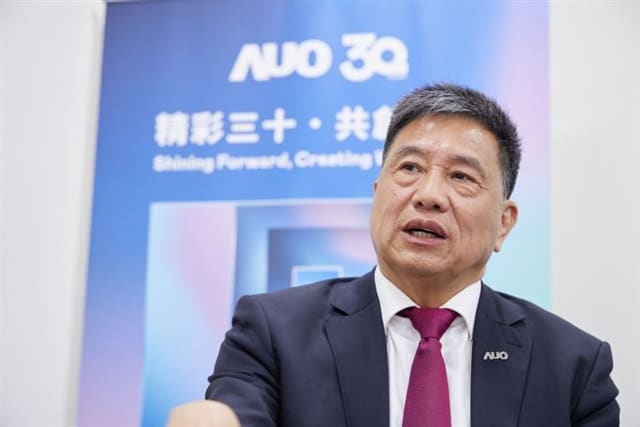
AUO's pivot from panel production to solar and specialty displays exposes the structural limits of Asia's display manufacturing model - and the difficult economics of moving upmarket.
KEY TAKEAWAYS
- ·AU Optronics is shifting from commodity LCD production toward solar modules and specialty displays after years of margin pressure in panel manufacturing.
- ·Taiwan's display makers accumulated massive scale during the LCD boom but failed to convert capacity leadership into sustained pricing power or profitability.
- ·The pivot to specialty markets and adjacent industries like solar represents a managed retreat rather than a growth strategy, as core LCD economics remain structurally challenged.
- ·Across Asia, display manufacturers face a shared reckoning as abundant capacity and new low-cost entrants erode returns on decades of capital investment.
The Weight of Scale
AU Optronics has spent two decades building manufacturing heft that matters less each year. The Taiwanese display maker accumulated production lines, process expertise, and supply-chain depth during the LCD boom, yet finds itself locked in a business where tonnage rarely converts to margin. The company's recent pivot toward solar modules and specialty panels is less a triumph of strategic foresight than an acknowledgment of an uncomfortable truth: in commodity display manufacturing, scale is a prerequisite for survival, not a formula for prosperity.
This is not a story unique to AUO. Across Taiwan, South Korea, and increasingly China, panel makers have discovered that the economics that once rewarded vertical integration and capacity leadership have inverted. The very investments that secured market position in the 2000s now anchor companies to a cost structure misaligned with the pricing reality of mature LCD markets. Chair statements about transitioning "scale into value" typically signal that the former has been achieved and the latter remains elusive.
The Commodity Cycle Nobody Escaped
Taiwan's display industry rose on a straightforward premise: capture share in a high-growth category by underpricing Japanese incumbents, then ride volume to profitability. For a time, it worked. Shipments grew, fabs expanded, and the island became indispensable to global electronics supply chains. But the model contained a structural flaw - it assumed that scale would eventually confer pricing power, or at least insulate manufacturers from the worst margin compression.
Neither happened. Chinese producers entered with state backing and lower cost bases, repeating Taiwan's own playbook. Panel prices entered a multi-year decline punctuated by brief rallies driven by supply shocks, not demand strength. The result: years of losses steep enough to become industry shorthand, and a strategic search for exits that don't require abandoning expensive fabrication assets.
AUO's move into solar is instructive. Photovoltaic module production shares equipment, cleanroom infrastructure, and even some process steps with TFT-LCD manufacturing. It allows the company to redeploy capital without writing off fabs. But it also represents a migration from one commoditized, capital-intensive, cyclical business into another. Solar module margins in Asia are thin, Chinese capacity is vast, and differentiation remains difficult. The economics improve relative to LCD, but the fundamental challenge - turning industrial scale into defensible value - persists.
Specialty Displays and the Margin Mirage
The other pillar of AUO's post-LCD strategy involves specialty panels: automotive displays, medical screens, industrial monitors, and other segments where customization and reliability command premiums over consumer TV panels. This is the standard playbook for mature display makers seeking to escape commodity hell - move upmarket, serve demanding customers, capture higher average selling prices.
It is also harder than it sounds. Specialty display markets are smaller, fragmented, and require capabilities - application engineering, regulatory navigation, long qualification cycles - that pure manufacturing scale does not confer. Incumbents in automotive and medical often have entrenched relationships and sticky switching costs. And while ASPs are higher, so are the costs of customization, lower-volume production, and after-sales support. The margin expansion is real but modest, and the addressable market is a fraction of what consumer electronics once offered.
More fundamentally, the specialty strategy concedes that the core LCD business - the one that justified decades of capital expenditure - will not generate acceptable returns. It is a managed retreat, not a breakthrough. Companies pursuing it are rightsizing their ambitions to match the reality that panel manufacturing, absent proprietary technology or brand pull-through, is a subscale business masquerading as a growth industry.
The Asia Angle: A Regional Reckoning
Taiwan is not alone in this reckoning. South Korea's LG Display and Samsung Display have faced parallel pressures, pivoting toward OLED in search of differentiation and margin. Japan's Sharp, now under Foxconn ownership, has oscillated between niche plays and volume attempts. China's BOE and CSOT continue to add capacity, but their profitability remains episodic and policy-supported.
What unites these players is a shared legacy: they scaled in an era when display manufacturing was a bottleneck technology, and they are adjusting to an era when it is abundant infrastructure. The transition is proving costly. Across Asia, billions in capital are sunk into fabs that generate mid-single-digit returns in good years and losses in bad ones. Governments, mindful of employment and supply-chain sovereignty, are reluctant to let flagship manufacturers fail, so the capacity stays online and the price pressure continues.
This dynamic has implications beyond displays. It is a cautionary tale for other Asian manufacturing sectors - batteries, semiconductors, solar - where the race to scale is accelerating. The lesson from LCD is that capacity leadership is necessary but not sufficient, and that the window between achieving scale and being undercut by the next low-cost entrant is narrower than most strategic plans assume.
What Comes After the Pivot
AUO's trajectory suggests that the next phase of Taiwan's display industry will be smaller, more specialized, and less central to the island's economic identity. That is not failure - it is adjustment. The company will continue to operate fabs, serve customers, and generate revenue. But the era of display manufacturing as a national champion industry, capable of anchoring clusters and justifying massive capital deployment, is over.
The broader question is whether Taiwan can convert its manufacturing discipline and supply-chain integration into businesses with better structural economics. The semiconductor industry, anchored by TSMC, offers one model: a focus on process leadership, customer intimacy, and relentless execution in a market where differentiation is durable. Displays offered no equivalent moat, and the results reflect that reality.
For investors and policymakers watching Asia's industrial landscape, the AUO story is a reminder that not all manufacturing is created equal. Scale matters, but only when it translates into pricing power, customer lock-in, or cost advantages that competitors cannot replicate. In commodity markets, scale often just means you lose money at a larger volume. Taiwan's display makers learned that lesson the hard way. The question now is whether other sectors will heed it before repeating the same cycle.
RELATED STORIES
China Steel Pretax Profit Falls 55% as Asian Demand Weakens
Cheng Wei-Lun · 2 min

South Korea's Chip Concentration Carries Lower Risk Than Taiwan's, Financial Analysis Shows
Cheng Wei-Lun · 3 min
Taiwan's FSC Targets Late-2026 Trial Production for High-End Capacitors
Cheng Wei-Lun · 2 min

Taiwan Consumer Confidence Falls Amid Record Growth Forecasts
Cheng Wei-Lun · 2 min
Spot something wrong? Email editor@briefasia.com. We log every correction publicly.