Technology · Products
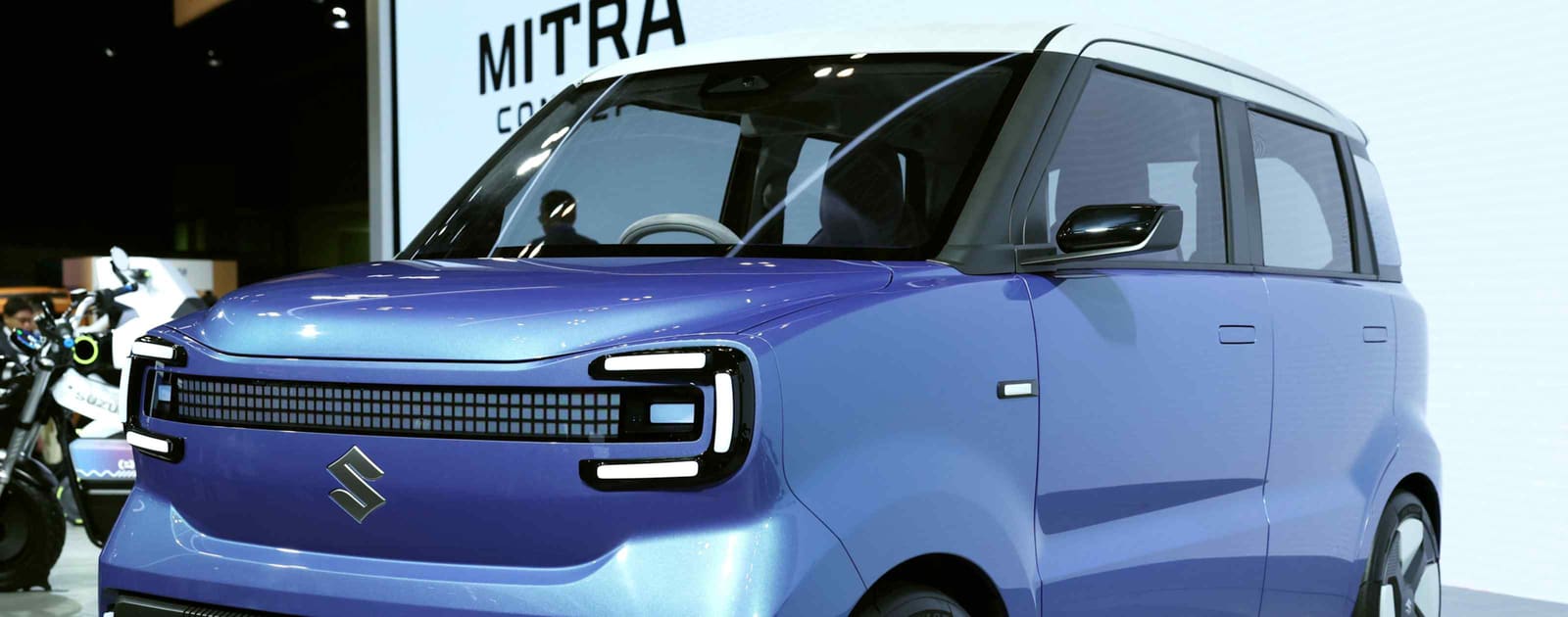
Suzuki Plans European Launch for Electric Kei Minicar by 2027
Japanese automaker sees opening in Europe's EV market as high fuel costs and currency shifts make compact electric vehicles more attractive
KEY TAKEAWAYS
- ·Suzuki Motor plans to launch its e-Sky electric kei minicar in Europe as early as 2027, following a November 2026 domestic launch in Japan.
- ·High European fuel prices and a weak yen have created favorable conditions for Japan's compact vehicle category to compete against European and Chinese EV makers.
- ·The shift to electric powertrains removes engine displacement restrictions that previously confined kei cars to Japan's domestic market.
Japan's Minicar Strategy Goes Electric
Suzuki Motor is preparing to introduce its electric kei minicar to European markets by 2027, a move that brings Japan's uniquely compact vehicle category into direct competition with both established European automakers and China's expanding EV manufacturers.
The company plans to export the e-Sky mini EV, scheduled for its domestic Japanese launch this November, to Europe as early as next year. The timing reflects a strategic bet that rising fuel prices and favorable currency conditions have created an opening for Japan's smallest vehicle class in a market traditionally dominated by larger cars.
Kei cars, Japan's minicar category defined by strict size and engine displacement limits, have historically remained a domestic phenomenon. The vehicles must not exceed 3.4 meters in length, 1.48 meters in width, and originally were restricted to 660cc engines. Their appeal in Japan stems from tax advantages, lower insurance costs, and easier parking in dense urban areas.
Market Dynamics Behind the Expansion
The European push represents a significant shift for Suzuki, which has built its business model around kei vehicles in Japan and small cars in emerging markets like India. The company currently ranks as Japan's third-largest automaker by domestic sales but has maintained a relatively modest presence in Europe compared to Toyota, Honda, or Nissan.
High gasoline prices across Europe have made vehicle operating costs a more prominent factor in purchase decisions. At the same time, the yen's weakness against the euro has improved the price competitiveness of Japanese exports. For Suzuki, these conditions create an opportunity to test whether European consumers will embrace vehicles originally designed for Tokyo's narrow streets and Osaka's tight parking spaces.
The company faces established competition from European brands like Renault, Fiat, and Volkswagen, all of which offer compact electric city cars. Chinese manufacturers including BYD have also been expanding aggressively into Europe, often undercutting local producers on price despite recent tariff increases imposed by the European Union on Chinese-made EVs.
Electrification as Category Expansion
The shift to electric powertrains removes one of the key regulatory barriers that previously kept kei cars confined to Japan. While the 660cc engine displacement limit made sense within Japan's domestic tax and licensing framework, it offered no particular advantage in markets without similar regulations. Electric motors face no such displacement restrictions, allowing Suzuki to market the vehicles based purely on their compact dimensions and efficiency rather than engine size.
The e-Sky model represents Suzuki's first major electric entry in the kei segment. Details on battery capacity, range, and pricing remain limited ahead of the November launch, but the vehicle will need to balance the cost advantages that make kei cars attractive in Japan with the performance expectations of European buyers accustomed to longer driving distances.
Competitive Landscape
Suzuki's European ambitions unfold against a backdrop of intensifying competition in the region's EV market. Chinese automakers have been gaining market share despite tariffs, leveraging established manufacturing scale and battery supply chains. European manufacturers, meanwhile, have been racing to electrify their lineups while protecting their home market through regulatory measures.
The company's strength in India, where it holds a commanding market share through its Maruti Suzuki joint venture, has positioned it to potentially overtake Honda as Japan's second-largest automaker by total volume. That success has been built on affordable, fuel-efficient small cars tailored to price-sensitive emerging markets. The European kei car strategy tests whether a similar formula can work in a developed market with different infrastructure and consumer preferences.
Japan's automotive industry has generally lagged behind European and Chinese competitors in battery electric vehicle adoption, with many manufacturers prioritizing hybrid technology instead. Suzuki's move signals a recognition that purely electric vehicles have become necessary for competing in major markets, even for a company that built its reputation on small-displacement gasoline engines.
The European launch timeline aligns with tightening emissions regulations across the continent and growing urban restrictions on internal combustion vehicles. Several major European cities have announced plans to restrict or ban non-electric vehicles from city centers in the coming years, creating a regulatory tailwind for compact urban EVs.
Whether European consumers will embrace vehicles designed around Japan's unique size constraints remains an open question. The experiment will test assumptions about urban mobility, vehicle size preferences, and the extent to which electrification can make previously region-specific vehicle categories viable in new markets.
RELATED STORIES
Fujifilm Commits $83 Million to Semiconductor Materials Plant in India
Siti Nuraini · 3 min

Minebea Mitsumi Halts Acquisitions to Prioritise AI Component Demand
Cheng Wei-Lun · 3 min

Kioxia Rules Out SK Hynix Merger, Focuses on Stabilising Memory Chip Prices
Tran Quoc Bao · 3 min
Kioxia Rules Out SK Hynix Manufacturing Partnership Despite Memory Boom
Jun-ho Seo · 3 min
Spot something wrong? Email editor@briefasia.com. We log every correction publicly.