Finance · Deals
StarHub Jumps to Buy Rating as DBS Sees M1 Merger Unlocking S$75 Million in Synergies
Singapore's telecom consolidation could deliver 120% earnings growth in year two, while market leader Singtel stands to benefit from reduced price competition without integration risk.
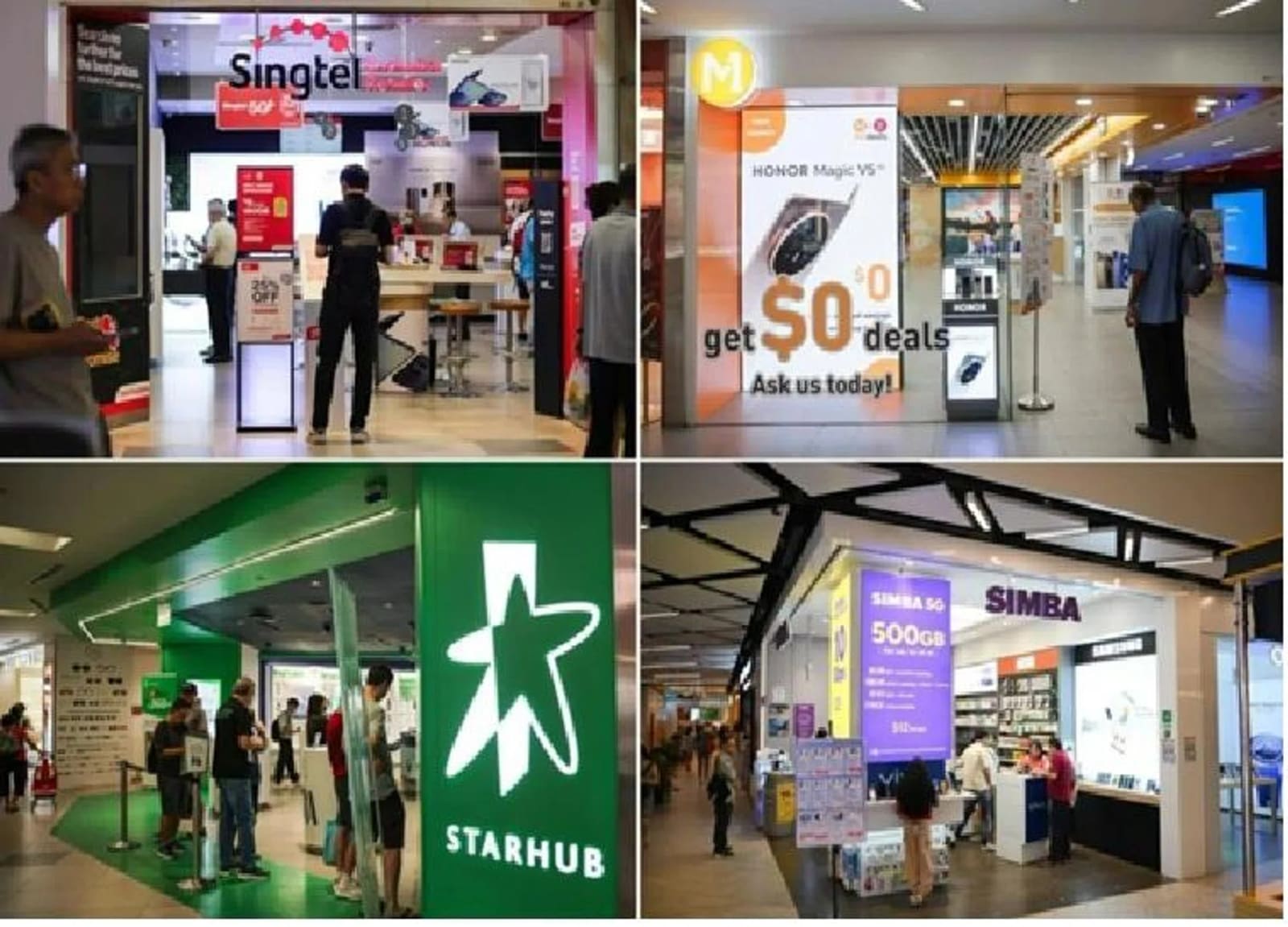
KEY TAKEAWAYS
- ·DBS upgraded StarHub to buy with a target of S$1.40, projecting S$65 million to S$75 million in annual synergies from a potential M1 merger by 2029.
- ·The deal values M1 at S$1 billion enterprise value and would be funded by a S$400 million sale of Ensign InfoSecurity plus S$621 million in new debt.
- ·Singtel's mobile ARPU is forecast to recover 13 percent from S$22.10 in 2027 to S$25.90 by 2030 as market consolidation reduces price competition.
DBS Lifts StarHub on Merger Math
DBS Group Research upgraded StarHub to buy on July 27, raising its target price to S$1.40 from S$0.94, as expectations build for a deal between Singapore's second and third-largest mobile operators. The move follows M1's parent company Keppel reaffirming its commitment to industry consolidation after its agreement with Simba Telecom collapsed in May.
Analyst Sachin Mittal projects that a StarHub-M1 combination completed in 2026 could deliver annual recurring synergies of S$65 million to S$75 million by the 2029 financial year. That figure represents 9 to 11 percent of the merged entity's combined forecast earnings for 2026. The synergy estimate adds S$0.35 per share to StarHub's valuation, though the target would retreat to S$1.05 if the transaction fails to materialize.
DBS pegs M1's acquisition enterprise value at S$1 billion, applying an EV-to-earnings multiple of seven to 7.5 times. The valuation sits well below the S$1.43 billion Simba had agreed to pay, reflecting a sharp drop in M1's forecast earnings under intense competitive pressure. Mittal noted that while merger speculation may initially lift the share price, synergy extraction in 2027 will ultimately dictate performance.
Funding the Deal
The transaction structure outlined by DBS anticipates S$400 million from the sale of StarHub's cybersecurity unit, Ensign InfoSecurity, combined with S$621 million in new borrowing. Net debt to earnings would peak at 3.5 times upon deal completion in 2027, then decline as cost integration takes hold.
DBS expects earnings accretion of 120 percent in the second year post-merger and 250 percent in the third year as operational efficiencies materialize. The timeline assumes a close in 2026 and full cost synergy realization by 2029, with network rationalization and back-office consolidation driving the bulk of savings.
Singapore's mobile market completed its nationwide shift to 5G standalone architecture in 2026, shutting down legacy 4G fallback networks. Without access to additional spectrum, new entrants face substantial capital outlays for small cells, base stations, and backhaul infrastructure to maintain service quality as subscriber counts grow. DBS argues that the era of hyper-aggressive price wars has reached its natural limit, and consolidation into a three-player or two-tier structure will restore rational competition and support sector-wide ARPU recovery starting in 2027.
Singtel's Quiet Win
While StarHub navigates integration execution risk, market leader Singtel stands to capture significant upside from a post-consolidation environment without bearing operational burdens, according to DBS. Singtel holds a 44 percent mobile subscriber share in Singapore. As price competition eases, the brokerage projects Singtel's blended mobile ARPU will recover from a trough of S$22.10 in the 2027 financial year to S$25.90 by 2030, a 13 percent increase over the 2026 base.
Because Singtel's fixed network cost structure carries high operating leverage, incremental ARPU gains flow directly to earnings with minimal additional capital expenditure. DBS forecasts Singtel's Singapore mobile EBITDA will grow at a compound annual rate of 8 to 8.5 percent from 2028 to 2030.
Singtel's holding company discount currently sits at 22 percent but could narrow to 10 percent on four near-term catalysts: a minority stake sale in Optus, the planned IPO of its Singapore data center business following the ST Telemedia Global Data Centres acquisition in August, a full exit from its remaining 4.95 percent stake in Gulf Development, and a further 6 to 7 percent sell-down in India's Bharti Airtel. DBS maintained its buy rating on Singtel with a sum-of-the-parts target of S$5.46.
Consolidation as the Only Path Forward
The collapse of the M1-Simba transaction in May left Keppel with a clear mandate: find a partner or face continued margin erosion in a four-player market that has struggled to generate returns since Simba's aggressive entry. StarHub emerged as the logical counterparty, with overlapping infrastructure in urban areas and complementary enterprise customer bases.
Whether Simba maintains standalone operations or eventually succumbs to margin pressure, DBS believes Singapore's mobile market is converging on a structure that can support sustainable pricing. The shift to 5G standalone eliminates the shared infrastructure advantages that allowed fourth entrants to undercut incumbents, raising the bar for capital intensity and technical expertise.
For investors, the StarHub upgrade hinges on deal execution and the speed of cost extraction. The S$0.35-per-share synergy value assumes full realization by 2029, but integration missteps or regulatory delays could push that timeline further out. Singtel's position as the passive beneficiary of industry rationalization offers a cleaner risk-reward profile, with ARPU recovery driven by competitive dynamics rather than operational integration.
The next twelve months will clarify whether Keppel and StarHub can agree on valuation and structure, and whether regulators will approve further concentration in a market that has oscillated between three and four credible operators for the past decade. DBS's revised target prices reflect confidence that consolidation is no longer a question of if, but when.
RELATED STORIES
Shein Drops 4% in Hong Kong Debut as Tariff Pressure Weighs on Valuation
Priyanka V. Rao · 4 min

Grab Pursues Majority Stake in Buy-Now-Pay-Later Platform Atome
Jun-ho Seo · 3 min
Singapore Brokerages Raise STI Targets on Earnings Strength
Jun-ho Seo · 3 min

Addvalue Technologies Lands $5 Million in Space and Radio Contracts
Tran Quoc Bao · 3 min
Spot something wrong? Email editor@briefasia.com. We log every correction publicly.