Finance · Deals
Standard Chartered Posts Record First Half With $1 Billion Buyback
The Asia-focused lender beat second-quarter profit expectations on strength in wealth and global banking, even as it booked fresh Middle East impairments
KEY TAKEAWAYS
- ·Standard Chartered reported second-quarter pre-tax profit of $2.33 billion, beating analyst estimates by over $250 million, and announced a fresh $1 billion share buyback.
- ·The bank raised full-year operating income guidance to the middle of a 5-7 percent range, citing double-digit growth in wealth solutions and global banking despite China's cross-border account restrictions.
- ·Standard Chartered booked $44 million in Middle East conflict-related impairments during the quarter, adding to $190 million in first-quarter overlays tied to the Iran war.
Earnings Beat Amid Regional Headwinds
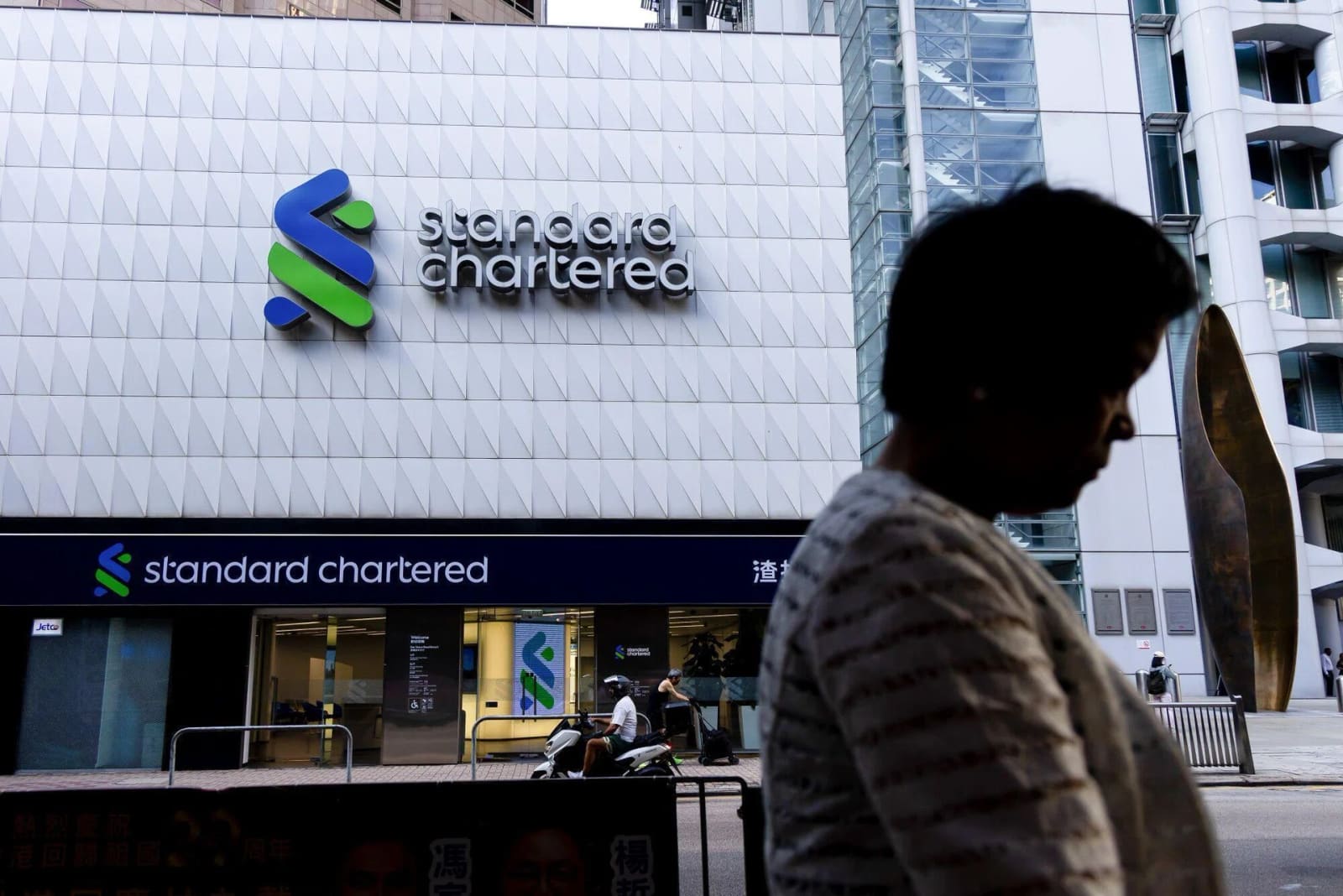
Standard Chartered reported pre-tax profit of $2.33 billion for the second quarter, according to the bank, clearing analyst expectations by more than $250 million. The London-headquartered lender announced a new $1 billion share buyback program alongside the results, having completed a $1.5 billion repurchase in late June.
Chief executive Bill Winters described the outcome as a record first-half performance for 2026, driven by double-digit growth in both wealth solutions and global banking divisions. The bank raised its full-year operating income guidance to the middle of a 5-7 percent range, up from the lower end previously, while projecting expenses of approximately $13.3 billion.
Wealth Business Holds Up Despite China Curbs
The wealth management unit delivered strong performance even as China introduced new restrictions on cross-border accounts, a move that had rattled sentiment around financial institutions with exposure to Hong Kong and mainland China earlier this year. Bloomberg Intelligence analysts had warned in a worst-case scenario that banks could see new money flows drop by 30 percent under the tightened rules.
Standard Chartered's share price initially fell alongside other lenders exposed to the Greater China wealth corridor but has since rebounded to fresh all-time highs. The stock is up roughly 15 percent year-to-date in London trading. Chief financial officer Manus Costello told a Goldman Sachs conference in June that the bank was observing healthy levels of client activity within its wealth division.
Middle East Exposures Draw Fresh Provisions
The bank took a $150 million credit impairment charge in the quarter, including $44 million tied to the ongoing conflict in the Middle East and potential secondary effects, according to Standard Chartered. The provisions covered increased overlays for the petrochemical sector and the risk of sovereign downgrades in the region.
This follows a $190 million precautionary management overlay in the first quarter related to the Iran war. The Middle East accounts for about 6 percent of Standard Chartered's total exposure, with the United Arab Emirates and Saudi Arabia representing the largest shares.
Asia Franchise Drives Momentum
Global banking, which serves corporate and institutional clients across trade finance, capital markets, and transaction banking, contributed significantly to the quarter's outperformance. The division benefits from Standard Chartered's footprint across Asia's manufacturing and energy corridors, linking capital flows between the Gulf, South Asia, and Greater China.
The bank's operating model tilts heavily toward emerging markets in Asia, Africa, and the Middle East, a strategic bet that has paid off as regional economies deepen financial integration. The wealth business, in particular, captures flows from high-net-worth individuals and family offices across Singapore, Hong Kong, and key Southeast Asian hubs.
Standard Chartered expects 2026 expenses to rise 2 percent from the prior year, reflecting continued investment in technology infrastructure and regulatory compliance. The lender has been upgrading its digital platforms to compete with both global rivals and local challengers in wealth management and transaction banking.
Capital Return Accelerates
The completion of a $1.5 billion buyback in late June and the immediate launch of a fresh $1 billion program signal confidence in the bank's capital generation capacity. Standard Chartered has been returning surplus capital to shareholders as it winds down legacy exposures and focuses on higher-return businesses in its core markets.
The bank's ability to sustain buybacks while absorbing impairments in volatile regions underscores the resilience of its Asia-centric franchise. Wealth management, transaction banking, and trade finance generate stable fee income that cushions against episodic credit losses.
Investor attention will now turn to whether the raised guidance holds through the second half, particularly if geopolitical tensions in the Middle East escalate or if China's regulatory stance on cross-border wealth flows tightens further. For now, Standard Chartered's first-half momentum offers a clear contrast to peers navigating slower growth in developed markets.
RELATED STORIES

China's Social Security Fund Doubles Offshore Holdings to $86 Billion
Jun-ho Seo · 3 min
From Tourism Graduate to Indonesia Electronics Distributor: Wook Eyes IPO
Cheng Wei-Lun · 3 min
China-US Bond Yield Gap Reaches Two-Decade Peak
Cheng Wei-Lun · 3 min
ByteDance Secures $29.6 Billion Credit Facility After Bank Demand Surges
Cheng Wei-Lun · 3 min
Spot something wrong? Email editor@briefasia.com. We log every correction publicly.